Introduction
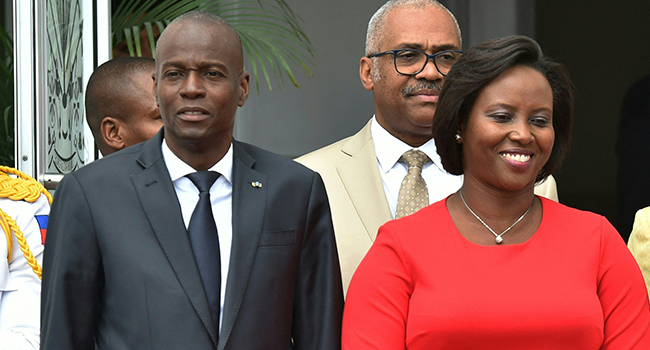
A major development in the long-running investigation into the 2021 killing of Haitian President Jovenel Moise saw 18 suspects transported to Florida to face trial, U.S. officials confirmed. The mass extradition marks a significant step toward accountability nearly five years after the president was gunned down at his private residence.
What Happened
Haitian leader Jovenel Moise was shot dead on July 7, 2021, at his home by a group of roughly 20 military-trained Colombian mercenaries. His security detail did not intervene, leaving him vulnerable to the attack. Among those now facing American justice is Joseph Felix Badio, a former anti-corruption official at Haiti's Ministry of Justice, identified as a main suspect in the probe. The group also includes Colombian nationals, whose transfer from Haiti to the United States was confirmed by Colombia's Ministry of Foreign Affairs, which stated it did not intervene in the process. Federal prosecutors revealed that 18 defendants were flown to Florida on a military aircraft, joining over 30 others already indicted in the case. Four additional men were recently convicted in a Miami federal court of conspiracy to kill the president, conspiracy to provide material support, and violating the U.S. Neutrality Act.
Why This Matters
The extradition and ongoing trials represent a rare moment of progress in a case that has highlighted the fragility of Haiti's political landscape. Since Moise's death, the nation has lacked a stable head of state, with gangs now controlling an estimated 80 percent of Port-au-Prince and widespread violent crime including kidnappings, armed robbery, and carjackings. A United Nations-backed armed force intended to stabilize the country remains understaffed, officials said earlier this month. The pursuit of justice for Moise's assassination is also tied to Haiti's ability to hold its first presidential and legislative election since 2016, scheduled for December 13, contingent on security conditions permitting.
Key Takeaways
- Eighteen suspects were transported from Haiti to face trial in the Southern District of Florida, joining a growing list of defendants in the Moise assassination.
- Joseph Felix Badio, a former Haitian justice ministry official, is among the high-profile figures now facing American courts.
- Colombian mercenaries formed the core of the attack group, and Colombia's government confirmed it had no role in the transfer decision.
- Four men were recently convicted in Miami on charges including conspiracy to kill the president and violating the U.S. Neutrality Act.
- Haiti continues to grapple with gang-controlled territories, a power vacuum after the president's death, and a delayed election set for December 13.
Conclusion
The movement of 18 suspects to face trial in the United States underscores the enduring commitment of international law enforcement to resolve the Moise assassination, even half a decade after the crime. As Haiti navigates a precarious political transition and prepares for a pivotal election, the outcomes of these proceedings may shape the country's path toward stability. Continued global attention and support will be essential as the nation works to overcome the chaos that has defined the post-Moise era.


Discussion
Join the conversation
Thoughtful reactions, questions, and follow-up ideas help shape the next story.