Introduction
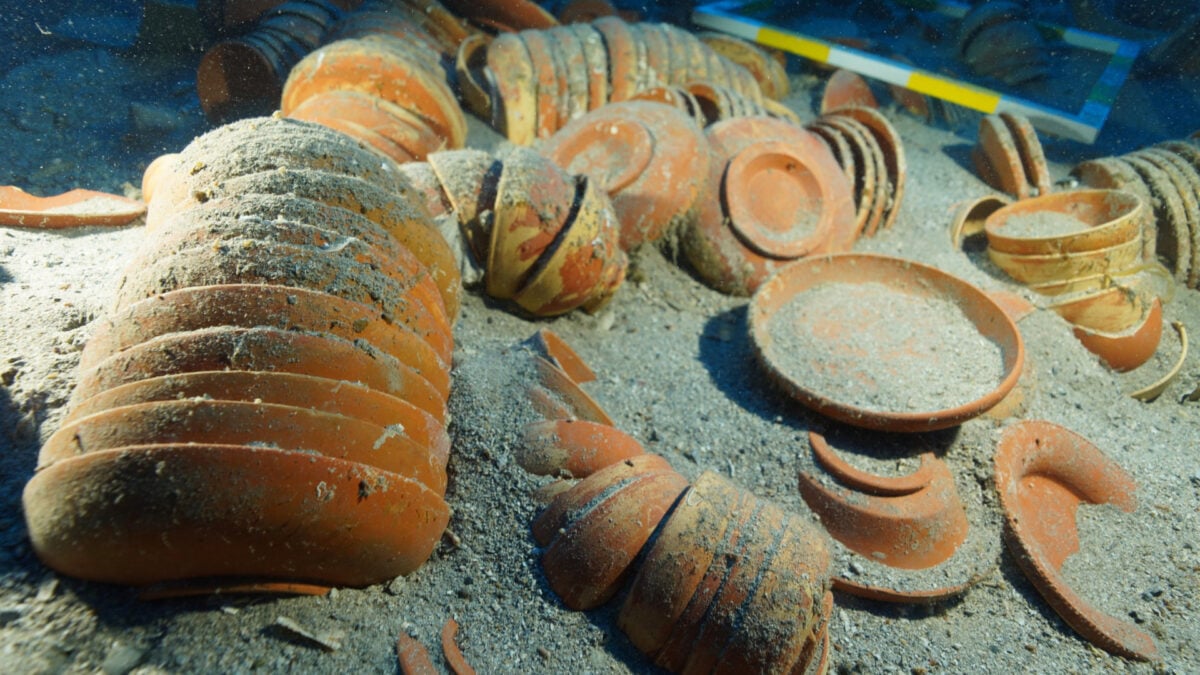
A remarkable underwater discovery has brought 2,100-year-old luxury tableware to light. Off the Turkish coast, archaeologists recovered over 6,500 intact ceramic pieces from a merchant ship that sank in the Mediterranean centuries ago.
What Happened
The Adrasan wreck, located 42 to 55 meters deep off Antalya, was excavated in 2025 under Türkiye’s Ministry of Culture and Tourism. Minister Mehmet Nuri Ersoy announced the find on social media, revealing 122 shapes and sizes of plates, bowls, and trays. The ceramics were manufactured in Rhosus (modern Arsuz) for elite Roman clients. Packed carefully between clay layers and placed in wooden crates, the cargo survived intact despite millennia underwater.
Why This Matters
The find offers a rare glimpse into Roman elite consumption and trade. As art historian Christopher S. Lightfoot noted, wealth poured into Rome on an unprecedented scale, prompting lavish commissions and specialized imports. Ancient politician Marcus Tullius Cicero once requested fine Rhosian ware for a friend, joking about vegetarian fare on fern-pattern plates. The ship’s cargo also included coins from Antioch, suggesting a trade network linking Antioch, the Aegean, Greece, and the Italian coast during the 1st century BCE.
Key Takeaways
- Over 6,511 ceramic pieces recovered, remarkably intact
- Tableware crafted in Rhosus for Roman elite
- Clay packing and wooden crates prevented damage over 2,100 years
- Coins from Antioch reveal broader Mediterranean trade connections
- Discovery illuminates Roman luxury consumption and ancient commerce
Conclusion
The Adrasan shipwreck stands as a testament to ancient craftsmanship and Mediterranean trade resilience. As Minister Ersoy remarked, the artifacts carry Anatolia’s skill and the region’s trading history into the present day, offering modern audiences a tangible link to the Roman world’s luxury and logistics.


Discussion
Join the conversation
Thoughtful reactions, questions, and follow-up ideas help shape the next story.