Introduction
Many homeowners imagine a flawless bookshelf, but styling a tall, built-in unit often feels like a puzzle without a clear solution. When Meg Hemphill added a rolling-ladder bookshelf to her space, she hit a wall—unsure how to arrange books and decor without creating visual chaos. Seeking guidance, she turned to professional organizer Jessica Litman of The Organized Mama, who shared four straightforward strategies that turned a cluttered shelf into a warm, personal showcase.
What Happened
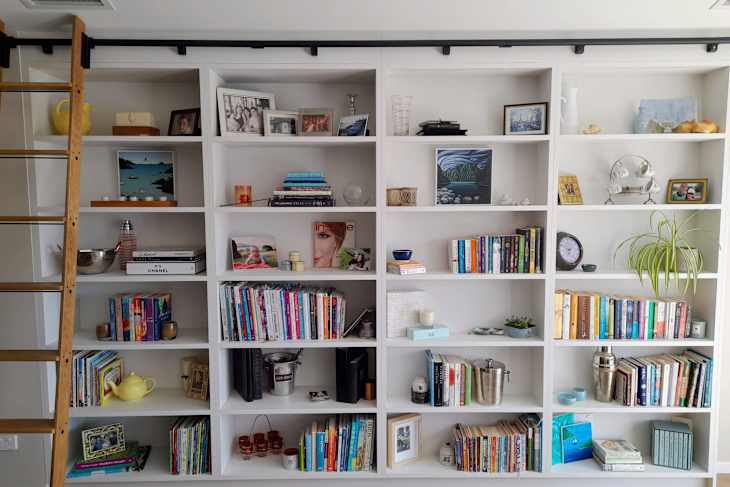
Hemphill’s process started by clearing every item from the shelves and sorting everything into categories. As Litman advised, grouping like with like—such as pairing silver frames with a matching candlestick—made it easy to see what was truly worth displaying. She then turned to the books themselves, organizing by purpose: cookbooks gathered together, fiction separated by genre, and children’s books placed on lower shelves for easy access. Coffee table books were stacked horizontally to introduce texture and visual interest.
Next, she followed the “bottom-up” styling rule: placing heavier objects on lower shelves and keeping smaller, lighter items at eye level. This single adjustment grounded the entire bookcase and created an immediate sense of balance. Finally, Litman emphasized the power of white space. By leaving small gaps between decor pieces and varying how books were stacked, Hemphill ensured nothing got lost in the back, and the display felt open and intentional.
Why This Matters
A well-styled bookshelf does more than look good—it reflects your personality, makes items easier to find, and transforms a bulky architectural feature into a curated showcase. These tips prove that you don’t need a perfect starting point or expensive redesign to achieve results. Even small, intentional shifts—like grouping by function or leaving breathing room—can dramatically change how a space feels and functions.
Key Takeaways
- Start by removing everything and grouping items by category, color, or collection to identify what truly belongs on display.
- Organize books by function: keep kids’ books low, group fiction by genre, and stack coffee table books horizontally for texture.
- Style from the bottom up, placing heavier objects on lower shelves and lighter pieces at eye level for immediate balance.
- Leave intentional white space between decor and avoid overcrowding; breathing room lets each piece shine.
- Resist the urge to overthink—arrange the shelves, step back, and make adjustments as you live with the space over time.
Conclusion
Hemphill’s journey from frustrated planning to confident display shows that expert guidance and a few simple rules can rewrite the story of any cluttered bookshelf. As Litman advises, avoid overthinking—arrange the shelves, step back, and make adjustments as you live with the space. With these strategies, anyone can turn a chaotic shelf into a warm, personal, and truly reflective home feature.



Discussion
Join the conversation
Thoughtful reactions, questions, and follow-up ideas help shape the next story.