Introduction
African startups raised $2.49 billion across 315 disclosed deals in the first nine months of 2026, representing 7.8% year-on-year growth from $2.30 billion across 403 deals in the same period in 2025. The figure sets the stage for a notable quarterly rebound as the year progresses.
What Happened
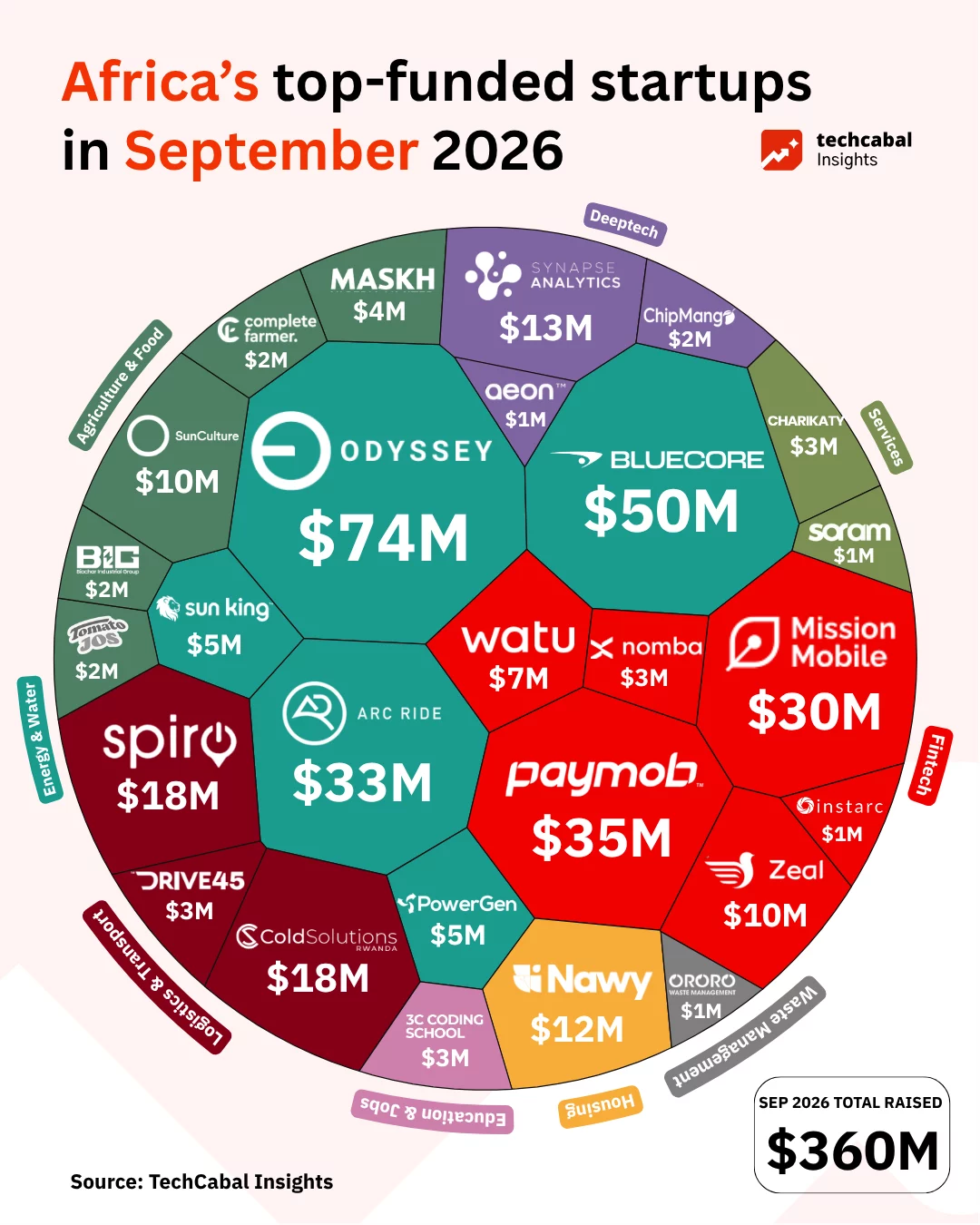
Q3 2026 alone brought in $1.025 billion across 167 deals, up from $785 million across 149 deals in Q3 2025, signaling a sharp recovery after a slower first half. September continued the quarter's momentum with significant capital directed into energy infrastructure, mobility, and digital payments platforms. Notable deals included a $50 million seed round for Bluecore Energy (Ghana), a $74 million combined financing for Odyssey Energy Solutions (Nigeria), and a $35 million pre-Series C for Paymob (Egypt).
Why This Matters
The nine-month total brings full-year projections into focus, especially as top destinations diverged. Nigeria led with $624 million, followed by Egypt at $396 million, Benin at $345 million, Kenya at $297 million, and South Africa at $279 million. Beyond equity, over $3.08 billion in LP commitments flowed into African fund managers across Q1–Q3 2026, with major closes including Ninety One's $404 million Africa Credit Opportunities Fund III and Airnergize Capital's $239 million Clean Energy Fund.
Key Takeaways
- African startups raised $2.49 billion across 315 deals in nine months, up 7.8% year-on-year.
- Q3 2026 rebounded to $1.025 billion across 167 deals, a significant increase from Q3 2025.
- Energy, fintech, and clean tech sectors led the largest individual rounds this year.
- Nigeria ($624 million) and Egypt ($396 million) were the top funding destinations so far in 2026.
- Over $3.08 billion in LP commitments were secured by African fund managers between Q1 and Q3 2026.
- Six major fund closes surpassed $40 million each in Q3 2026, including Ninety One's $404 million Africa Credit Opportunities Fund III.
Conclusion
With substantial dry powder now in the hands of fund managers, the sector appears positioned for continued momentum into the final quarter of 2026. However, founders will need to demonstrate robust unit economics and navigate the evolving preferences of capital allocators to access the growing pool of available investment.





Discussion
Join the conversation
Thoughtful reactions, questions, and follow-up ideas help shape the next story.