Introduction
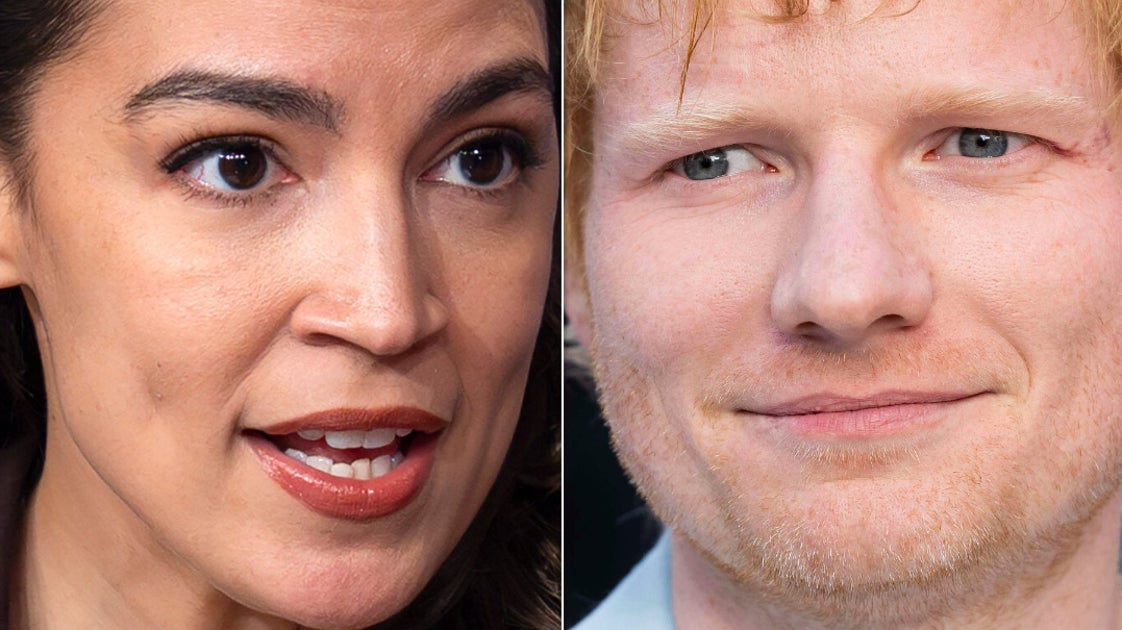
Alexandria Ocasio-Cortez has entered the conversation surrounding Ed Sheeran’s touring controversy, using the moment to highlight broader concerns about who controls artistic expression on stage. The discussion ignited after Macklemore was dropped from Sheeran’s tour following a pro-Palestinian remark at a New Jersey stadium, sparking debate over censorship, corporate influence, and musician accountability.
What Happened
The situation unfolded when Macklemore shouted Free Palestine during a set at MetLife Stadium, a gesture that continued his well-documented advocacy for Palestinian rights and was followed by his tribute song Hind’s Hall honoring a young Palestinian girl killed in 2024. Sheeran’s team responded by removing Macklemore from the remainder of the tour, a decision that prompted Robert Kraft, owner of the New England Patriots and MetLife Stadium, to defend the exclusion by referencing Macklemore’s history of antisemitic rhetoric and imagery. Kraft maintained the move was about protecting the Jewish community, though he did not address Macklemore’s claim that Kraft had pressured other venue owners to blacklist him. In a show of solidarity, every remaining opening act on the tour—including Sheeran’s own backing band—announced they would withdraw from upcoming performances.
Why This Matters
Beyond the immediate fallout on a summer tour, the incident raises urgent questions about the power dynamics between venue owners, corporate interests, and musicians who use their platforms for political expression. Ocasio-Cortez emphasized that when a handful of wealthy stadium owners can effectively censor an artist across an entire tour, it creates a chilling effect that extends far beyond a single controversy. With a UN Commission of Inquiry having declared Israel’s actions in Gaza as genocide, alongside Kraft’s public stance and the congresswoman’s warning about creeping censorship, this situation frames as a test case for how much space artists have to address global human rights issues without losing their livelihoods.
Key Takeaways
- Ocasio-Cortez called on Ed Sheeran to publicly address the situation, though she acknowledged she had no insight into his contractual obligations.
- Macklemore’s removal stemmed from a Free Palestine chant at MetLife Stadium, building on his long-standing advocacy for Palestinian rights.
- Robert Kraft’s statement framed the ban as a response to antisemitic content, while declining to engage with claims he orchestrated a wider blacklist.
- Every remaining opening act, including Sheeran’s backing musicians, walked out in solidarity with Macklemore, underscoring the tour-wide impact of the decision.
- The controversy intersects with broader allegations that Israel’s military operations in Gaza amount to genocide, as noted by multiple human rights bodies and a UN Commission of Inquiry.
- Ocasio-Cortez warned that allowing elite venue owners to dictate permissible speech could eventually silence artists on any political topic, from climate change to war.
Conclusion
The clash between Macklemore, Ed Sheeran, and the tour’s corporate backbone spotlights the growing tension between artistic freedom and the commercial pressures of major live events. As more artists weigh whether to risk speaking out on conflict zones, the industry is forced to confront who really holds the microphone—and who decides which voices get silenced. Whether this moment leads to lasting change in how tours handle political expression remains to be seen, but the conversation has already shifted the spotlight onto the hidden power structures shaping today’s soundtrack.
Discussion
Join the conversation
Thoughtful reactions, questions, and follow-up ideas help shape the next story.