Introduction
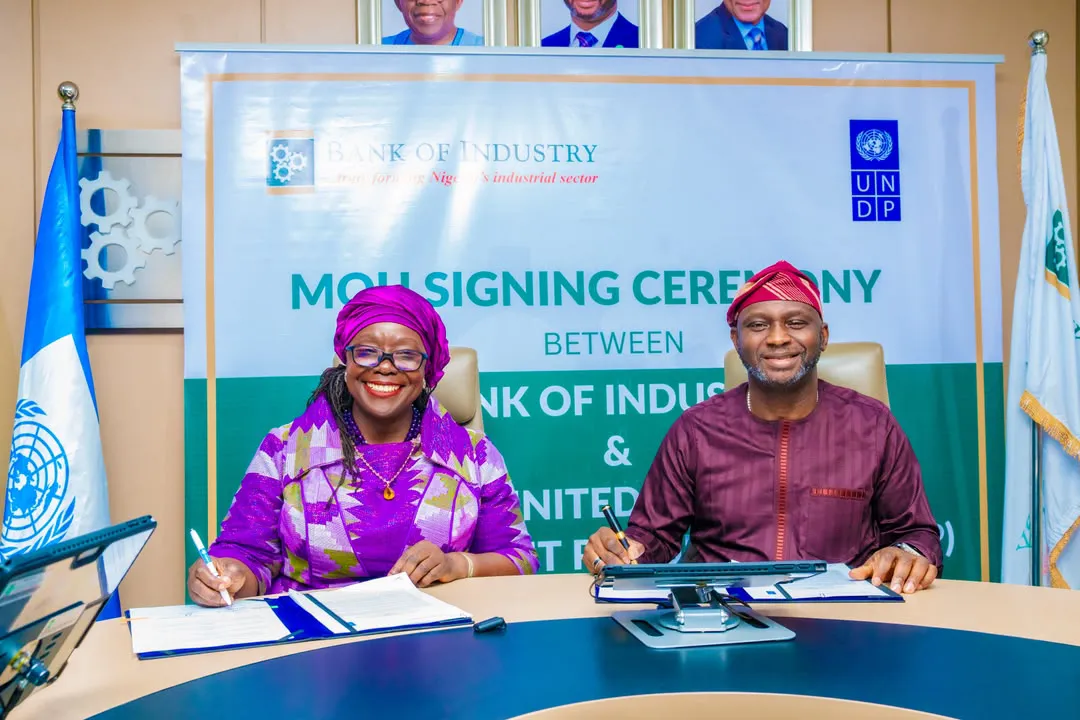
The Bank of Industry (BOI) and the United Nations Development Programme (UNDP) have formalised a renewed collaboration aimed at strengthening Nigeria's private sector. The two institutions signed a three-year memorandum of understanding at BOI's office in Abuja, setting the stage for joint efforts to help local businesses grow, access financing, and compete in regional markets.
What Happened
The agreement establishes a structured framework for cooperation between Nigeria's leading development finance institution and the UN's development agency. Under the deal, BOI and UNDP will prioritise micro, small, and medium enterprises, with special attention to manufacturing and agro-processing. The partnership also introduces Project THRIVE, an initiative designed to merge BOI's lending capacity and sector knowledge with UNDP's technical programming and global partnership networks. Discussions leading to the memorandum began in 2025, and the signed document now provides the institutional backing needed to move those talks into action.
Why This Matters
Nigerian enterprises, particularly those led by women and young people, often face barriers when seeking capital, skills, and market connections. This collaboration targets those gaps directly by supporting business development at multiple stages, from farmers transitioning into agro-processing to manufacturers looking to sell beyond national borders. A key focus is preparing Nigerian firms to take advantage of the African Continental Free Trade Area, which could open new export routes across the continent. Beyond finance, the agreement covers digital inclusion, renewable energy, climate resilience, and the creative economy, reflecting a broader push toward sustainable industrialisation.
Key Takeaways
- A three-year memorandum of understanding between BOI and UNDP renews their partnership for enterprise growth in Nigeria.
- The agreement was signed at the Bank of Industry's office in Abuja.
- Priority sectors include micro, small, and medium enterprises, manufacturing, agro-processing, and corridor-based value chains.
- Project THRIVE will combine BOI's development financing with UNDP's technical and partnership resources.
- Women-led businesses, young entrepreneurs, and underserved communities are central to the collaboration.
- The partnership aims to improve competitiveness under the African Continental Free Trade Area.
- Additional cooperation areas include renewable energy, digital inclusion, and the mining sector.
Conclusion
By aligning BOI's development financing mandate with UNDP's global development experience, the two organisations hope to create practical, lasting support for Nigerian businesses. The success of the partnership will depend on coordinated delivery, regular progress reviews, and the ability to turn financing into measurable outcomes such as job creation and economic diversification. For entrepreneurs and industry stakeholders across Nigeria, the agreement signals a renewed commitment to building competitive, inclusive enterprises that can drive national prosperity.
Discussion
Join the conversation
Thoughtful reactions, questions, and follow-up ideas help shape the next story.