Introduction
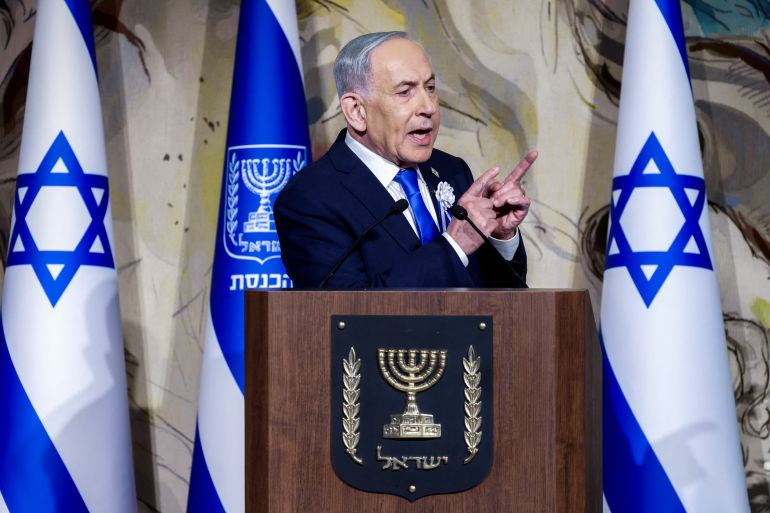
Benjamin Netanyahu has built a career on surviving political crises that would have ended most leaders' tenures. Yet Israeli commentators and political observers suggest the prime minister may now be facing his most serious challenge yet. Following recent parliamentary elections, Netanyahu's bloc failed to secure the 61 seats required for a majority in the 120-member Knesset. Instead, former military chief Gadi Eisenkot has been given the mandate to attempt to form a new government. With a long-running corruption trial approaching its final stages and several legislative threats on the horizon, the stakes for Netanyahu have never been more personal.
What Happened
According to the election results, Netanyahu's political bloc captured 53 seats, leaving it eight short of a governing majority. Sixty-seven members of the new Knesset recommended Eisenkot, the head of the Yashar party and a former Israel Defense Forces chief of staff, to lead coalition negotiations. Under Israeli law, Eisenkot has up to 42 days to assemble a government before the president must consider alternative options.
The situation is further complicated by Netanyahu's legal circumstances. His corruption trial, which began in 2020, is entering its concluding phase. A request for a presidential pardon remains pending with President Isaac Herzog. Meanwhile, Eisenkot's allies have already introduced legislation calling for a state commission of inquiry into the October 7 attacks and for term limits on the prime minister's office.
Netanyahu is reportedly pursuing three strategies to remain in power. First, he has proposed a "national unity government" that would include far-right and ultra-Orthodox parties while excluding Arab political factions. Second, he has used inflammatory rhetoric to portray Arab parties as illegitimate partners. Third, according to media reports, he has urged the United States to support additional military strikes against Iran, a move some analysts believe could be intended to justify an emergency government or delay the transfer of power.
Why This Matters
For Netanyahu, remaining in office is about more than political preference. As long as he serves as prime minister, he cannot be removed from office except following a final criminal conviction. Leaving office would expose him to the full force of the justice system and a possible prison sentence. He has also expressed deep attachment to the public image of Israel's defender, a reputation that a state inquiry into October 7 could seriously damage.
The broader implications extend to Israeli democracy and regional stability. A state commission of inquiry could reshape public understanding of the October 7 security failures. Term-limit legislation would alter the country's leadership structure. At the same time, any new military escalation involving Iran could draw in regional actors and complicate Israel's relations with Washington. Observers have also warned that the current climate of incitement recalls the atmosphere preceding the 1995 assassination of Prime Minister Yitzhak Rabin.
Key Takeaways
- Netanyahu's bloc won 53 Knesset seats, eight short of the 61 needed for a majority.
- Sixty-seven lawmakers recommended Gadi Eisenkot to form a government, giving him a 42-day window.
- Netanyahu's corruption trial is in its final stretch, and a pardon request remains unresolved.
- Eisenkot's bloc has proposed bills for a state inquiry into October 7 and for prime-ministerial term limits.
- Netanyahu is pursuing a unity government offer, anti-Arab incitement, and potential escalation with Iran to survive.
- Eisenkot faces difficult coalition math, including potential reliance on ultra-Orthodox parties or Arab-backed support from outside the coalition.
Conclusion
The coming weeks will likely determine whether Benjamin Netanyahu's long dominance of Israeli politics is ending. Eisenkot must navigate competing promises made during the campaign, including pledges to exclude Netanyahu, ultra-Orthodox parties, and Arab parties from his government. Netanyahu, for his part, appears willing to test the limits of political maneuvering, including the possibility of forcing another election.
Ultimately, the most immediate path to ending Netanyahu's tenure may be the swift formation of any alternative government before the 42-day mandate expires. Whether Israel's political system can produce such an outcome—and whether the country avoids further instability in the process—remains an open question.
Discussion
Join the conversation
Thoughtful reactions, questions, and follow-up ideas help shape the next story.