Introduction
Watch the sun set over Macau and the skyline across the water belongs to Hengqin, an island once populated by oyster farmers and fishermen. Today it stands as a flagship piece of China's Guangdong-Hong Kong-Macau Greater Bay Area, a vast integration project that Beijing hopes can produce a domestic rival to Silicon Valley. After roughly a decade of planning, the region is showing early signs of momentum, but serious questions remain about whether centralized coordination can recreate the organic energy of the world's leading technology hub.
What Happened
The Greater Bay Area, formalized in 2017, connects nine mainland cities in Guangdong province—including Shenzhen, Guangzhou, and Zhuhai—with Hong Kong and Macau. Together, the region encompasses 88 million people and generates approximately $2.1 trillion in economic output, rivaling countries such as Canada and Germany in scale.
Hengqin captures both the ambition and the limits of that vision. The island, three times Macau's size, was expected to house 280,000 residents by 2020. By the close of 2025, it had only about 50,000. Officials are using it as an "In-Depth Cooperation Zone" to help Macau reduce its reliance on gambling, yet the island's highways and parks remain relatively empty.
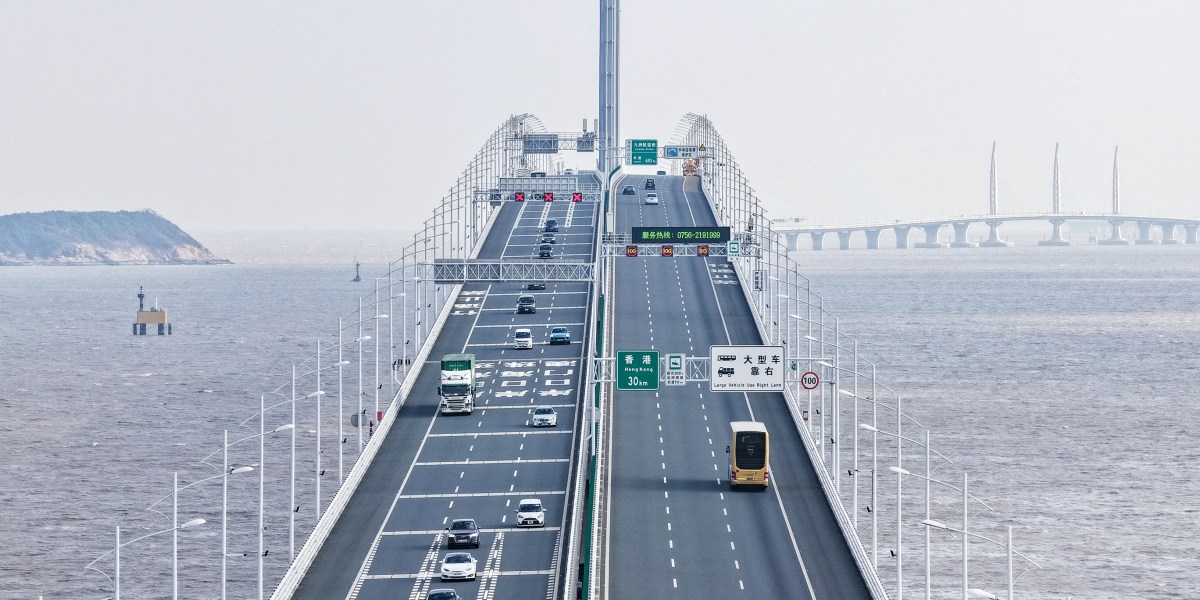
Infrastructure represents the clearest area of delivery. Hundreds of kilometers of rail lines and the roughly $20 billion Hong Kong-Zhuhai-Macau Bridge—the longest bridge-and-tunnel sea crossing on earth—are intended to keep major cities within an hour's travel of one another. The region also operates under three legal systems, three currencies, and separate customs territories, which makes integration a complicated policy task.
Innovation metrics offer encouragement. The World Intellectual Property Organization placed the Shenzhen-Hong Kong-Guangzhou corridor at the top of its global innovation cluster rankings in both 2025 and 2026. The nine mainland cities in the bay area submitted more than one-third of China's international patent applications in 2025, and the region is home to roughly one-fifth of the country's unicorn startups.
The wider economy tells a more mixed story. Guangdong expanded more slowly than the national average every year from 2021 through 2025. During the first three quarters of 2026, provincial growth hit 4.6 percent, matching the national pace for the first time since the third quarter of 2021.
Why This Matters
The Silicon Valley comparison is deliberate. The name "Greater Bay Area" was chosen with the American counterpart in mind, and Chinese leaders have spent years attempting to build a similar engine of technology and wealth. Yet experts describe two distinct operating systems. Silicon Valley emerged organically over many decades, while the Chinese approach depends on central planning, targeted infrastructure, and a division of labor among cities.
For now, the rewards are concentrated. Hong Kong supplies financial depth, while Shenzhen contributes hardware, software, and manufacturing speed. Other cities in the bay area are not advancing at the same speed. Hong Kong's per capita GDP exceeds five times that of Zhaoqing, the region's poorest city, and Shenzhen's is three times higher. That disparity raises questions about whether integration is spreading prosperity or simply reinforcing existing hierarchies.
Structural challenges also loom. China's property downturn and youth unemployment have weighed heavily on Guangdong, and automation powered by artificial intelligence is reducing demand for low-skilled factory work. Still, demand for AI infrastructure, robotics, and self-driving vehicles is generating fresh momentum, and local firms are iterating on physical products on timelines measured in days instead of months.
Key Takeaways
- The Greater Bay Area unites 88 million people and about $2.1 trillion in GDP across Hong Kong, Macau, and nine Guangdong cities.
- Shenzhen-Hong Kong-Guangzhou ranked as the world's leading innovation cluster in 2025 and 2026.
- Hengqin, a flagship development zone, fell far short of its population target, reaching only 50,000 residents by 2025.
- Guangdong's growth matched China's national rate in early 2026 after years of underperformance.
- Economic gains remain concentrated in Hong Kong and Shenzhen, leaving other cities behind.
Conclusion
China's Greater Bay Area has the scale, manufacturing strength, and financial connections to matter on the global stage. Its innovation metrics are already world-class, and its hardware-software integration gives it a distinct edge in AI and robotics. But replicating Silicon Valley requires more than bridges and rail lines. It requires talent, risk capital, and organic company formation across a wider set of cities. For now, the bay area remains largely a Hong Kong-Shenzhen story, and whether the rest of the region catches up will determine if it can truly challenge the original Bay Area.
Discussion
Join the conversation
Thoughtful reactions, questions, and follow-up ideas help shape the next story.