Introduction
Small robotic companions are entering our homes, and Microduck leads the charge. This AI-powered duck raises a fundamental question about the nature of attachment in an age of advanced machines.
What Happened
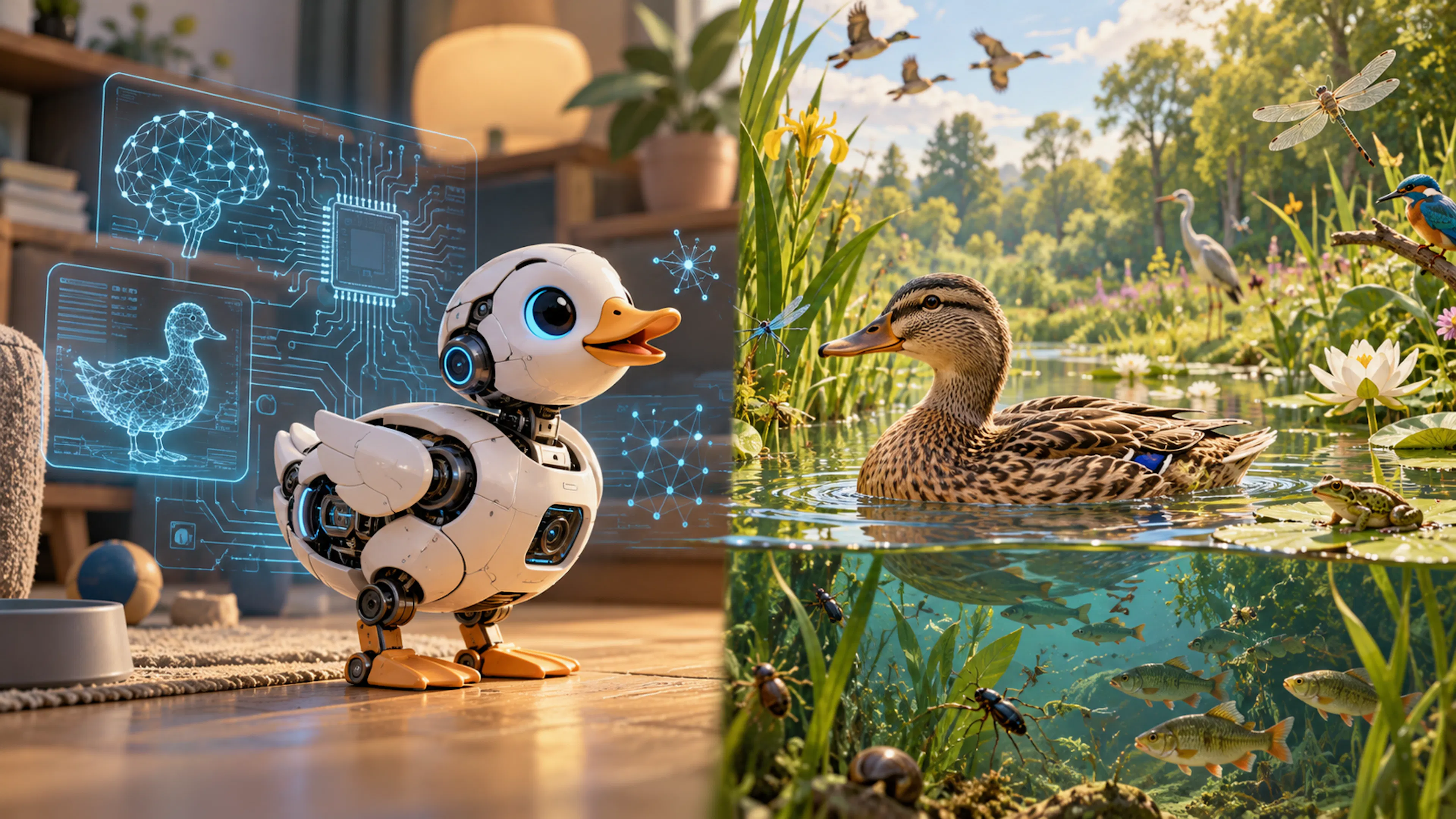
Microduck stands just 25 centimeters tall and weighs under 800 grams. Despite its compact size, it integrates fifteen motors, sensors, and a miniature computing system. A neural network helps control its movements, continuously adjusting its balance and position. A standout feature is its unique sonic identity, generated from the robot's serial number, giving each unit a distinct voice. The robot simulates emotional states—lowering its head and emitting soft sounds for sadness, or producing higher-pitched tones and lively movements for happiness. When multiple Microducks gather, they interact and can synchronize into a collective behavior resembling a chorus, echoing social animal dynamics. The entire software stack is open source, inviting developers to study, modify, and expand its capabilities. Through a digital twin and reinforcement learning, the robot practices thousands of movements in a virtual space before transferring successful behaviors to the physical body via sim-to-real transfer. Even so, fitting all this functionality into a small battery-powered frame remains a significant engineering challenge, mirroring the energy-efficiency strategies animals have refined over millions of years.
Why This Matters
Microduck's designers intentionally embedded emotional cues and social interaction patterns to encourage user attachment. A robot that sounds unique, expresses simulated feelings, and engages with peers can feel surprisingly alive. However, the article makes a clear distinction: simulation is not the same as experience. Real pets carry biological needs, life cycles, and genuine reciprocity. A robot offers companionship without mess, veterinary care, or lifelong responsibility, but it also lacks the living cycle that gives animal bonds their depth. The piece ultimately probes whether humans should grow attached to something that appears alive without actually being so.
Key Takeaways
- Microduck blends AI, robotics, and emotional simulation into a compact, open-source platform
- Unique sonic identity and social interaction behaviors are designed to foster user connection
- Digital twins and reinforcement learning enable rapid skill development through virtual simulation
- Battery efficiency and physical constraints remain central hurdles in small-scale robotics
- The device underscores the widening boundary between simulated and genuine companionship
Conclusion
Microduck exemplifies the rapid convergence of robotics and AI to produce machines that mimic life-like behavior. Whether it becomes a beloved companion or remains a sophisticated novelty depends on how society values simulated affection against the irreplaceable depth of living relationships. As these devices proliferate, the real question may not be how closely robots imitate life, but how willing we are to invest emotion in something that can never truly return it.






Discussion
Join the conversation
Thoughtful reactions, questions, and follow-up ideas help shape the next story.