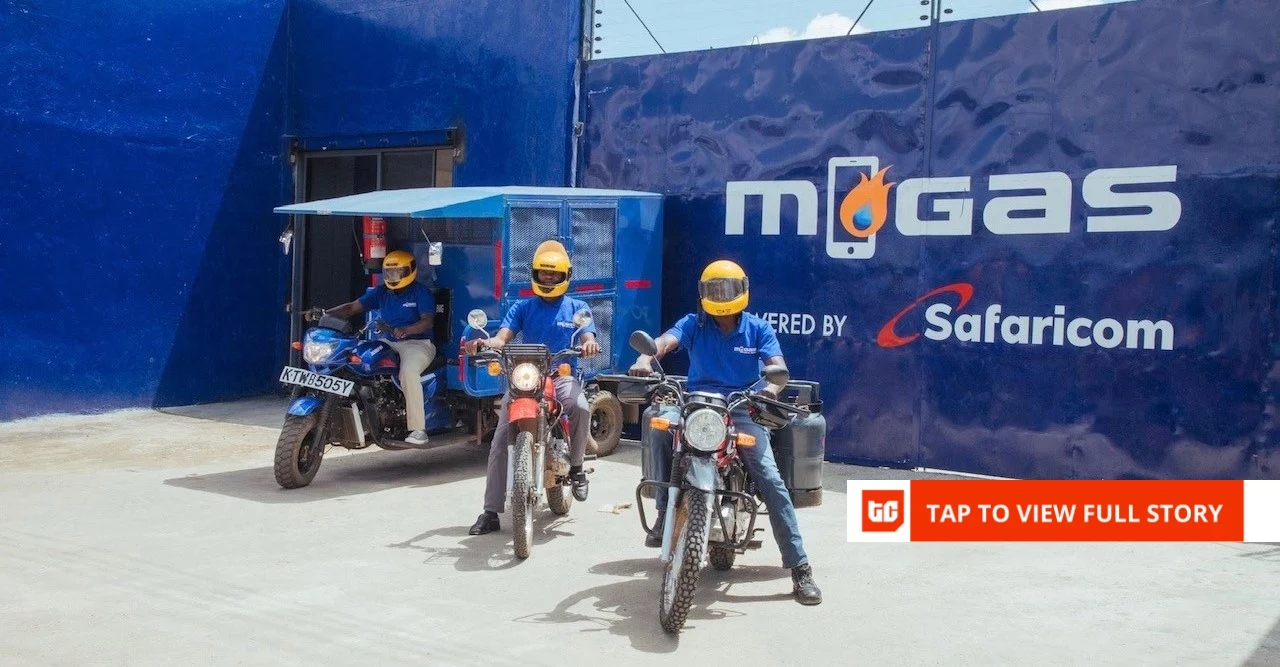
Circle Gas, the UK-backed operator of Kenya's M-Gas pay-as-you-cook LPG service, has found itself at the centre of a growing financial storm. Its 2025 accounts reveal a business heavily dependent on carbon-credit revenue, even as the company posts a significant loss and scrambles for new funding. The situation underscores the fragile economics of clean-cooking startups across Kenya.
What Happened
In 2025, Circle Gas reported $67 million in contracted carbon credits still awaiting delivery, alongside $57 million in cash prepayments from buyers. The company posted a $39.3 million loss after tax, held just $1.1 million in cash, and carried $156.7 million in net liabilities. To fund its expansion, the company estimates it needs roughly $28 million in new investment this year, a sum it says remains largely unsecured. Revenue grew to $40.8 million from $36.1 million, but the bottom line remained firmly in the red.
Why This Matters
Carbon credits form the backbone of the clean-cooking business model, enabling companies like Circle Gas to subsidise affordable LPG through emissions-reduction revenue. However, the value of those credits hinges entirely on government authorisation to move them internationally. The collapse of Koko Networks, which shut down in January 2026 after the Kenyan government declined to approve its carbon-credit sales, serves as a stark warning. Without that seal of approval, contracted credits cannot be converted into cash, leaving companies exposed and creditors at risk.
Key Takeaways
- Circle Gas holds $67 million in carbon credits waiting for government authorisation to deliver.
- The company lost $39.3 million in 2025 and needs $28 million more to sustain 2026 growth plans.
- Kenya's carbon-market rules give the government final say over which credits can be sold abroad.
- Koko Networks' collapse shows how quickly a clean-cooking startup can fail when credit sales are blocked.
- M-Gas recently announced a Letter of Approval, but Circle Gas is still seeking its own authorisation.
Conclusion
Circle Gas's predicament is a litmus test for Kenya's clean-cooking sector and the broader carbon-credit market. With millions in contracted credits hanging on regulatory approval, the company's next steps could set a precedent for how other startups navigate the intersection of climate finance and government policy. As the sector waits, the balance between growth ambition and regulatory reality remains finely poised.







Discussion
Join the conversation
Thoughtful reactions, questions, and follow-up ideas help shape the next story.