Introduction
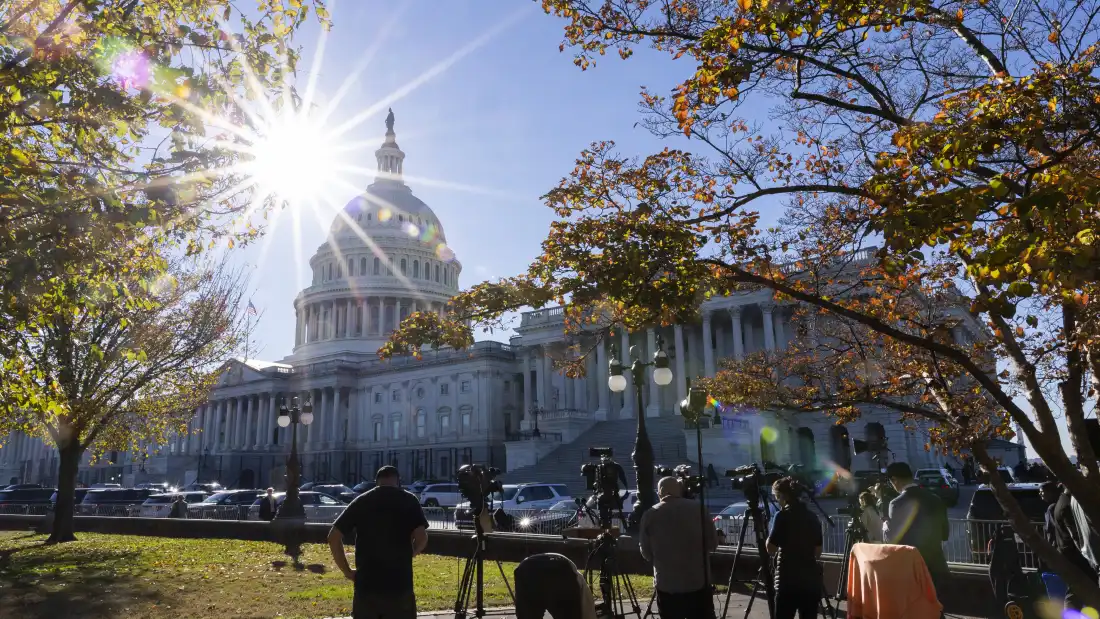
Congress is racing toward a December funding deadline, and Democrats are preparing to use their votes to challenge how the United States pays for military operations in Iran. At the same time, federal officials in Iowa have postponed a controlled detonation of unstable chemicals at an Army ammunition plant. The developments come as the Trump administration navigates a complex relationship with China, including controversial semiconductor sales.
What Happened
Democratic lawmakers, led by Virginia Senator Tim Kaine, are pushing to attach a provision to the upcoming stopgap spending bill that would end funding for the war in Iran. Because the Senate requires 60 votes to advance most legislation and Republicans hold only a narrow majority, Democratic support is essential to keep the government open past December 11. Republican Senator Thom Tillis of North Carolina warned that if Democrats insist on the provision, his party might turn to reconciliation to bypass them.
In a separate national security matter, the Trump administration has approved the sale of nearly 900,000 advanced chips to Chinese companies since May 2026. Buyers include Alibaba and Tencent, firms the Pentagon has linked to China's military. The House Foreign Affairs Committee recently disclosed requests from Nvidia and AMD to sell semiconductors directly to Chinese businesses. President Trump and Chinese leader Xi Jinping have met three times this year and may meet again next month in Miami.
Meanwhile, the U.S. Army has delayed plans to detonate approximately 9,500 pounds of lead azide at the Iowa Army Ammunition Plant in Middletown. The unstable compound has been stored in underground tanks for two decades, but recent inspections found the tanks had dried out, causing crystallization that raises the risk of an accidental explosion. Following pressure from Iowa lawmakers and environmental groups, Acting Army Secretary Adam R. Telle ordered the blast postponed until just before colder weather arrives. If the detonation eventually takes place, the Army, the Environmental Protection Agency, and the University of Iowa will monitor air quality.
Why This Matters
The standoff over Iran war funding tests the balance of power between Congress and the White House on military action. Democrats argue the president launched attacks without congressional approval, breaking with decades of bipartisan practice. A government shutdown would disrupt federal services, so the stopgap bill has become a vehicle for broader policy disputes.
The chip sales to China highlight tensions between economic opportunity and national security. While some view advanced semiconductors as a business opportunity, defense officials worry about military applications. The Iowa detonation delay shows how local advocacy and environmental concerns can influence federal military operations, especially when aging infrastructure creates new hazards.
Key Takeaways
- Senate Democrats want to end Iran war funding through the December government funding bill.
- Republican leaders may use reconciliation if Democrats block the stopgap measure.
- The Trump administration approved nearly 900,000 advanced chip sales to Chinese companies, including firms tied to China's military.
- The Army postponed a lead azide detonation in Iowa after concerns about unstable storage tanks.
- Air quality monitoring will involve the Army, EPA, and University of Iowa if the blast proceeds.
Conclusion
As lawmakers return to Washington, the December 11 deadline will force difficult choices about war spending, government operations, and national security priorities. The outcome could shape how future presidents conduct military engagements without explicit congressional authorization. In Iowa, residents await a revised timeline for the chemical detonation, while federal agencies prepare to track environmental impacts if the operation moves forward.
Discussion
Join the conversation
Thoughtful reactions, questions, and follow-up ideas help shape the next story.