Introduction
The 2026 midterm elections produced one of the most decisive shifts in modern U.S. political history. With nearly all House races now decided, Democrats have secured a commanding victory that surpasses anything either major party has achieved in half a century. The results signal a major realignment in the balance of power on Capitol Hill.
What Happened
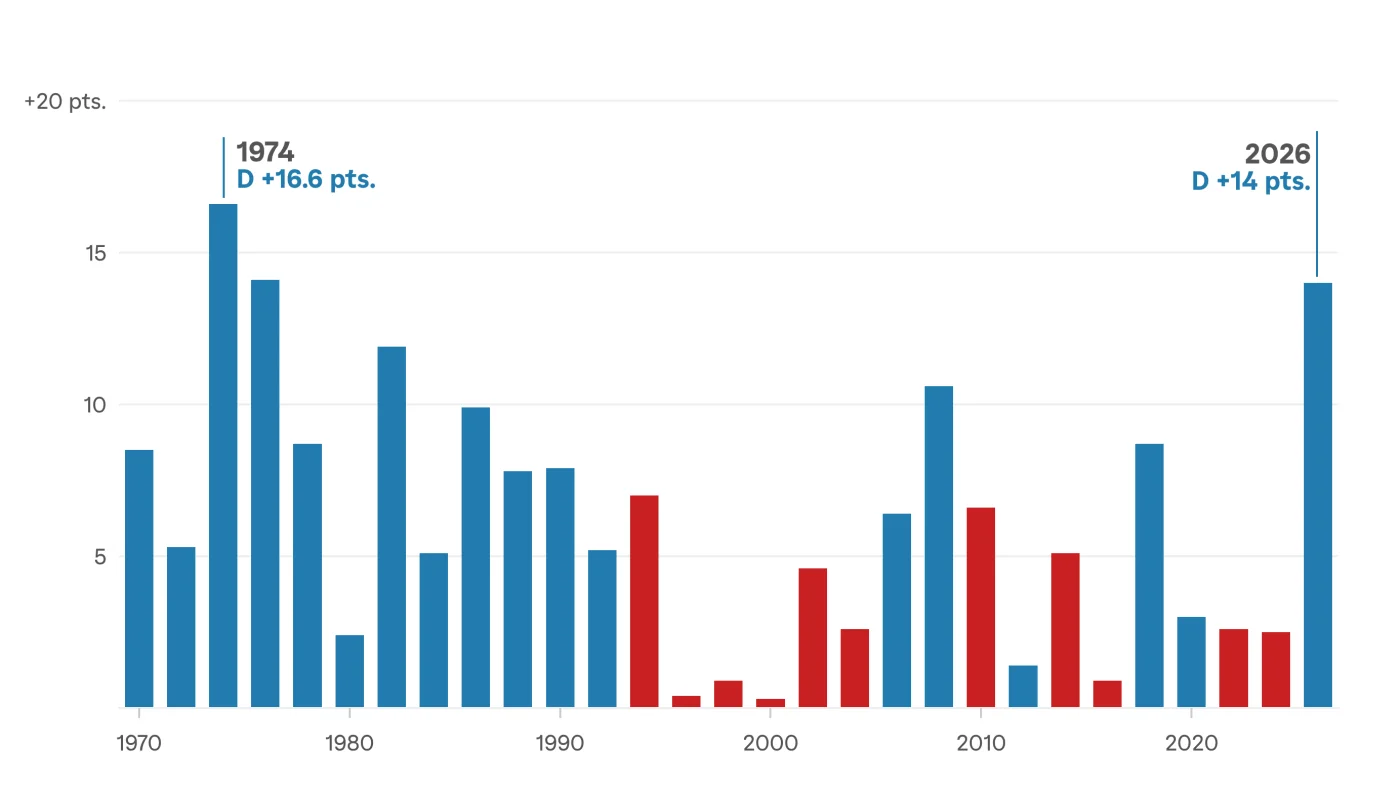
Voters chose Democratic candidates for the House by a margin of 56% to 42%, a 14-point spread. That gap is the widest for either party since the aftermath of the Watergate scandal. So far, Democrats have picked up 46 seats previously held by Republicans, and they lead in three additional races that remain uncalled. If those races break their way, the total could reach 49 flipped seats.
This would mark the second-largest seat turnover of the 21st century. The only larger shift occurred in 2010, when Republicans gained 66 seats in a backlash to the Affordable Care Act.
When every vote is finalized, Democrats are expected to hold roughly 260 House seats. That would be the party's largest majority since the 102nd Congress, which served from 1991 to 1993. For context, Democrats held the House continuously for four decades before the 1994 Republican Revolution shifted control to the GOP.
Why This Matters
The scale of this victory breaks a recent pattern of extremely narrow House majorities. Over the past 20 years, control of the chamber has changed hands five times. Historically, such frequent turnover is rare; the last comparable stretch began in the post-Reconstruction era around 1875.
The outcome also ends a long era for House Republicans. It has been three decades since Newt Gingrich's "Contract with America" reshaped the GOP, and roughly a decade since Donald Trump became the dominant force in the party. With this result, Republicans find themselves in a position similar to where they stood before the 1994 revolution.
Key Takeaways
- Democrats won the national House popular vote by 14 points, 56% to 42%.
- The margin is the largest for either party in 50 years, dating to the post-Watergate era.
- Democrats have flipped 46 Republican-held seats, with three more races still too close to call.
- A final tally of 260 seats would give Democrats their biggest majority since the early 1990s.
- House control has flipped five times in the last 20 years, an unusually volatile stretch by historical standards.
Conclusion
The 2026 midterms will be remembered as a watershed moment for the House of Representatives. Democrats have turned a series of close elections into a decisive mandate, erasing recent Republican gains and building a majority not seen in a generation. Whether this advantage lasts will depend on how the party governs, but for now, the political map has clearly shifted.
Discussion
Join the conversation
Thoughtful reactions, questions, and follow-up ideas help shape the next story.