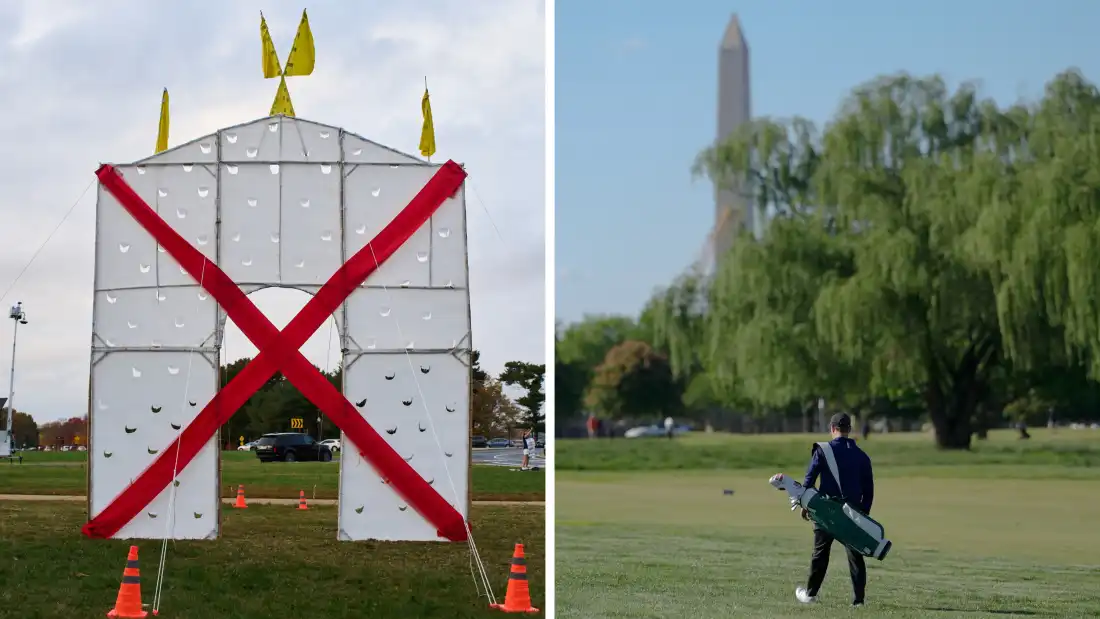
Two federal judges in Washington, D.C., have temporarily halted major construction initiatives tied to President Trump's second-term agenda. One order stops work on a proposed triumphal arch near Memorial Circle, while another keeps East Potomac Park's municipal golf course open to the public. Both rulings are short-term, with deadlines arriving in early December, leaving the long-term fate of both projects in legal limbo.
What Happened
Judge Tanya Chutkan of the U.S. District Court for the District of Columbia extended her temporary restraining order on the arch project until December 3. She first intervened on November 5, shortly after the National Capital Planning Commission and the National Park Service gave the 250-foot structure final approval. Her order bars construction, excavation, demolition, land disturbance, utility installation, and road closures at the site.
Meanwhile, Judge Ana Reyes issued a separate order directing the administration to keep East Potomac Park open after its operator's lease expired. The Trump administration has appealed that ruling, which is currently set to lapse on November 28. Plaintiffs, including local golfers and preservationists, have asked Reyes to extend her order through December 12 while she weighs a longer preliminary injunction.
The legal challenges have drawn in a wide range of opponents. A group of Vietnam War veterans and an architectural historian filed the original arch lawsuit, later joined by the governments of D.C. and Virginia and nine members of the Kennedy family. The Kennedys argue the arch would obstruct historic sightlines and cast shadows over graves at Arlington National Cemetery, including that of President John F. Kennedy.
Why This Matters
The disputes center on whether the administration followed proper legal procedures. Arch opponents say the project violates the Commemorative Works Act and D.C.'s Height of Buildings Act, and note that Congress has not specifically approved the monument. The administration counters that a 1925 authorization for columns at the same location covers the arch, and describes the build as urgent for national security and historical completion.
At East Potomac Park, critics argue the administration rushed the golf course overhaul to bypass environmental review. Judge Reyes suggested in her order that the government likely violated the National Environmental Policy Act and the Administrative Procedure Act by breaking the project into smaller pieces, such as tree removal, to avoid full scrutiny. The Interior Department has projected $43 million in deferred maintenance alone, though total renovation costs remain unspecified.
Public opposition has been vocal. Hundreds of commenters weighed in before the Commission of Fine Arts, with nearly all expressing disapproval of the golf course plan. Locals have continued to use the park informally even after flagsticks were removed, underscoring the site's role as a community space.
Key Takeaways
- Judge Tanya Chutkan extended a construction freeze on Trump's proposed D.C. arch through December 3.
- Judge Ana Reyes ordered East Potomac Park to remain open, though her order expires November 28 and is under appeal.
- Plaintiffs include veterans, historians, D.C. and Virginia officials, and Kennedy family members concerned about historic sightlines and graves at Arlington.
- The arch debate involves claims that the project lacks congressional approval and violates commemorative and building height laws.
- The golf course fight raises questions about environmental review, public access, and the future of a popular municipal course.
- Both rulings are temporary, meaning construction could resume if the courts ultimately side with the administration.
Conclusion
For now, the bulldozers are on hold. The judges' decisions give opponents more time to make their case and give the courts room to decide whether the administration overstepped its authority. With deadlines looming in late November and early December, the next few weeks will determine whether these projects move forward or face deeper legal obstacles. Anyone following Trump's broader building agenda in the nation's capital should watch these dockets closely.
Discussion
Join the conversation
Thoughtful reactions, questions, and follow-up ideas help shape the next story.