Introduction
The Himalayas are undergoing a crisis of accelerating melt, with glacial ice disappearing at a pace that has scientists and policymakers on high alert. A catastrophic glacial collapse in Nepal during August 2026 triggered deadly flash floods, exposing the growing vulnerability of communities living in the shadow of the world's highest peaks.
What Happened
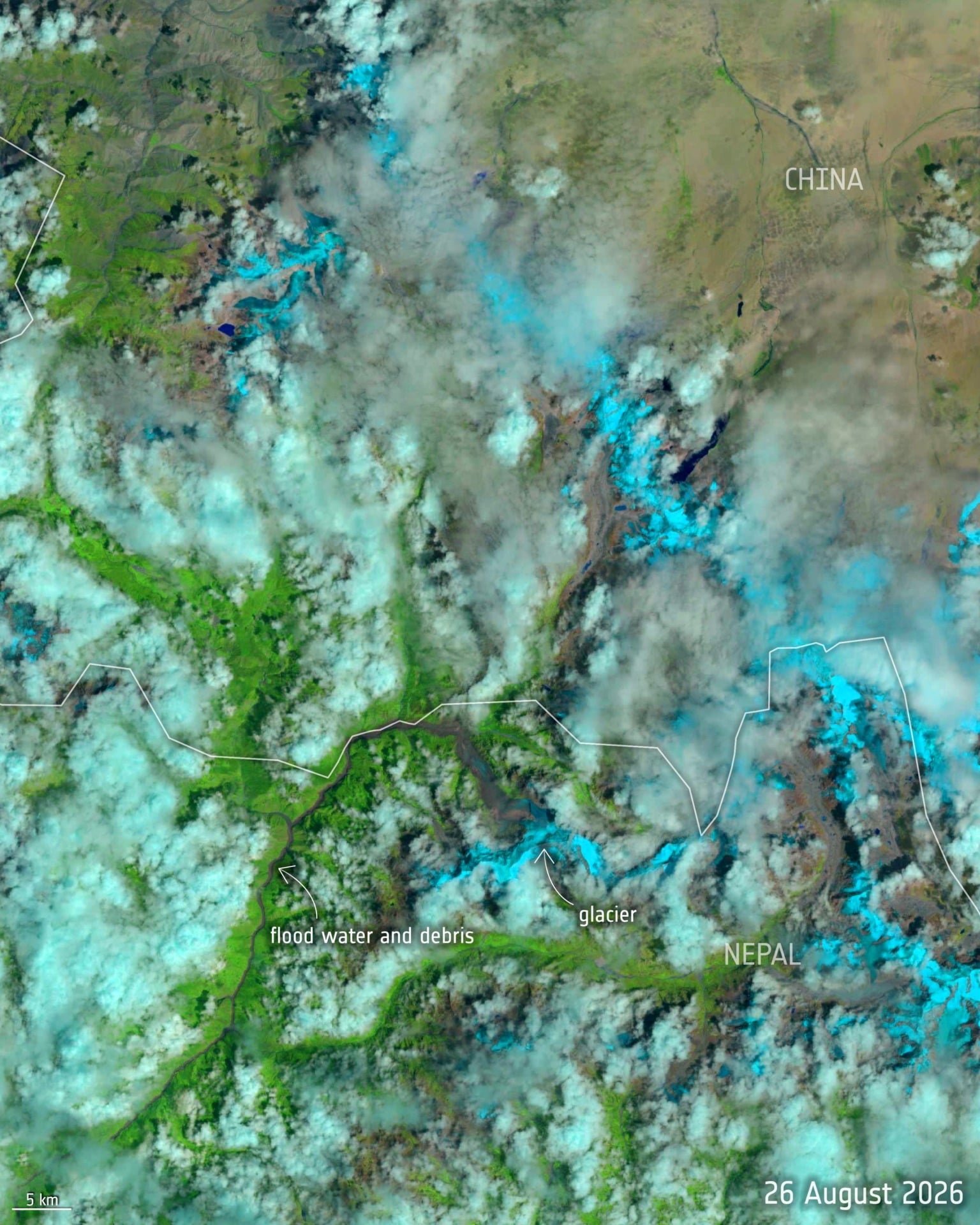
On August 26, 2026, a massive glacier collapse high atop Langtang Lirung sent a wall of water and debris through Nepalese valleys, destroying entire towns and damaging critical hydroelectric facilities. The disaster left more than 5,130 people unaccounted for and claimed at least 1,386 confirmed fatalities, with hundreds more missing across the border in China. Relief crews worked urgently to locate an estimated 900 utility workers trapped in compromised tunnels beneath the mountains. Satellite imagery from Landsat-9 captured the flood's reach just two hours after the event, confirming the speed and scale of the disaster.
- The collapse washed away settlements and disrupted power generation in regions dependent on glacial runoff.
- Over 900 workers were trapped in compromised hydroelectric tunnels, underscoring the human cost of infrastructure exposed to rapid environmental change.
- Satellite imagery from Landsat-9 captured the flood's reach just two hours after the event, confirming the speed and scale of the disaster.
Why This Matters
Beyond the immediate tragedy, the melt rate signals a longer-term threat to the Third Pole, which supports nearly 2 billion people across South Asia. Researchers warn the region may reach a peak water tipping point by mid-century, after which glacial retreat will lead to severe water scarcity despite initial flood surges. The implications are far-reaching: India, where Himalayan land covers only about 18 percent of territory, now accounts for roughly 35 percent of the nation's natural disasters, with glacial water supporting 20 percent of annual GDP through hydropower, agriculture, and industry. With only about 21 of 40,000 Himalayan glaciers monitored in detail, unmonitored glacial lakes are swelling unchecked, creating breach risks that could affect populations far beyond the mountains.
- About 2 billion people rely on Himalayan melt for drinking water, irrigation, and energy, making the region's stability critical to regional food security.
- The report projects up to 80 percent glacier volume loss by 2100 if current warming trends continue, echoing findings from the International Centre for Integrated Mountain Development.
- A 2023 glacial lake outburst in India's northeast killed at least 70 people, buried roads in mudslides, and demonstrated the lethal potential of unmonitored lakes.
- Geopolitical tensions could escalate as water resources become contested across national borders, with ripple effects through global supply chains and climate migration patterns.
Key Takeaways
- Himalayan glacial melt is accelerating, increasing flood and water scarcity risks for billions.
- The 2026 Nepal disaster illustrates the immediate human cost of inadequate monitoring and early warning systems.
- Up to 80 percent of glacier volume could vanish by 2100 without significant climate mitigation.
- Only a small fraction of Himalayan glaciers are closely monitored, leaving millions exposed to unannounced lake breaches.
- Economic and geopolitical consequences extend well beyond the mountain range, affecting food, energy, and stability across South Asia.
Conclusion
The accelerating melt of the Himalayas is no longer a distant projection, it is a present-day risk multiplier for millions. Sustained investment in glacier monitoring, transboundary early warning systems, and climate adaptation strategies is essential to mitigate loss of life and protect the water security of nearly two billion people. As the region approaches a critical peak water threshold, the choices made this decade will shape the safety and stability of South Asia for generations to come.



Discussion
Join the conversation
Thoughtful reactions, questions, and follow-up ideas help shape the next story.