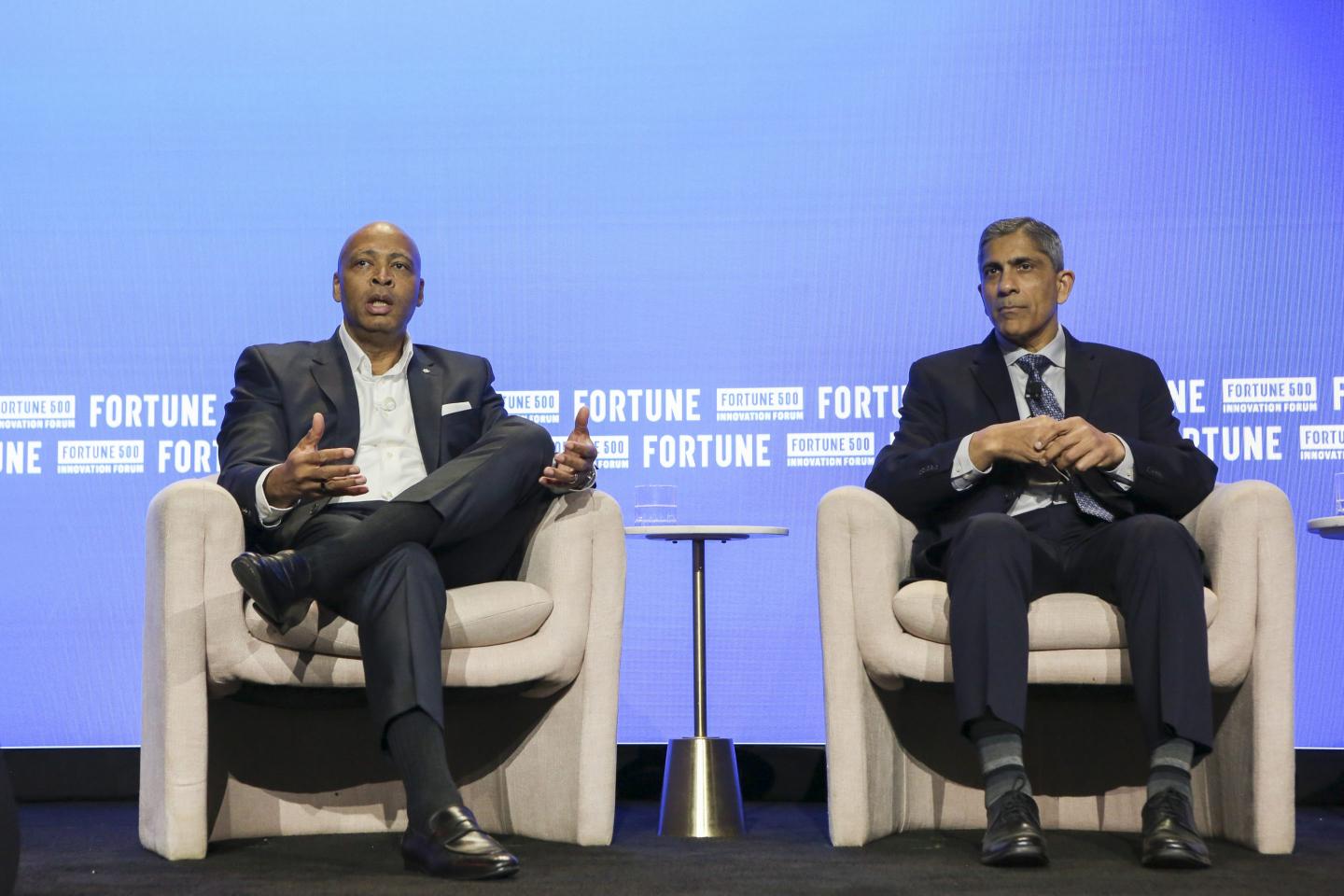
Artificial intelligence is reshaping industrial work, but not by eliminating the people who do it. That is the message from Honeywell Technologies CEO Vimal Kapur and C.H. Robinson CEO Dave Bozeman, who recently shared a stage at the Fortune 500 Innovation Forum in Detroit. Both executives argue that AI's real value lies in making human workers more productive, provided companies and employees commit to learning new skills.
Introduction
Kapur told attendees that AI is not about replacing industrial workers. Instead, he described it as a tool for making humans more productive. He noted that Honeywell, a 140-year-old industrial giant, has already spun off its advanced materials and aerospace divisions to concentrate on industrial automation, and is now applying AI to transform operations further.
Bozeman, whose logistics company traces its roots back 120 years, reported productivity gains of more than 60 percent since the end of 2022. C.H. Robinson has deployed specialized AI agents across its order-to-cash process to generate freight quotes, process shipment orders, and schedule pickups and deliveries. The technology handles repetitive administrative work so employees can focus on complex supply-chain challenges.
The discussion came as C.H. Robinson prepares to acquire rival freight broker RXO for $5.8 billion, a deal expected to close in early 2027. Bozeman characterized the acquisition as more than a scale play, saying the company plans to apply its AI-powered operating model, known as Lean AI, to RXO's operations and target roughly $300 million in annualized cost savings within two years of closing.
What Happened
Anxiety about AI replacing jobs is widespread among industrial employees, but Kapur pointed to history to ease those concerns. He recalled similar fears in the 1980s when computers were expected to replace engineers. Rather than eliminating the profession, computers changed how engineers worked.
Both CEOs emphasized that technology alone is not enough. Companies must redesign processes and ensure workers have the skills to use new tools effectively. Kapur said the next 18 to 24 months will require widespread reskilling across organizations, including at the executive level. He revealed that he personally completed training on Microsoft Copilot because leaders must understand the change firsthand before advising others.
Why This Matters
- AI is positioned as a productivity enhancer for industrial workers, not a replacement for them.
- C.H. Robinson reports more than 60 percent productivity gains since late 2022 through AI adoption.
- Specialized AI agents are handling repetitive tasks such as freight quotes and shipment scheduling.
- The pending $5.8 billion RXO acquisition is expected to generate about $300 million in annualized savings through AI integration.
- Executives and employees alike must reskill within the next 18 to 24 months.
Key Takeaways
The industrial sector's AI transition appears to be less about robots taking factory jobs and more about people learning to work alongside intelligent tools. As Honeywell and C.H. Robinson demonstrate, the companies that invest in both technology and workforce development may be best positioned to navigate the shift. For workers, the message is clear: adaptability and continuous learning will define the next era of industrial employment.
Discussion
Join the conversation
Thoughtful reactions, questions, and follow-up ideas help shape the next story.