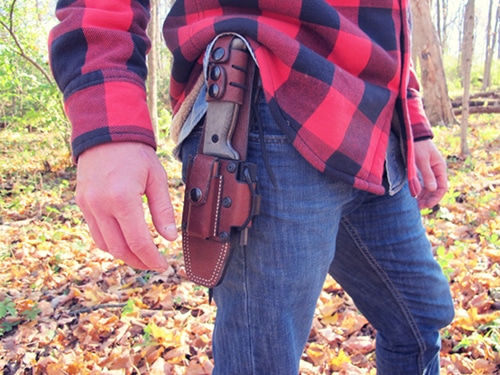
Few tools carry the weight of a good survival knife. For generations, a reliable cutting edge has helped humans secure food, build shelter, start fires, and stay safe in unpredictable situations. Despite modern technology, a quality blade remains one of the most practical resources you can keep within reach. The challenge is that not every knife marketed as a survival tool is actually built for real-world use.
What Happened
Wilderness survival instructor Creek Stewart breaks down the decision-making process behind choosing a dependable survival knife. Rather than focusing on flashy designs or movie-inspired props, the guide emphasizes six time-tested features that determine whether a knife will perform when it matters most. These include overall size, fixed-blade construction, full tang design, a sharp pointed tip, a single-edged blade with a flat ground spine, and a solid pommel.
Why This Matters
In an actual emergency, equipment failure can have serious consequences. A folding knife with a loose joint or a partial tang that separates under pressure can turn a manageable situation into a dangerous one. Understanding what makes a knife durable and versatile helps you avoid buying a decorative piece that fails under rigorous tasks like batoning wood, processing game, or driving shelter stakes.
Key Takeaways
- Size: Aim for roughly 9 to 11 inches overall. Too large, and fine tasks like carving snare triggers become difficult; too small, and heavy-duty work like splitting wood suffers.
- Fixed blade: A fixed blade is stronger and more reliable than a folding knife because it lacks a joint, which is a natural weak point.
- Full tang: The blade and handle should be one continuous piece of metal. Partial tangs can loosen over time, especially during chopping or prying.
- Sharp pointed tip: A spear-point style tip supports thrusting, self-defense, and detailed work such as cleaning game or making gear repairs.
- Single-edged blade with flat spine: A flat 90-degree grind on the spine allows you to strike a ferro rod for fire starting and provides a stable thumb rest for carving.
- Solid pommel: The butt of the handle should be substantial enough for light pounding, such as driving stakes into the ground.
Beyond these essentials, choices like blade steel, handle material, serrations, and sheath style largely come down to personal preference.
Conclusion
A survival knife is not a magic solution. Its real value depends on the skill of the person using it, and skill only develops through practice and repetition. Treat the knife as a working tool, not a display piece, and select one based on performance rather than appearance. When you choose wisely and train regularly, a dependable blade becomes a trustworthy companion in the backcountry and beyond.
Discussion
Join the conversation
Thoughtful reactions, questions, and follow-up ideas help shape the next story.