Introduction
The gap between America's economic extremes has rarely been so sharp. While the wealthiest households drive a disproportionate share of spending, the middle class faces a deepening structural squeeze. This divergence isn't just a statistic—it's reshaping consumer behavior, policy priorities, and the strategic calculations of major corporations.
What Happened
In mid-2026, SpaceX's blockbuster IPO cemented Elon Musk's status as the world's first trillionaire even as ordinary households felt the pinch of a shifting economy. Official data showed the U.S. household margin turning negative for the first time in years: wages rose 3.2% over the prior year, but consumer prices climbed 3.4%, leaving a -0.20-point spread. That gap represents a margin collapse exceeding 115% relative to pre-pandemic baselines. To stay afloat, many families have turned to credit; Buy Now, Pay Later usage for grocery purchases has doubled in two years, turning everyday essentials into deferred payments. Meanwhile, policy responses like the One Big Beautiful Bill Act deliver uneven relief, favoring top earners, while employers freeze hiring in middle- and entry-level roles, further constraining household earnings.
Why This Matters
When the economic floor erodes, the entire system feels the ripple. A diminished middle class reduces demand redundancy, making the economy more vulnerable if high-income spending retracts. The impact is not evenly distributed: analysis of Bureau of Labor Statistics data shows Native American women earning 53 cents for every dollar paid to white, non-Hispanic men, and roughly 510,000 Black women exiting the labor force within five months. Closing these disparities isn't merely social—economic modeling suggests narrowing the gaps could inject $3.1 trillion into U.S. GDP, covering roughly one-third of the Social Security funding shortfall. Policymakers and executives ignoring this structural misallocation do so at the nation's long-term peril.
Key Takeaways
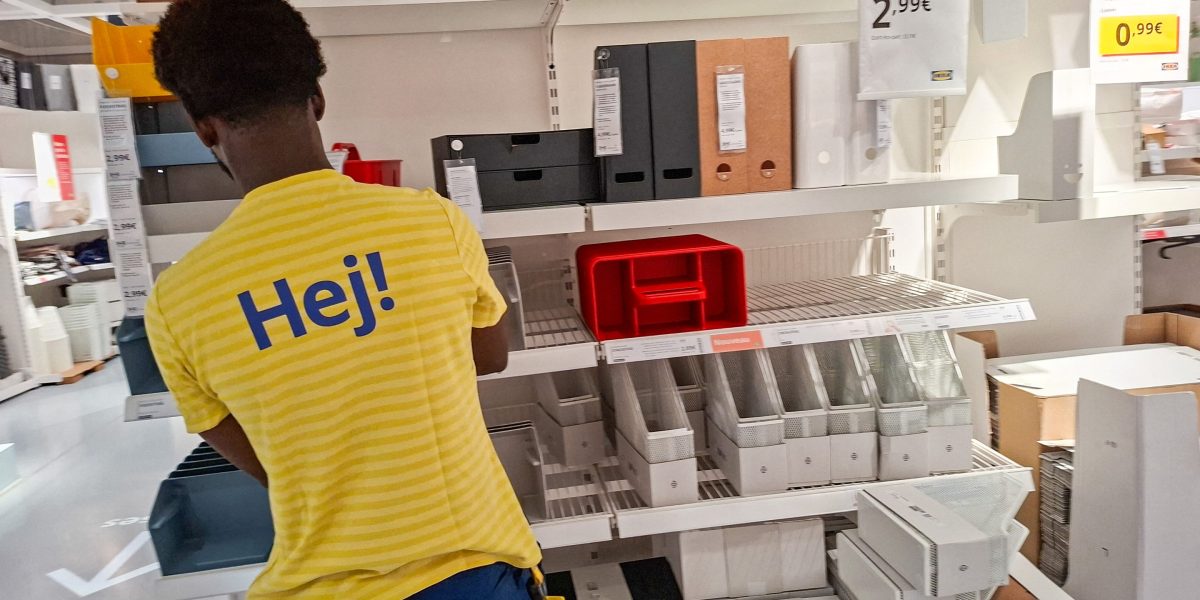
- IKEA's deflationary pricing strategy accepted a 0.9% revenue dip to €41.5 billion in fiscal year 2025, yet operating income climbed 16.8% to €1.46 billion as store visits hit 736 million.
- When geopolitical tensions threatened shipping routes, IKEA had already localized production, investing $70 million in an automated facility in North Carolina with backing from Inter IKEA to reduce maritime exposure and tar risk.
- The company committed €7.5 billion by 2030 to utility-scale wind and solar, already operating 49 wind farms and 26 solar parks to shield costs from fossil fuel volatility.
- IKEA's AI customer service bot, Billie, now handles 74% of routine inquiries; the retailer retrained 8,500 employees for complex service and design roles, driving remote sales centers to generate €1.25 billion in revenue and lifting customer satisfaction from 60% to 89%.
Conclusion
The contrast between the U.S. playbook of extraction and IKEA's investment-in-the-many model is stark. National solvency depends on a consumer base with genuine purchasing power, not one propped up by subprime credit. True economic strength in 2026 means building systems that keep umbrellas affordable when the rain falls, not pricing them out of reach. For executives and legislators alike, the lesson is clear: sustainable growth comes from strategic affordability and structural investment, not from engineering out the middle class.



Discussion
Join the conversation
Thoughtful reactions, questions, and follow-up ideas help shape the next story.