Introduction
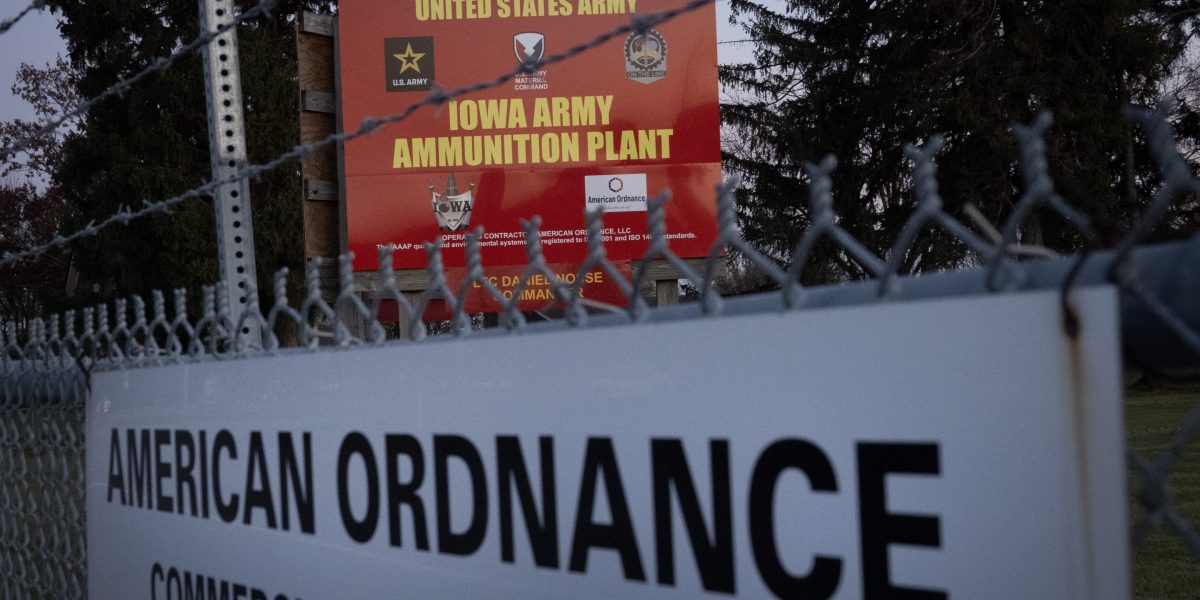
A federal appeals court has temporarily stopped the U.S. Army from detonating nearly five tons of degraded lead azide at the Iowa Army Ammunition Plant, but the legal fight is far from over. The Justice Department has signaled that the military could still move forward without the paused permit by invoking an emergency regulation. With the blast rescheduled for Monday, communities in southeastern Iowa and western Illinois are bracing for a weekend of uncertainty over whether a cloud of lead-contaminated dust will drift over their homes and farmland.
What Happened
The U.S. Court of Appeals for the Eighth Circuit issued a brief order late Thursday pausing an emergency permit the Environmental Protection Agency granted on November 13. The EPA had determined that the aging explosive material presented an imminent and substantial danger to human health and the environment. The stay remains in effect while the court considers an emergency motion from two environmental groups seeking to keep the permit blocked.
In a filing on Friday, Justice Department lawyers representing the EPA said they would oppose that motion. They pointed to federal rules that allow the Army to conduct waste treatment without an EPA permit during qualifying emergencies when there is an immediate threat to safety, property, or the environment. The filing did not confirm whether the Army intends to detonate the material while the court's pause is active.
The 68 drums of lead azide, an explosive used to initiate munitions, have sat at the Middletown facility for more than two decades, submerged in ethanol and water. Army officials say the chemical has degraded and recrystallized, making it dangerously sensitive to friction and shock. Acting Army Secretary Adam Telle said the Army moved the detonation from Friday to Monday because it was the last viable window before a predicted temperature drop could further destabilize the substance.
Iowa Governor Kim Reynolds activated the State Emergency Operations Center on Friday evening to coordinate state, federal, and local agencies ahead of the possible blast. The Army has asked some residents of Middletown, a town of roughly 360 people, to evacuate during the operation because the explosion could shatter windows.
Why This Matters
The central issue is not just whether the blast happens, but how the public was informed and what protections are in place. The Iowa Environmental Council and the Sierra Club Iowa Chapter argue that the EPA issued the permit without the required public notice and comment period, failed to fully examine safer alternatives, and did not include adequate health and environmental safeguards.
Health concerns are significant. The detonation is expected to release a plume of dust containing lead. Army modeling for a Friday blast projected that dust would settle across a roughly 25-mile area north of the plant, with lower levels of airborne lead traveling even farther. Iowa health officials have said there is no known safe threshold for lead exposure. Environmental attorneys have criticized Army guidance suggesting residents simply hose lead dust off their property, calling that advice misleading given how lead persists in soil and water.
The case also raises questions about the use of emergency provisions to bypass standard permitting. Earthjustice senior attorney Thien Chau characterized the emergency provision as a rare and extreme measure, and said the environmental groups strongly urge the Army not to rely on it. Meanwhile, a bipartisan group of federal and state officials, including Illinois Governor JB Pritzker and Senators Dick Durbin and Tammy Duckworth, has asked the Army and EPA to delay the detonation and explore safer options.
Key Takeaways
- The Eighth Circuit paused the EPA's emergency permit for the lead azide detonation at the Iowa Army Ammunition Plant.
- The Justice Department says the Army may still proceed without the permit under federal emergency rules.
- The blast is currently set for Monday, November 23, though the court could rule sooner.
- Sixty-eight drums of degraded lead azide have been stored at the site for over 20 years.
- Environmental groups say the permit lacked proper public notice and sufficient consideration of alternatives.
- Lead exposure carries no known safe threshold, and residents are worried about dust drifting across Iowa and Illinois.
- Governor Kim Reynolds has activated the state emergency operations center in response.
Conclusion
The Eighth Circuit could issue a decision before Monday. If the court sides with the environmental groups, the permit remains on hold while the underlying case proceeds. If it denies their request, the pause lifts and the Army would be free to detonate under the existing permit. Whether the military would then use the emergency exception to move forward anyway remains unresolved.
For now, residents near the plant are waiting for clarity on a situation that has been years in the making. The material's degradation was reportedly discovered in March 2026, and critics say authorities waited until the final days to make the plans public. As the legal clock runs down, the focus remains on whether a controlled explosion can be carried out without endangering the health of nearby communities.
Discussion
Join the conversation
Thoughtful reactions, questions, and follow-up ideas help shape the next story.