Introduction
\nMeta is staking its claim as the frontrunner in the race toward a post-smartphone world, positioning smart glasses as the next major interface for artificial intelligence. After years of refinement, the company is blending high-end fashion with cutting-edge AI, aiming to make wearable tech indispensable rather than novel.
\n\nWhat Happened
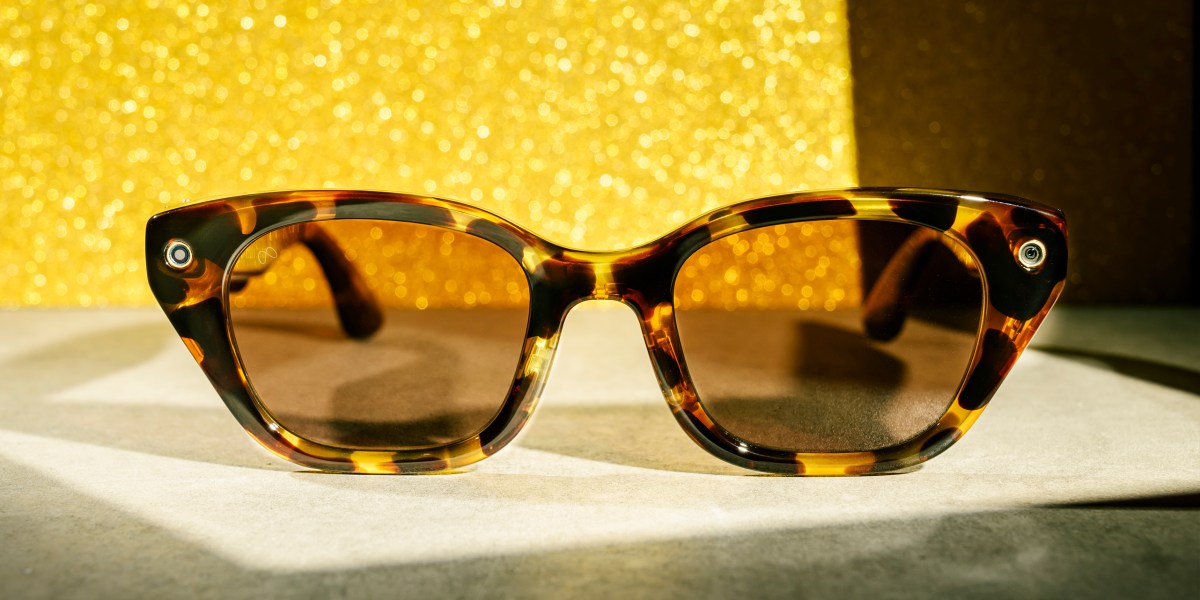
\nFortune was granted access to a private demo at Meta's Menlo Park headquarters, where the company showcased its latest wearable lineup. The display ranged from the flagship Ray-Ban Wayfarer camera-enabled glasses with an updated nine-hour battery life, to models featuring a neural wristband that interprets finger taps, and even audio-only frames that ditch the camera entirely. Prototypes like the Orion augmented reality glasses hint at a future where digital overlays blend seamlessly with everyday vision. Meta also highlighted new styles, including Aviator frames, and revealed pricing starting at $349 for audio-only versions and $449 for the third-generation camera-enabled Ray-Bans. The event underscored Meta's strategy: grow sales threefold within a year, reaching 7 million pairs sold in 2025, and cement smart glasses as a daily habit through design and comfort.
\n- \n
- Flagship Ray-Ban Wayfarer glasses with nine-hour battery life \n
- Neural wristband enabling control via finger taps \n
- Audio-only smart glasses starting at $349 \n
- Prototype Orion AR glasses for immersive computing \n
- New Aviator and Clubmaster style options \n
Why This Matters
\nThe implications extend far beyond novelty. Control over how billions of people access AI is at stake, and smart glasses represent a strategic hardware platform that could redefine human-computer interaction. With the majority of U.S. adults already wearing corrective lenses, the form factor is naturally accessible, though challenges around battery life, data privacy, and tethering to smartphones remain significant. Meta's position is particularly notable because its AI models lag behind rivals like OpenAI and Anthropic, yet its glasses dominate the market. A strategic partnership with EssilorLuxottica has been instrumental, delivering devices that prioritize style without sacrificing functionality. However, the race is intensifying: OpenAI, Apple, Snap, and numerous startups are all developing competing form factors, each betting on a different vision of what AI-first hardware should look and feel like. Privacy concerns also loom large. Class-action lawsuits allege that user footage was shared with third-party reviewers, and the industry-wide tension between always-on sensors and personal space continues to shape public trust.
\n- \n
- Control over AI access is a strategic battleground \n
- Two-thirds of U.S. adults wear corrective lenses, making glasses a natural form factor \n
- Privacy lawsuits and data handling are critical trust factors \n
- Competition from OpenAI, Apple, Snap, and HTC is accelerating \n
- Battery and tethering limitations may keep devices phone-dependent for years \n
Key Takeaways
\nMeta's smart glasses line demonstrates that fashion-first design and early market entry can overcome significant technical and privacy hurdles. The neural wristband, agentic AI capabilities, and hologram features showcase how deeply AI can be integrated into everyday eyewear, while the company's partnership with EssilorLuxottica proves that style and technology can coexist. Yet, the broader industry faces a recurring challenge: earning user trust when devices constantly capture audio, video, and environmental data. As the market expands, competition will likely sharpen around three fronts: hardware design, AI capability, and privacy infrastructure. For consumers, the takeaway is clear—smart glasses are no longer a niche experiment, but a rapidly maturing category that will likely share the post-smartphone landscape with smartphones, tablets, and whatever form factor emerges next.
\n- \n
- Fashion and function are now inseparable in wearable AI \n
- Agentic AI and hologram features signal the next evolution of interaction \n
- Privacy and data transparency will determine long-term adoption \n
- The post-smartphone era will be defined by multiple coexisting form factors \n
Conclusion
\nMeta is proving that smart glasses can be more than a novelty—they can be a daily driver for AI interaction, provided they look good, feel light, and respect user privacy. With 7 million pairs sold in 2025 and a growing suite of AI-powered features, the company has secured a leading position in a category that could fundamentally shift how we engage with digital information. Whether the future is dominated by glasses, audio-only frames, or entirely new form factors remains to be seen, but one thing is clear: the race to define the post-smartphone world is already underway, and Meta is running at the front of the pack.



Discussion
Join the conversation
Thoughtful reactions, questions, and follow-up ideas help shape the next story.