Introduction
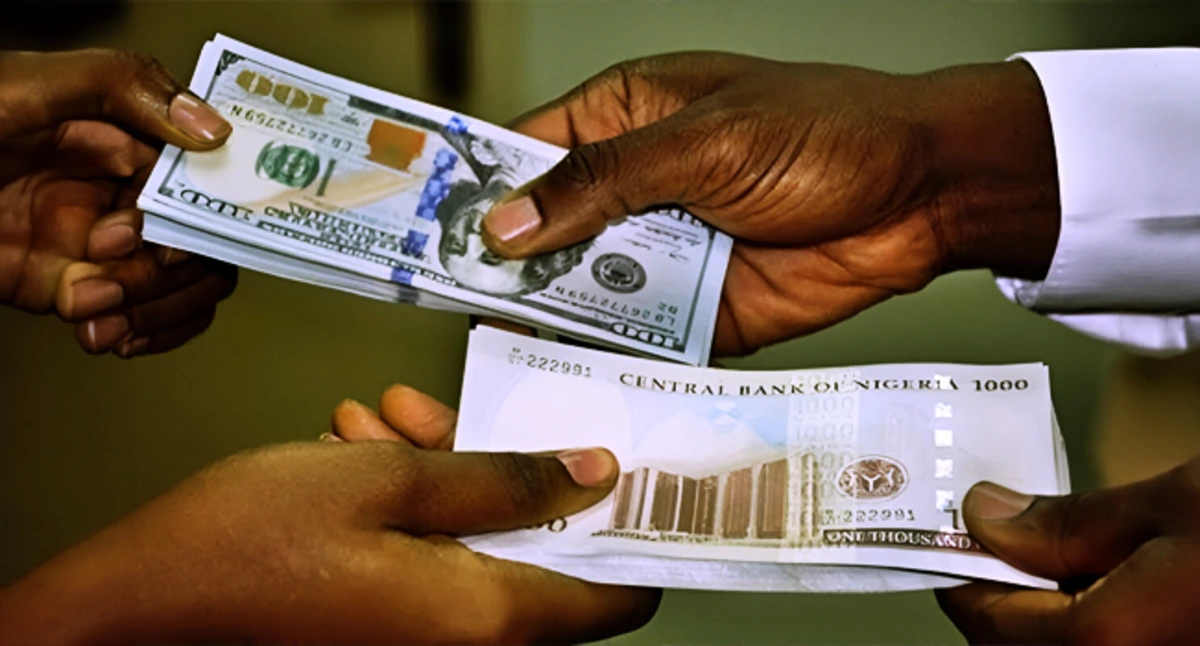
Nigeria's currency faced renewed pressure in the informal foreign exchange market last week, even as the official window moved in the opposite direction. The naira traded at N1,445 per US dollar in the parallel market on Thursday, November 12, 2026, reflecting fresh demand from bureau de change operators. Meanwhile, the Central Bank of Nigeria's official market recorded a modest gain, creating a wider divide between the two rates.
What Happened
According to BDC operators in Abuja, the dollar changed hands at N1,445 in the parallel market, up from N1,430 the previous day. That N15 depreciation pushed the gap between the informal and official rates to N86.50.
On the official Nigerian Foreign Exchange Market (NFEM), the naira appreciated by 0.37 percent, closing at N1,358.50 per dollar compared with N1,364 per dollar in the prior session. The CBN reported that the official rate traded between N1,348 and N1,363.75 during the day.
Market participants linked the parallel-market weakness partly to seasonal demand, with some buyers securing dollars ahead of the festive period. Broader drivers of the divide include speculation, arbitrage, and fiscal leakages, which have historically contributed to differences between official and informal quotations.
Trading activity on the official market also picked up. Interbank transactions reached approximately $644.85 million on November 12, compared with total NFEM turnover of about $397.54 million on November 11.
Why This Matters
A widening spread between official and parallel rates often signals strain in a country's foreign exchange system. For businesses and individuals who cannot access dollars at the CBN rate, the parallel market becomes the de facto reference point, affecting import costs, travel budgets, and inflation expectations.
The divergence also comes at a time when Nigeria's external reserves are moving in mixed directions. Gross reserves grew by $295.35 million in October 2026, the slowest monthly increase recorded this year, while net reserves climbed to a record $46 billion, up from $34.80 billion at the end of 2025.
Globally, the US dollar remained near a 19-month high, supported by expectations of a larger Federal Reserve interest-rate increase. That strength pressured several major currencies, including the euro and Japanese yen, adding external headwinds for emerging-market currencies such as the naira.
Key Takeaways
- The parallel-market naira rate weakened to N1,445 per dollar on November 12, 2026, from N1,430 the day before.
- The official rate appreciated to N1,358.50 per dollar, widening the gap between the two markets to N86.50.
- BDC operators cited festive-season demand as one factor behind renewed pressure in the informal market.
- NFEM interbank turnover rose to roughly $644.85 million, up from about $397.54 million in total turnover the previous day.
- Nigeria's net foreign exchange reserves reached a record $46 billion, while gross reserves posted their slowest monthly gain of 2026.
- A stronger US dollar globally added pressure on multiple currencies, including the naira.
Conclusion
The naira's split performance-gaining in the official window while losing ground among street traders-underscores the persistent fragmentation in Nigeria's foreign exchange market. Until the gap between official and parallel rates narrows, businesses and households are likely to keep feeling the effects of a two-tier currency system. Market watchers will be watching reserve trends, CBN intervention, and seasonal dollar demand to see whether the divide stabilizes or widens further in the coming weeks.
Discussion
Join the conversation
Thoughtful reactions, questions, and follow-up ideas help shape the next story.