Introduction
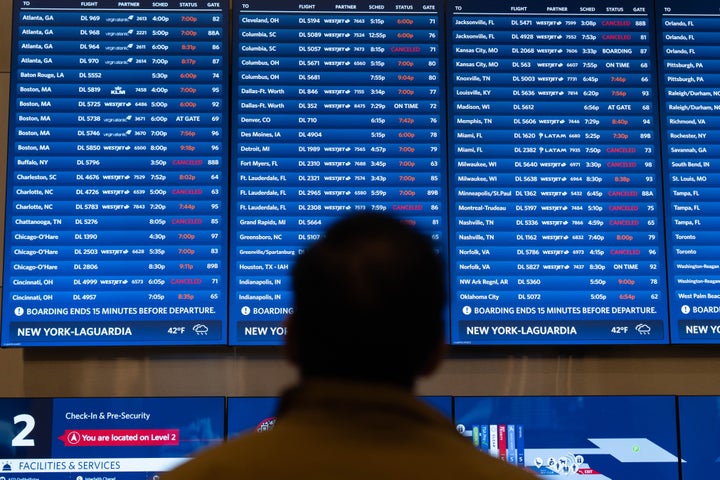
On Friday, November 13, the Federal Aviation Administration ordered an unprecedented nationwide ground stop, halting departures at airports across the United States. The disruption left travelers stranded and renewed debate over whether the nation’s air traffic control infrastructure can keep pace with modern demand.
What Happened
The FAA cited a communications issue affecting all Air Route Traffic Control Centers. Transportation Secretary Sean Duffy said the problem stemmed from the agency’s legacy network, where switches and routers became overwhelmed by data and failed. The exact trigger for the overload remains unclear.
Operations resumed after more than four hours, though Duffy cautioned that returning to full capacity would take additional time. According to aviation analytics firm Cirium, roughly 11,000 flights carrying about 1.5 million departing passengers were scheduled after 4 p.m. Eastern Time, shortly after the ground stop began.
The Department of Homeland Security said there was no indication the outage resulted from a malicious attack.
Why This Matters
The incident occurred the same day the White House and Transportation Department requested another $30.1 billion from Congress for airport and air traffic control upgrades, including $10.1 billion specifically for modernization. It also followed a Government Accountability Office report from 2024 that labeled 51 of the FAA’s 138 air traffic control systems as unsustainable, with another 54 deemed potentially unsustainable.
FAA Administrator Bryan Bedford has described the agency’s more than 300 facilities as technological silos, some still dependent on decades-old computers and telecommunications gear. In some cases, replacement parts must be sourced from online auctions or produced with 3D printers.
Key Takeaways
- A rare nationwide ground stop halted U.S. flight departures for over four hours on November 13.
- The FAA traced the outage to an overloaded legacy communications network, not a cyberattack.
- About 11,000 flights and 1.5 million departing passengers were affected during the peak evening period.
- Federal auditors have repeatedly warned that most FAA air traffic control systems are aging or unsustainable.
- Congress approved $12.5 billion for modernization in July 2025, but planning and coordination gaps remain.
Conclusion
Friday’s shutdown was the first nationwide ground stop since January 2023, when a safety notice system failure disrupted more than 10,000 flights. While the FAA reports progress replacing copper lines with fiber, officials warn that hardware upgrades alone will not solve deeper architectural problems. With the first phase of modernization targeted for December 2028, travelers and policymakers alike face an open question: can the current system hold until the overhaul is complete?
Discussion
Join the conversation
Thoughtful reactions, questions, and follow-up ideas help shape the next story.