Introduction
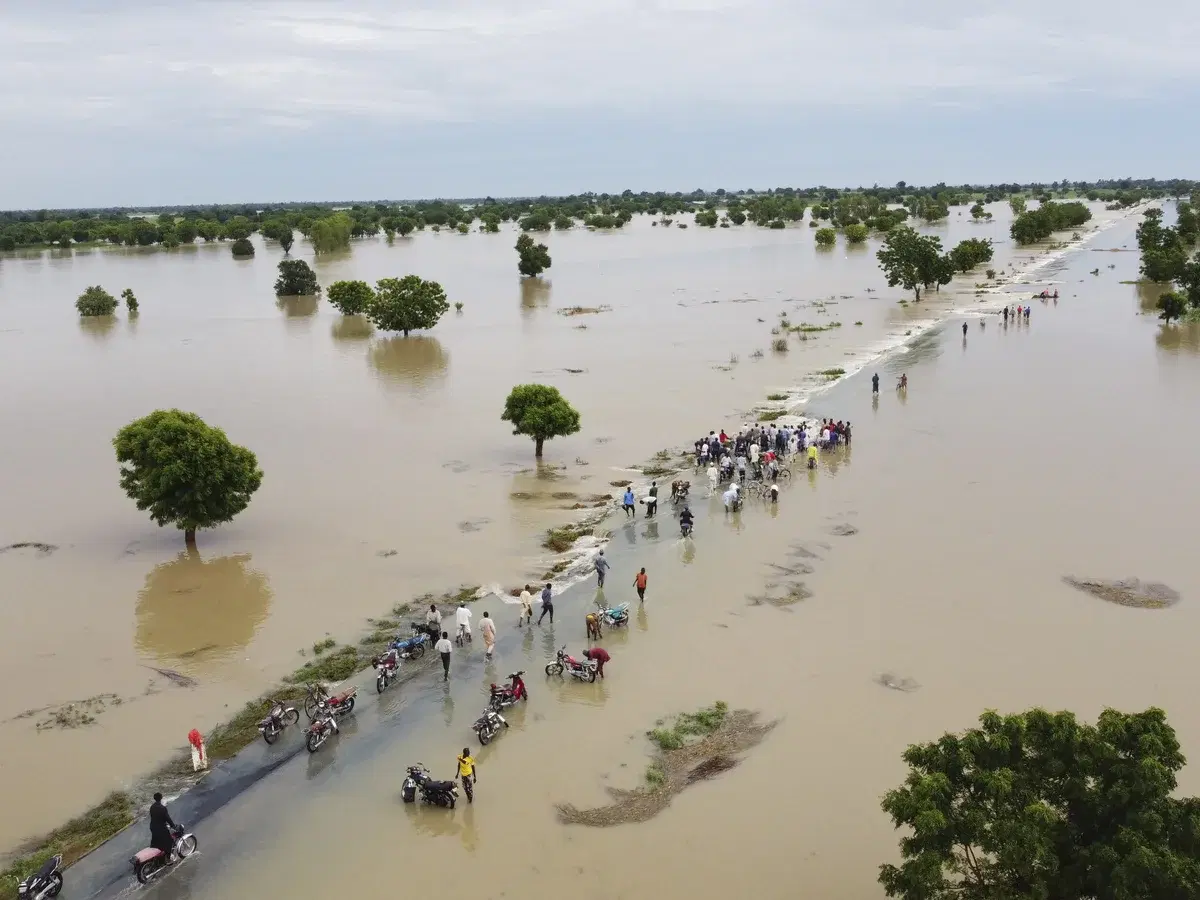
The Nigeria Hydrological Services Agency has issued a critical seven-day flood warning affecting 15 states, urging immediate relocation of residents in vulnerable communities. With river levels rising across Imo, Cross River, and thirteen other regions, the advisory highlights widespread risk to homes, schools, and farmland.
What Happened
NiHSA’s Director-General, Arch Umar Mohammed, announced the flood risk spanning September 19 to 25, 2026. The warning covers Imo State, where seven local government areas including Aboh-Mbaise and Ideato North face exposure of nearly 958 communities, over 1,000 schools, and 161 markets. Cross River State follows with eight affected LGAs, 2,471 communities, 703 schools, and 854 hectares of farmland under threat. Additional states such as Ebonyi, Benue, Anambra, Akwa Ibom, Edo, Bayelsa, Enugu, Kogi, Delta, Abia, Taraba, Rivers, and Lagos are also listed, with detailed exposure data provided for healthcare facilities, religious buildings, and agricultural land across each region.
Why This Matters
The advisory signals a significant threat to public safety, education, and agriculture across a broad swath of Nigeria. With over 2,500 communities, hundreds of schools, and numerous healthcare facilities identified as exposed, the flood risk could disrupt learning, delay medical services, and damage harvests. Residents in flood-prone areas are urged to relocate to higher ground without delay, while state governments are expected to coordinate emergency preparedness and relief efforts.
Key Takeaways
- NiHSA has flagged a seven-day flood risk across 15 Nigerian states
- Imo and Cross River states face the most extensive community and facility exposure
- Over 2,500 communities, 1,000+ schools, and hundreds of healthcare centers are at risk
- Affected states include Ebonyi, Benue, Anambra, Akwa Ibom, and eight others
- Immediate relocation to safer ground is the primary recommended action
- State governments and local authorities are urged to activate emergency protocols
Conclusion
The NiHSA flood warning serves as an urgent call for residents in at-risk areas to prioritize safety by moving to higher ground and staying informed through official channels. With the rainy season progressing, proactive measures and community cooperation will be essential to minimize loss and protect lives across the affected states.



Discussion
Join the conversation
Thoughtful reactions, questions, and follow-up ideas help shape the next story.