Introduction
Nvidia is expanding its RTX Spark lineup beyond laptops and into small-form-factor desktops, with the first Windows 11 machines expected to arrive before the end of the year. Priced from roughly $4,400, these compact computers are being pitched as local AI hubs for the home, putting them in direct competition with Apple’s Mac Studio and AMD’s Ryzen AI Max workstations.
What Happened
According to Nvidia, the RTX Spark desktop family begins at approximately $4,400, with a base configuration that includes 64GB of unified memory. Costs climb as buyers add more RAM. Every desktop variant is built around a 20-core CPU paired with a 6,144-core GPU, distinguishing the new systems from the earlier DGX Spark machines that were designed primarily for local AI workloads. The desktops will run Windows 11 and are intended to serve as always-on devices capable of handling on-device AI models.
Nvidia also introduced Nvidia Pair, software intended to let AI agents operate across multiple devices on the same network. The company argues that running these models locally will cost far less in electricity than processing hundreds of tokens through a cloud-based service.
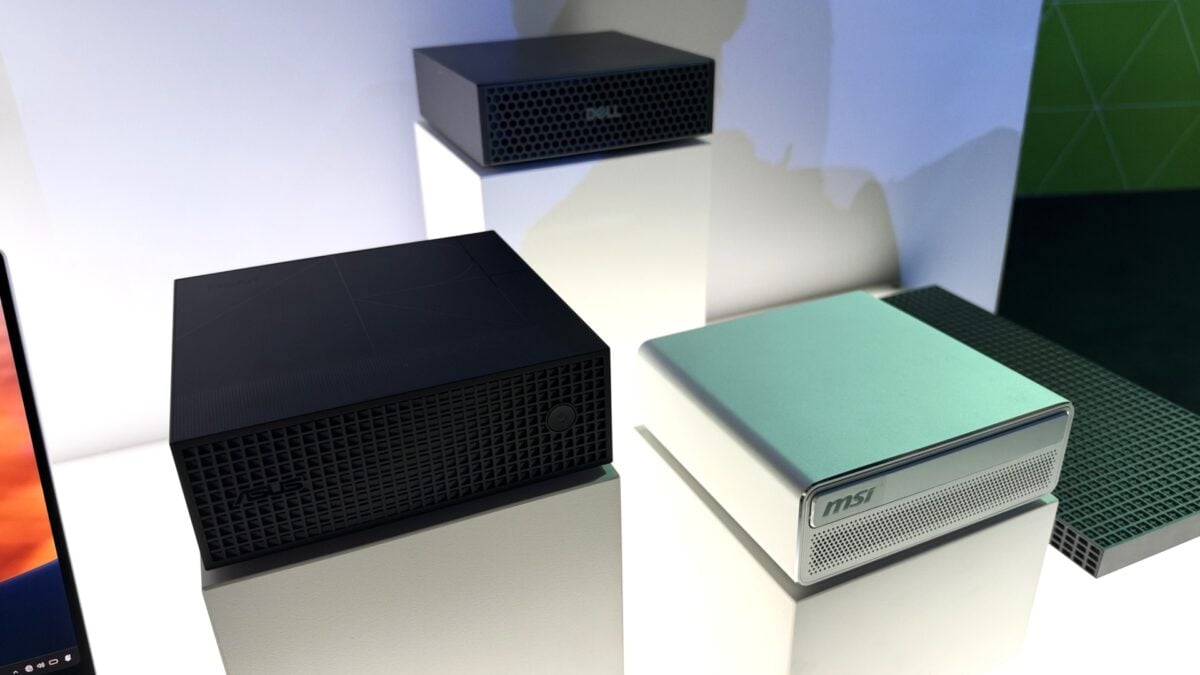
Hardware partners include Asus, Acer, Dell, Gigabyte, HP, Lenovo, and MSI. Models from Asus, Dell, MSI, and HP are available starting today, while Acer’s compact RTX Spark is expected in early 2027.
Why This Matters
Nvidia is positioning these machines as practical alternatives to Apple’s high-end desktop lineup. The Mac Studio starts at $2,500 for an M5 Max configuration with 36GB of unified memory, while a higher-end M5 Max with a 40-core GPU can exceed $3,099. The top-tier M5 Ultra Mac Studio begins at $5,499. By comparison, Nvidia’s entry price is significantly higher, even though the desktops offer more base memory.
The source material notes that RTX Spark systems may not match Apple’s latest M-series chips in raw CPU and GPU performance. Still, Nvidia is betting that local AI capabilities, broad OEM support, and the promise of lower long-term operating costs will appeal to consumers and professionals who want to keep AI workloads off public clouds.
Key Takeaways
- RTX Spark desktops start around $4,400 and include 64GB of unified memory at the base level.
- All desktop models use a 20-core CPU and a 6,144-core GPU variant.
- Systems run Windows 11 and are designed to run local AI models as always-on home devices.
- Nvidia Pair software enables AI agents to work across networked devices.
- Competitors include Apple’s Mac Studio and AMD’s Ryzen AI Max+ 495 workstations, such as the Framework Desktop.
- Asus, Dell, MSI, and HP models are available now; Acer’s version arrives in early 2027.
- The article questions whether RTX Spark can match Apple’s M-series chips in raw performance.
Conclusion
Nvidia’s move into RTX Spark desktops signals a broader push to bring AI processing into the home, but the high starting price and unproven performance advantage over Apple’s silicon leave room for skepticism. With several OEMs on board and a mix of immediate and delayed release dates, the coming months will reveal whether consumers are willing to pay a premium for local AI hardware—or if cloud-based alternatives remain the more practical choice.
Discussion
Join the conversation
Thoughtful reactions, questions, and follow-up ideas help shape the next story.