Introduction
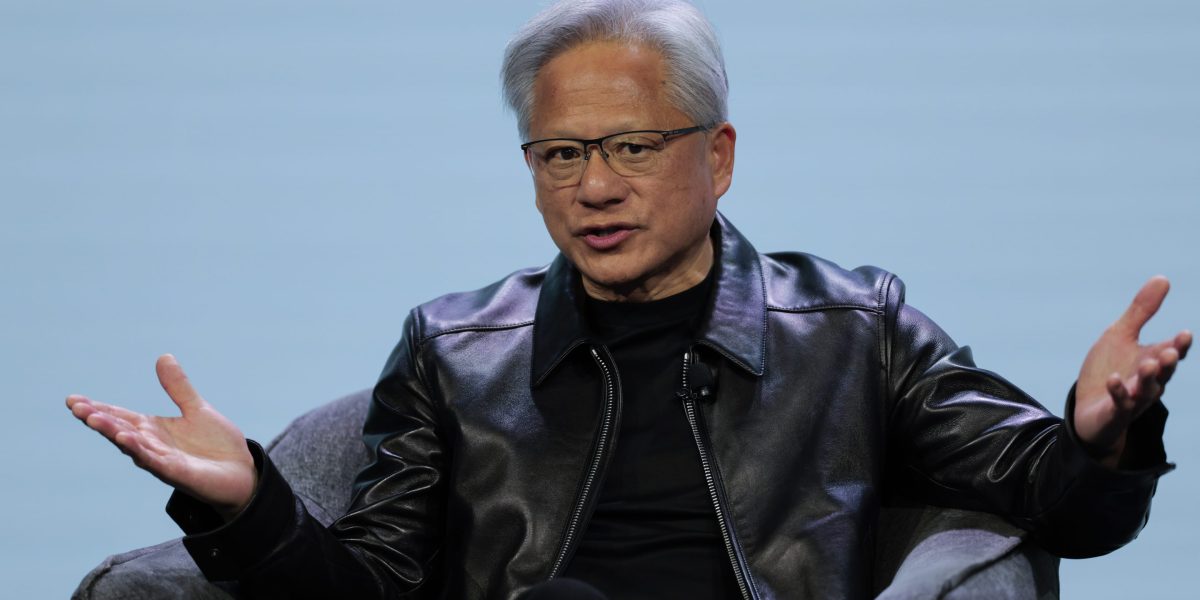
Jensen Huang’s abrupt departure from Nvidia is doing more than dominating technology headlines. It is sending tremors through a specialized corner of the artificial intelligence economy: the neoclouds. These data-center operators borrow heavily to acquire Nvidia processors and rent out computing capacity, and many of their loans rest on the assumption that Nvidia itself stands behind their business. With Huang gone, investors are asking whether those assurances still carry the same weight.
What Happened
Nvidia announced on Thursday that Huang resigned as president, chief executive officer, and board member, effective immediately. The move followed his disclosure of an extramarital relationship with an individual U.S. intelligence officials suspect has ties to Chinese intelligence, along with a board investigation into the matter. Chief Financial Officer Colette Kress was named interim chief executive, and Harvey Jones became the company’s first board chair.
The timing is significant because AI infrastructure firms are carrying enormous debt. CoreWeave reported roughly $35 billion in debt at the end of June, while Nebius held about $329 million in Nvidia-owned shares during the same period. These companies do not simply buy chips in bulk; they depend on financial structures that encourage lenders to extend billions in credit.
Why This Matters
Nvidia’s involvement goes well beyond hardware sales. Starting in July, the company offered to rent unused GPU capacity back from neocloud partners at a fixed rate, effectively establishing a revenue floor. It also joined a $500 billion financing platform with six institutional partners, potentially backstopping up to $125 billion. Joe Kaiser, founder of Switchyard Partners and former leader of Mercato Partners, said that written guarantee is what persuades institutions such as Blackstone and Brookfield to finance neocloud projects at lower interest rates.
Kaiser warned that if lenders decide Nvidia’s backing is less reliable than it was previously, neocloud operations could face serious difficulty. CoreWeave shares fell roughly 9% on Thursday after gaining 25% the day before, while Nebius dropped 16% alongside weak full-year guidance. Nvidia’s market value declined by about $450 billion in the days surrounding the revelations about Huang.
The implications reach OpenAI and SoftBank’s SB Energy, which may be among the primary beneficiaries of Nvidia’s backstop arrangements. Discussions have reportedly centered on a potential $250 billion backstop connected to an Ohio data-center campus being developed by SB Energy.
Key Takeaways
- Jensen Huang stepped down as Nvidia’s president, CEO, and board member effective immediately after a board investigation into an extramarital affair.
- Neocloud providers including CoreWeave and Nebius depend on Nvidia chips and financial guarantees to obtain large-scale debt from institutional lenders.
- Nvidia’s GPU rental program and role in a $500 billion financing platform helped reduce borrowing costs for AI infrastructure companies.
- CoreWeave carried approximately $35 billion in debt at the end of June, leaving it particularly exposed to any perceived decline in Nvidia’s support.
- Nvidia’s lead in AI training may persist for two to three years because of CUDA software dependencies, but competition in inference workloads is growing.
- Rivals such as AMD, Broadcom, Qualcomm, Cerebras, and Etched, as well as cloud giants Google and Amazon, could benefit if uncertainty surrounds Nvidia’s leadership transition.
Conclusion
Huang’s departure creates what Kaiser described as a leadership and vision gap at a firm organized around a centralized management model with dozens of direct reports. He likened the situation to Intel after Andy Grove left the CEO role in 1998, noting that revenue continued for a period but margins suffered and the company did not adjust as effectively to new chip demand.
For neoclouds, the pressing question is whether banks will continue to treat Nvidia’s guarantees as dependable. If confidence erodes, financing AI data centers could become more expensive, and the era of low-cost, Nvidia-backed infrastructure debt may fade. At the same time, Google and Amazon could move in by offering their own processors and balance sheets to AI developers. Whether Nvidia can preserve its dominance without its longtime public face remains a central question for the semiconductor sector.
Discussion
Join the conversation
Thoughtful reactions, questions, and follow-up ideas help shape the next story.