Introduction
An OpenAI engineer was arrested last month after authorities allege he used his wife's ChatGPT account to design a hidden recording device planted at the company's San Francisco headquarters. The case has drawn attention to how artificial intelligence tools can be repurposed for physical security breaches.
What Happened
According to court documents unsealed Tuesday, Abdulrahman Alfozan, 35, prompted ChatGPT to outline a "continuous audio recorder" and other surveillance components. He allegedly concealed a thumb-sized Seeed XIAO ESP32-S3 Sense board behind a conference room television in one of OpenAI's San Francisco buildings. The device was discovered on September 30 wrapped in toilet paper behind a TV during a routine sweep. Staff found no recoverable data on the microSD card.
- Alfozan used AI prompts to specify encryption, power-only USB output, and a second unit with speech-triggered recording.
- CCTV placed Alfozan near the conference room on ten different days in September, including the day the firmware was compiled.
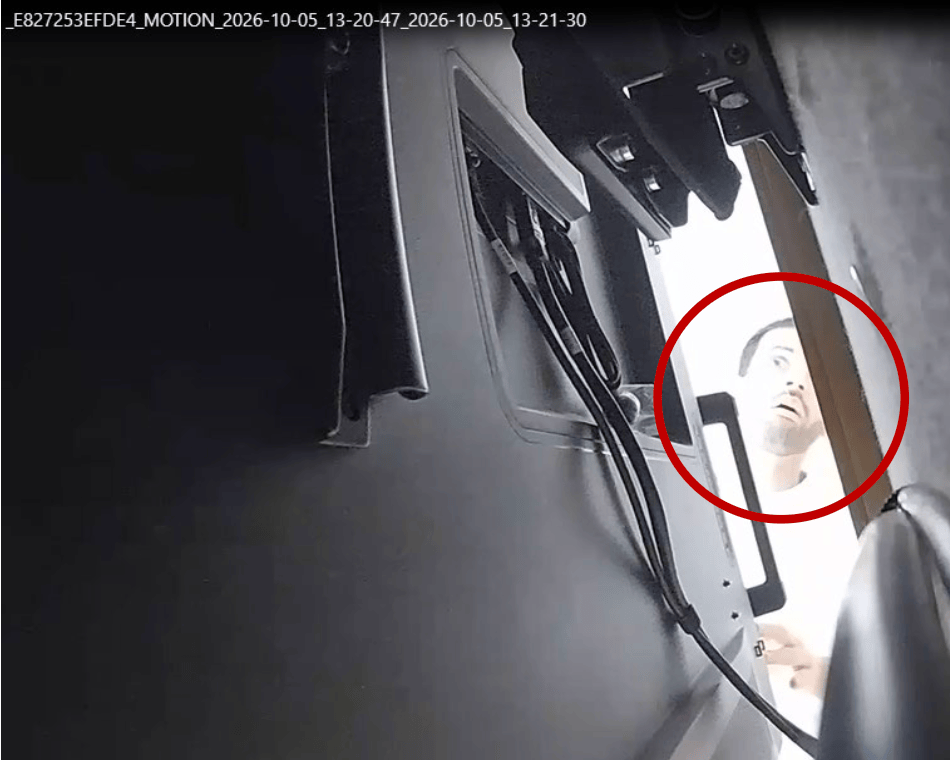
- Security footage from October 1 shows Alfozan checking behind the TV at 1:20 p.m., shortly after the device was discovered.
Why This Matters
The federal complaint charges Alfozan under the Wiretap Act, carrying up to five years in prison. Prosecutors allege he attempted to flee the country before his arrest on October 9, one day after his wife, Alfozan, and a third family member booked one-way tickets to Saudi Arabia via Istanbul. OpenAI and the FBI have partnered on the investigation, emphasizing the protection of proprietary research and development from insider threats.
Officials from the Director of National Intelligence and FBI leadership have stated that safeguarding American innovation from foreign and insider threats remains a top counterintelligence priority. OpenAI said it has no indication the engineer accessed model weights, source code, or customer data.
Key Takeaways
- Alfozan faces one federal count under the Wiretap Act; the government has sought no bail and deportation as a possible penalty.
- The alleged recording device never produced recoverable audio; forensic analysis of the microSD card found no decryptable files.
- Prosecutors say Alfozan used OpenAI's internal productivity agent to identify conference rooms suitable for high-powered meetings with external partners.
- The case underscores how chatbot interfaces can be manipulated to assist in physical security planning.
- OpenAI and U.S. authorities are coordinating on the legal response, with a grand jury able to add charges under the Speedy Trial Act.
Conclusion
Alfozan is due back in court on October 19 for a detention hearing. The case highlights the growing intersection of artificial intelligence, cybersecurity, and physical security in high-stakes tech environments. As the legal proceedings unfold, the industry will be watching how authorities balance innovation with protection against covert surveillance.


Discussion
Join the conversation
Thoughtful reactions, questions, and follow-up ideas help shape the next story.