Introduction
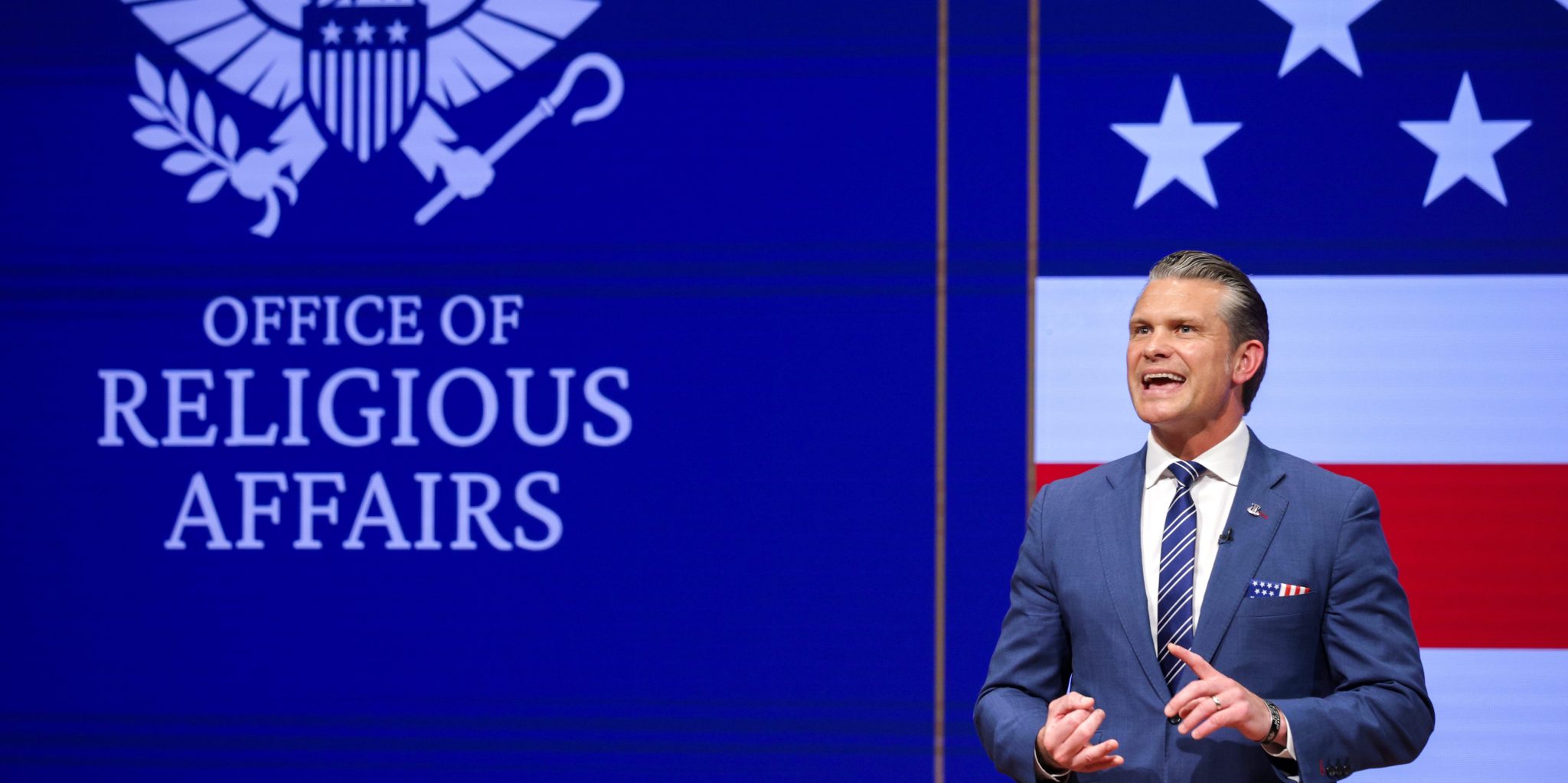
Defense Secretary Pete Hegseth has established a new Office of Religious Affairs at the Pentagon, a decision that has sparked immediate concern among military chaplains and advocacy groups. The office aims to give chaplains direct access to leadership, but critics warn it may advance a Christian-centric agenda within the armed forces.
What Happened
On September 30, 2026, Hegseth announced the office during a State of the Force address at Marine Corps Base Quantico, Virginia. The Pentagon stated the office would provide chaplains unfiltered access to leadership without bureaucratic dilution. The announcement coincides with Hegseth's Send Me campaign, which promotes a biblical phrase widely understood as a divine mission call. Critics point to Hegseth's visible Christian symbolism, including a Jerusalem cross and the Latin phrase Deus vult as evidence the office could institutionalize one faith tradition over others.
Why This Matters
Military chaplains serve all service members regardless of faith or belief. The new office's director will report directly to Hegseth and the deputy defense secretary, overseeing the Armed Forces Chaplains Board and civilian religious endorsement groups. Chaplains fear this consolidated control could make it harder to maintain pluralism, especially if spiritual fitness assessments or funding priorities favor Christian organizations. An active-duty chaplain told The Intercept he worries the office may be used to advance a specific religious viewpoint, making it difficult to advise non-Christian soldiers on moral and ethical dilemmas.
Key Takeaways
- The new Office of Religious Affairs reports directly to the defense secretary, bypassing typical bureaucratic layers.
- Chaplains worry the office could be used to prioritize Christian programming and resources over other faith traditions.
- Pentagon leadership says prayer services remain voluntary and constitutional rights are protected.
- Recent changes to the military's Religious Affiliations Code have already removed or obscured identities of Unitarian Universalists, Black churches, and Wiccan and Pagan groups.
- Funding priorities include faith-based home-school support and suicide-reduction programs, raising questions about equity across faith groups.
Conclusion
As the Pentagon moves forward with the Office of Religious Affairs, the central question remains whether the office will uphold religious pluralism or advance a specific faith tradition within the U.S. military. Chaplains and advocacy groups say only time and oversight will tell if non-Christian service members are truly protected, or if the new office tilts the balance toward Christian dominance.




Discussion
Join the conversation
Thoughtful reactions, questions, and follow-up ideas help shape the next story.