Introduction
Moving into a rental often means accepting the space exactly as it is, especially when the landlord draws a hard line at permanent changes. For one tenant, that meant living with a dated kitchen that felt more like a retro diner than a cozy home. Instead of accepting the red-toned cabinetry and yellowing laminate, they set out to create something moody, cinematic, and entirely their own—without touching a drill or risking their security deposit.
What Happened
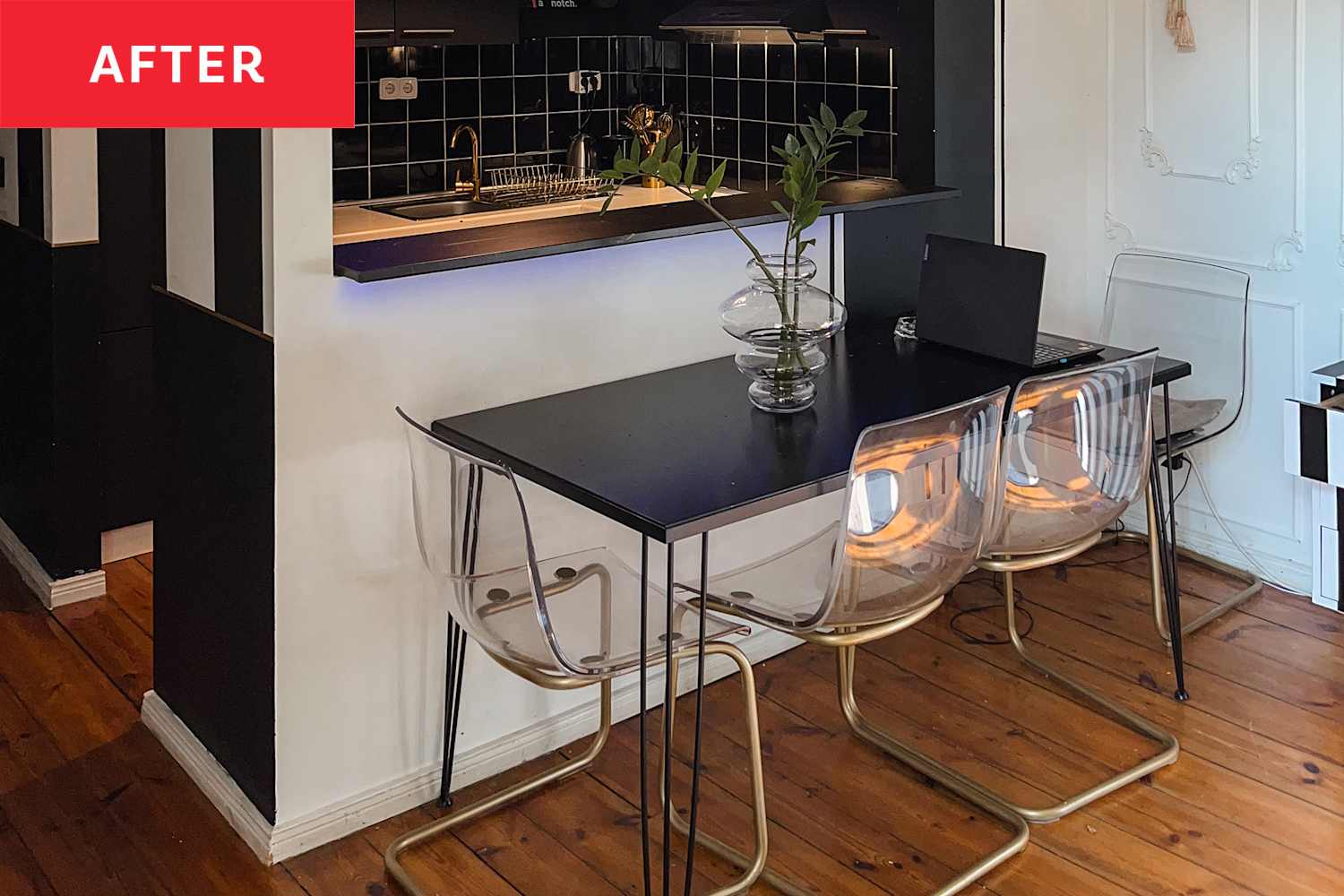
The kitchen arrived with 1990s-style red cabinets and worn laminate countertops. Because the lease prohibited removing cabinets, drilling holes, or making lasting alterations, the renter turned to removable solutions. Black matte contact paper covered the cabinets, while leftover marble-pattern contact paper refreshed the counters. The original white backsplash, described as feeling sterile, was replaced with peel-and-stick tiles.
Paint played a supporting role. The recessed area above the cabinets and a partition near the dining table were coated in black to add depth. In the adjacent hallway, 15-centimeter-wide stripes were painted across the ceiling, converging toward the kitchen to tie the spaces together. Gold hardware, including a secondhand faucet, and a blue neon sign added glamour and personality. Even the pendant light received a custom striped finish to match the ceiling.
The entire transformation cost roughly €220, or about $250, and left the deposit intact.
Why This Matters
Rental restrictions often discourage tenants from personalizing their homes, but this project shows that creative, temporary materials can deliver dramatic results. Contact paper, stick-on tiles, and removable paint choices allow renters to refresh a space without violating lease terms. For anyone living in a rental with outdated features, the story offers a practical blueprint for upgrading a kitchen on a tight budget.
Key Takeaways
- Black matte contact paper can instantly modernize dated cabinets without permanent changes.
- Peel-and-stick tiles offer a renter-friendly alternative to traditional backsplash installation.
- Buying about 20 percent more contact paper than estimated helps avoid delays from mismeasurement.
- Using a credit card to smooth bubbles and a hairdryer for stubborn corners simplifies application.
- Gold hardware and neon lighting can add luxury and playfulness for a modest cost.
- The full makeover was completed for approximately €220 while protecting the security deposit.
Conclusion
A rental kitchen does not have to feel like a compromise. With removable materials, strategic paint accents, and a few secondhand finds, it is possible to create a moody, personalized space that feels like home. This makeover proves that creativity and careful planning can outweigh a limited budget—and that even strict lease rules leave room for style.
Discussion
Join the conversation
Thoughtful reactions, questions, and follow-up ideas help shape the next story.