Introduction
The Russia-North Korea relationship has taken a tangible turn with the inauguration of a new cross-border road bridge, the first of its kind connecting the two nations directly. The structure, spanning the Tumen River, represents more than just engineering - it signals a strategic deepening of ties amid shifting geopolitical dynamics.
What Happened
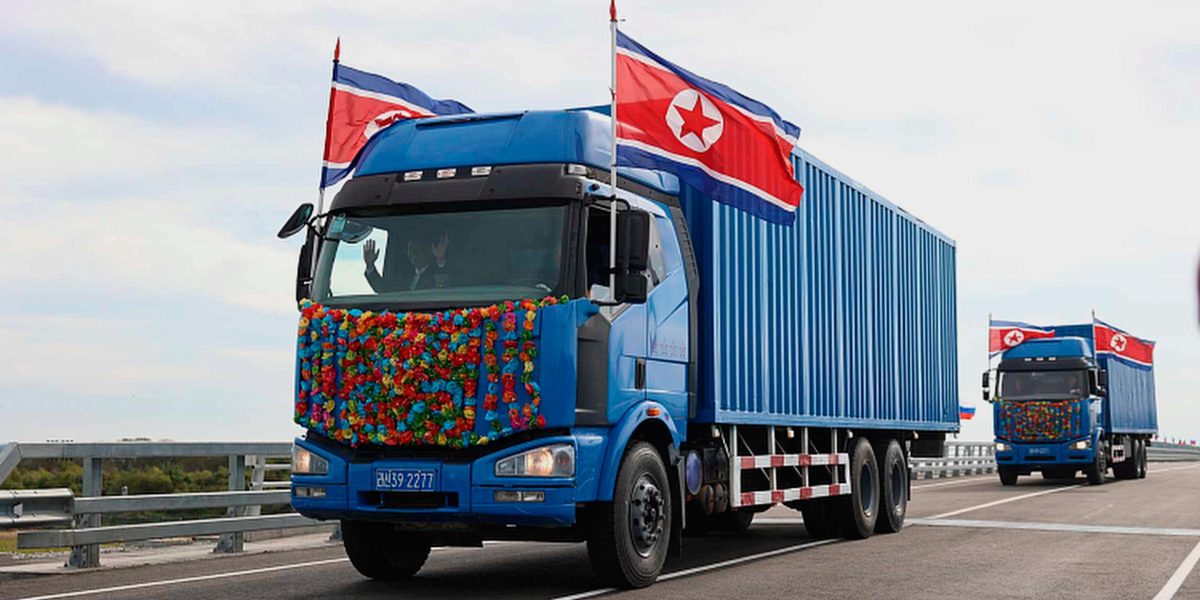
The bridge opening ceremony occurred Monday, with Russian Prime Minister Mikhail Mishustin and North Korean Premier Pak Thae Song participating via video link from their respective capitals. The 1-kilometer, two-lane structure connects the border cities of Rason and Khasan, designed for up to 300 vehicles daily. Named in honor of Soviet Colonel Yakov Novichenko, credited with protecting North Korea's founder Kim Il-sung from an assassination attempt in 1946, the project was completed after construction began last year following a 2024 agreement.
Why This Matters
Beyond the immediate logistics of moving goods and people, the bridge underscores the expanding partnership between Moscow and Pyongyang, particularly as North Korea supplies munitions and troops to support Russia's war effort in Ukraine. Experts note that while the crossing could facilitate limited freight and passenger movement, its impact on broader trade remains uncertain given that roughly 98% of North Korea's external commerce still flows through China. There are also concerns the structure may ease covert transfers that are harder to monitor than the existing rail routes, where cargo transfers at the border provide natural inspection points.
Key Takeaways
- The bridge is the first road link directly connecting Russia and North Korea, spanning the Tumen River.
- It has a two-lane design capable of handling up to 300 vehicles per day.
- Named after Soviet officer Yakov Novichenko, credited with saving Kim Il-sung in 1946.
- Inaugurated via video link by Russian PM Mishustin and North Korean Premier Pak.
- Reflects deepening military and economic cooperation, especially amid the Ukraine conflict.
- Represents only a small fraction of North Korea's trade, 98% of which still moves through China.
- Raises monitoring challenges for intelligence agencies compared to existing rail border points.
Conclusion
The opening of this road bridge marks a notable milestone in Russia-North Korea relations, offering a new physical conduit for people and limited cargo while symbolizing a broader strategic alignment. As both nations continue to expand their cooperation across transport, military, and economic spheres, the bridge's actual operational impact will depend on regulatory oversight and the evolving geopolitical context. Observers will be watching whether this infrastructure investment translates into sustained trade growth or remains a symbolic gesture in a complex regional landscape.



Discussion
Join the conversation
Thoughtful reactions, questions, and follow-up ideas help shape the next story.