Introduction
Living in a compact studio often means rethinking every piece of furniture. For one renter on Manhattan’s Upper East Side, the biggest constraint wasn’t style or comfort—it was floor space. Her solution? She skipped the traditional nightstand entirely and turned to an overlooked surface already sitting next to her bed.
What Happened
When Michaela Jonsson began searching for a new apartment, she knew her budget would limit her options. She found a 250-square-foot studio that fit her price range, but the tight layout left little room for bulky furniture. Rather than squeeze in a standard nightstand, she looked at the architecture around her bed and spotted a practical alternative hiding in plain sight.
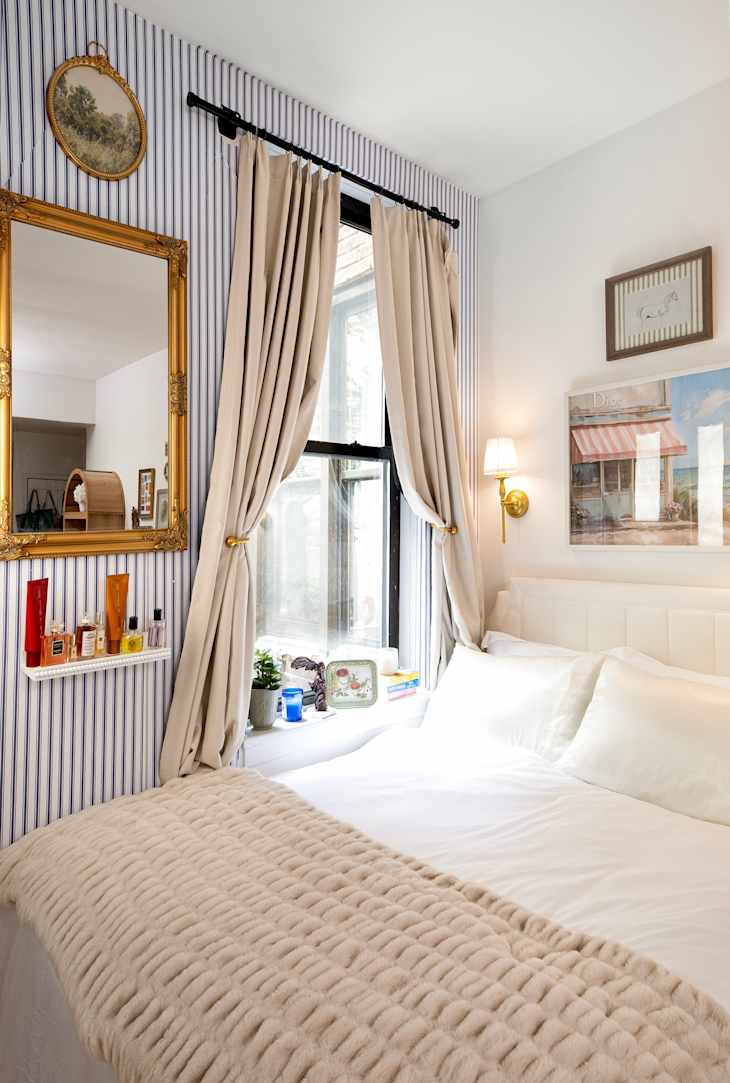
One side of Michaela’s bed sits directly against a wall with a window. Instead of leaving the windowsill empty, she transformed it into a functional bedside surface. She uses the ledge to hold books, candles, and small plants, keeping nightly essentials within arm’s reach without sacrificing square footage.
To make up for the missing nightstand, she placed two three-shelf bookcases with cabinets on either side of her couch, which shares the same wall as the headboard. This arrangement gave her more closed storage than a typical nightstand would provide, while keeping the room open and walkable.
She also wallpapered the window wall in stripes. The pattern contrasts with the leafy street outside and draws attention to the windowsill display, turning a utilitarian surface into a deliberate design feature.
Why This Matters
Nightstands are common, but they are not mandatory. In small bedrooms, every inch of floor space matters. Replacing a freestanding table with a windowsill can open up a pathway, reduce visual clutter, and make a studio feel larger. It also demonstrates how renters can work with existing architectural features instead of fighting against them.
Key Takeaways
- A windowsill can serve as a nightstand alternative in tight spaces.
- Books, candles, and plants work well on a bedroom windowsill.
- Bookcases with cabinets can provide more storage than a traditional nightstand.
- Wallpaper or paint on the window wall can highlight the new bedside area.
- Spaced-out placement keeps a windowsill display from looking cluttered.
Conclusion
If your bedroom lacks room for a nightstand, look at the wall beside your bed. A clean, sturdy windowsill might be all you need to keep your essentials close at hand. With a little styling and thoughtful placement, that overlooked ledge can become both a practical storage spot and a design focal point.
Discussion
Join the conversation
Thoughtful reactions, questions, and follow-up ideas help shape the next story.