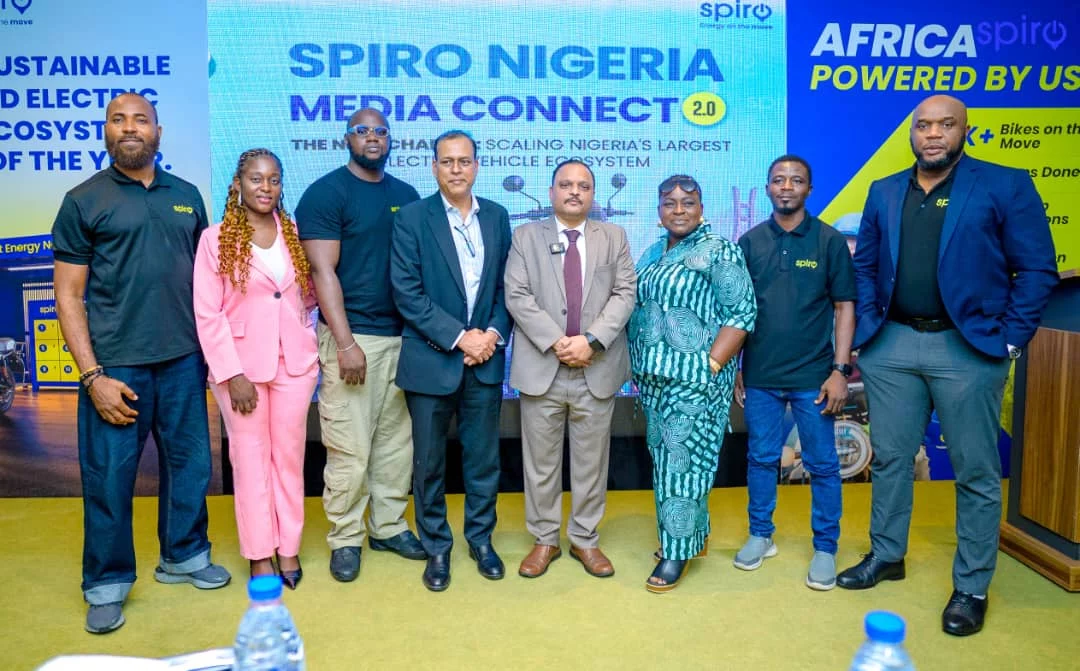
Spiro, the electric mobility company expanding across Nigeria, has outlined ambitious plans to grow its presence into four additional states and deploy 40 to 50 new energy stations by 2027. The goal: 100,000 electric bikes on the road, building on the company's existing footprint and a battery-swapping model designed to keep riders moving.
What Happened
At a media event in Lagos, Spiro's new Country Head and Managing Director, Prasad Sane, detailed the company's growth strategy. Since entering the Nigerian market in 2024, Spiro has already established operations in Lagos, Ogun, Oyo, and Benue states, operating 104 energy stations and 11 service stations. The company revealed plans to enter four more states in 2028, adding another 40 to 50 energy stations, with a long-term vision of approximately 200 stations across 11 to 12 states.
Why This Matters
Spiro's expansion represents a significant step toward reducing carbon emissions in Nigeria's transportation sector. The company's battery-swapping infrastructure allows riders to exchange depleted batteries for fully charged ones, minimizing downtime and supporting consistent vehicle use. Across Africa, Spiro reports over 150,000 electric bikes deployed, more than 2,500 battery-swapping stations, 50 million swaps, 220,000 tonnes of carbon saved, and over three billion CO2-free kilometres travelled. The company also highlighted sustainability efforts, including 7.3 megawatt-hours of secured solar capacity, a 10-megawatt solar plant under development, and plans to repurpose batteries for energy storage once they're no longer suitable for vehicles.
Key Takeaways
- Spiro plans to expand into four new Nigerian states and add 40–50 energy stations by 2027, targeting 100,000 bikes on the road.
- The company currently operates in Lagos, Ogun, Oyo, and Benue states with 104 energy stations and 11 service stations.
- Spiro's battery-swapping model enables faster rider turnaround and more efficient battery maintenance.
- Since 2024, the company has created 6,000 direct and indirect jobs in Nigeria, with women making up 40% of the manufacturing workforce.
- Spiro aims to reach approximately 200 energy stations across 11–12 states by its longer-term target.
- The company showcased its new Ekon M1V 3 motorcycle model, featuring alloy wheels, LED lighting, and a range of 80–100km per charge.
Conclusion
With fresh funding, a growing product lineup, and a clear infrastructure roadmap, Spiro is positioning itself as a central player in Nigeria's electric mobility transition. The next two years will test whether the company can translate its expansion plans, local assembly capacity, and sustainability commitments into widespread EV adoption across the country and beyond.






Discussion
Join the conversation
Thoughtful reactions, questions, and follow-up ideas help shape the next story.