Introduction
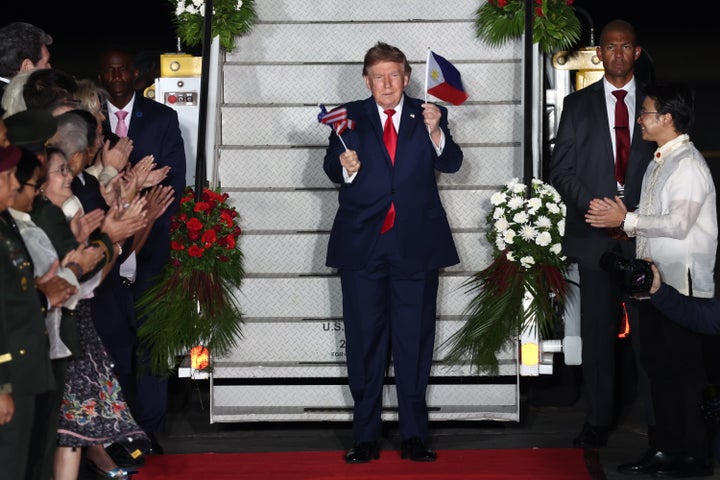
President Donald Trump has landed in the Philippines to open a high-stakes three-day tour of Asia. The visit marks his first international trip since his party faced significant losses in the recent midterm elections. While in Manila, the president is attending the annual Association of Southeast Asian Nations summit, holding bilateral talks, and pursuing new commercial agreements before traveling to China for discussions on nuclear policy.
What Happened
Upon arrival at Ninoy Aquino International Airport, Trump was greeted with ceremonial honors and quickly moved into a schedule of receptions and summits. He met with leaders of the Quad grouping—the United States, Australia, India, and Japan—for the first time since returning to the White House. During those talks, he announced plans for a maritime patrol aircraft exercise and a new accelerator focused on artificial intelligence development.
The president also signed a joint trade statement with Thailand. Under the arrangement, Thailand would reduce tariffs on most American goods and lower barriers for U.S. autos, food products, and pharmaceuticals. Trump said Thailand intends to purchase $2.6 billion in American agricultural products, with a formal agreement expected in the coming weeks.
On the sidelines, Trump addressed several ongoing controversies from Washington. He downplayed recent service disruptions involving Microsoft, the Federal Aviation Administration, and JPMorgan Chase online banking, telling reporters such incidents are an inevitable part of operating at a large scale. He also responded to reports about alleged Iranian plans involving a dirty bomb or chemical weapons, stating that any such action would carry severe consequences while adding that he hopes the reports are untrue.
Protests accompanied the visit. Roughly 1,500 demonstrators gathered in a Manila square, waving red flags and calling for an independent Philippine foreign policy. Riot police and thousands of security personnel were deployed to protect summit venues.
Why This Matters
The Philippines is Washington's oldest treaty ally in Asia, and the visit underscores the administration's effort to strengthen security and economic ties in the Indo-Pacific. The United States has rejected China's expansive claims in the South China Sea and has said it is obligated to come to the Philippines' defense if Filipino forces are attacked. With ASEAN leaders also working on a non-aggression pact with China regarding contested waters, Trump's presence adds weight to the regional balance of power.
The trip also carries domestic political significance. Traveling abroad shortly after midterm losses gives the White House an opportunity to project strength and diplomatic momentum. Meanwhile, the planned stop in China for three-way nuclear talks with President Xi Jinping and President Vladimir Putin—and a possible meeting with North Korean leader Kim Jong Un—signals that the tour extends well beyond trade and ceremonial events.
Key Takeaways
- Trump began a three-day Asia trip in the Philippines, attending the ASEAN summit as a guest of honor.
- The United States and Thailand signed a trade statement covering tariffs, autos, food, and pharmaceuticals, with $2.6 billion in agricultural purchases cited.
- Quad leaders agreed to a maritime patrol exercise and an artificial intelligence accelerator.
- Trump downplayed recent U.S. technology and aviation outages and addressed reports of potential Iranian attacks.
- Approximately 1,500 protesters rallied in Manila against the visit, while nearly 23,000 security personnel were deployed.
- The president is expected to meet Philippine leader Ferdinand Marcos Jr. and may reunite with former first lady Imelda Marcos.
- After Manila, Trump will travel to China for nuclear discussions involving Russia and potentially North Korea.
Conclusion
Trump's Manila stop blends alliance-building, trade promotion, and regional security messaging. From the Quad meeting to the Thailand trade statement, the administration is seeking concrete outcomes early in the Asia tour. The real tests may come later in the week, when the president sits down with Chinese and Russian leaders and weighs whether to meet with North Korea. For now, the Philippines visit sets the tone for a diplomatic swing that could shape U.S. relations across the Pacific for months to come.
Discussion
Join the conversation
Thoughtful reactions, questions, and follow-up ideas help shape the next story.