Introduction
President Donald Trump touched down in southern China on Wednesday, kicking off a high-stakes diplomatic swing that includes a first-of-its-kind trilateral session with Chinese President Xi Jinping and Russian President Vladimir Putin. The visit arrives at a delicate moment, with widespread technology disruptions in the United States casting a shadow over the president's efforts to project confidence and control on the world stage.
What Happened
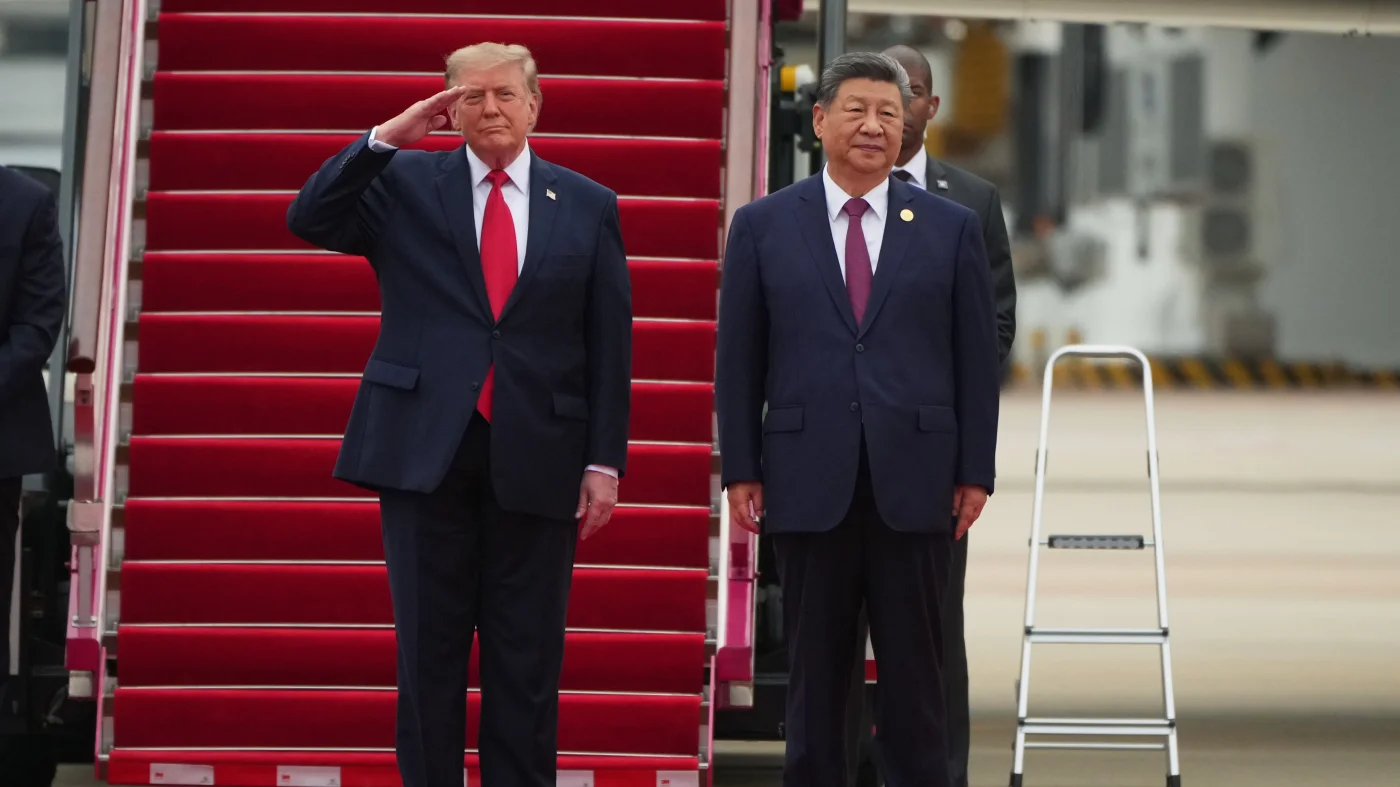
Trump arrived at Shenzhen Bao'an International Airport aboard Air Force One, where Xi personally greeted him on the tarmac—a rare honor that mirrored the welcome Xi received during a state visit to Washington last September. The two leaders shared a handshake and embrace as performers waved flowers and flags nearby. By contrast, Putin had arrived earlier without a similar airport reception from Xi.
The timing is complicated by a series of technical failures affecting American institutions, including Microsoft services, the Federal Aviation Administration, JPMorgan Chase, and communications networks tied to the National Security Agency. While in Manila earlier in the week, Trump dismissed the disruptions, describing them as a byproduct of running a "big and powerful" country. By the second day of the trip, Secretary of State Marco Rubio stepped in to calm concerns, telling reporters there was "zero" evidence linking the outages to foreign adversaries, hackers, or criminal actors.
On the diplomatic agenda, Trump plans to discuss nuclear arms control and a path toward ending the war in Ukraine during Thursday's trilateral meeting. He also raised the possibility of separate one-on-one sessions with Putin and North Korean leader Kim Jong Un, though Rubio clarified that no meeting with Kim is currently scheduled for Thursday. Before reaching China, Trump met with Philippine President Ferdinand Marcos Jr. in Manila, where the two sides announced a trade arrangement centered on energy and agricultural purchases, though specific terms were not released.
Why This Matters
The summit unfolds against rising anxiety about artificial intelligence and cybersecurity. The U.S. outages have highlighted how dependent daily life has become on stable digital infrastructure, from banking to air travel. At the same time, the removal of Nvidia CEO Jensen Huang following reports of a relationship with an individual alleged to have ties to Chinese intelligence has intensified debate over Beijing's access to advanced American semiconductors.
Trump's decision to engage Xi and Putin together—while maintaining a cooler posture toward traditional allies in Europe and North America—signals a deliberate shift in foreign-policy emphasis. The president has said he does not intend to raise Taiwan during the talks, though he acknowledged that Xi is likely to bring up the self-governing island, which China claims as its own territory.
Key Takeaways
- Trump met Xi in Shenzhen for a tarmac welcome before planned trilateral talks with Putin.
- U.S. technology outages involving Microsoft, the FAA, JPMorgan Chase, and NSA-linked networks occurred during the trip.
- Secretary of State Marco Rubio said there is no evidence connecting the outages to foreign governments or hackers.
- Thursday's meeting is expected to cover nuclear weapons and the war in Ukraine, though analysts do not anticipate major breakthroughs.
- Trump suggested possible separate meetings with Putin and Kim Jong Un, but none with Kim is set for Thursday.
- A trade deal with the Philippines was announced, focusing on energy and farm products, though details remain scarce.
- Trump said he will not initiate discussion on Taiwan, but expects Xi to raise the issue.
Conclusion
As Trump navigates his final years in the White House, the China leg of his Asian tour offers a chance to reshape relationships with two of Washington's most significant rivals. Yet the domestic technology failures trailing the president underscore a central tension of the trip: the United States is trying to project strength abroad while contending with visible vulnerabilities at home. Whether the Shenzhen talks produce concrete results or remain largely symbolic, the meeting marks a notable moment in U.S. diplomacy—and a test of how personal relationships between world leaders can influence global affairs.
Discussion
Join the conversation
Thoughtful reactions, questions, and follow-up ideas help shape the next story.