Introduction
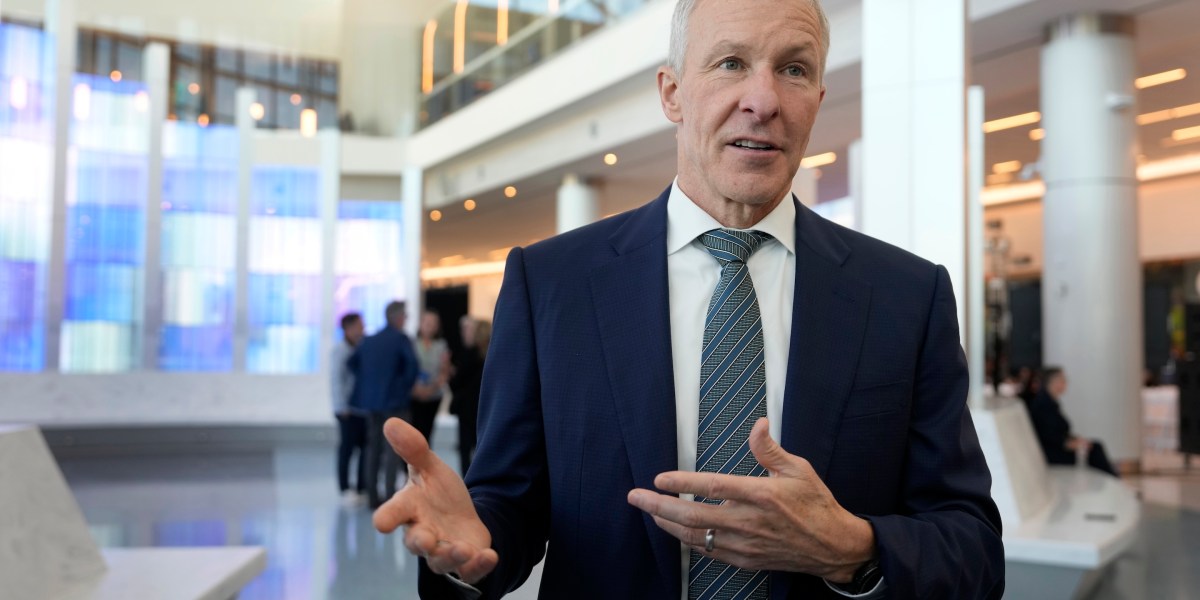
United Airlines chief executive Scott Kirby has placed himself at the center of a heated national debate over taxes and executive pay. In recent interviews, Kirby argued that the United States should adopt a national wealth tax and consider inheritance levies approaching 100 percent at the highest levels. The stance is notable not just for its substance, but for the messenger: Kirby received roughly $32.3 million in total compensation last year, according to United's proxy statement. While he insists his comments are personal and not a political platform, the contrast between his paycheck and his policy preference has drawn sharp criticism and renewed questions about fairness in the American tax system.
What Happened
Kirby first raised the issue in a wide-ranging conversation with The New York Times in mid-October. He characterized growing wealth gaps as a threat to the country and said he would personally pay a wealth tax. A few days later, he appeared on CNBC's Squawk Box to elaborate, describing the concept as fundamentally about fairness. He pointed out that under current law, assets can grow in value for years without being sold or taxed, allowing the richest individuals to avoid income tax on unrealized gains.
The reaction was immediate. Fox Business reached out to United Airlines asking how Kirby reconciled his compensation with his warnings about inequality. The company did not respond. Meanwhile, Kirby's proposal arrived as California voters weighed a similar idea at the state level. In early November, Californians rejected Proposition 40, a ballot measure that would have imposed a one-time 5 percent tax on residents with net worth above $1 billion. The Associated Press called the race on November 9, with 52.8 percent of voters opposed.
Why This Matters
Kirby's position stands out because he leads a major corporation on the 2026 Fortune 500 list. United Airlines generated $59.1 billion in revenue over the past year, placing Kirby among the most prominent business leaders to publicly endorse a wealth tax. His argument centers on the difference between income and wealth: the federal government taxes wages and salaries, with the top rate of 37 percent applying to single filers earning more than $626,350 in 2025, according to the IRS. However, unsold investments that appreciate in value are not taxed until they are realized.
Critics say the proposal raises practical and constitutional questions. Mariana Trujillo, managing director of government finance at the libertarian-leaning Reason Foundation, told Fortune that annual wealth taxes discourage investment and entrepreneurship. She pointed to Europe, where France, Sweden, and Germany abandoned national wealth taxes amid concerns about capital flight, administrative costs, and weak revenue. Norway, Spain, and Switzerland still maintain net wealth taxes, according to the Tax Foundation. Trujillo also suggested that if Kirby wants to use his fortune to help others, he is free to donate it voluntarily rather than relying on government redistribution.
Key Takeaways
- United Airlines CEO Scott Kirby received approximately $32.3 million in total compensation last year, based on the company's proxy statement.
- Kirby supports a national wealth tax and inheritance taxes that could approach 100 percent at the top end, saying he would pay them himself.
- He argues the current system is unfair because unsold investments can grow indefinitely without being taxed, unlike ordinary income.
- California voters rejected Proposition 40, a state-level billionaire tax, with 52.8 percent opposed in November.
- Opponents, including the Reason Foundation, warn that wealth taxes can drive capital away and reduce investment and innovation.
- Kirby says his views are personal and that he has no interest in running for office or shaping policy directly.
Conclusion
Scott Kirby's call for a wealth tax has sparked a conversation about fairness, taxation, and the responsibilities of the ultra-wealthy. Whether the idea gains traction at the federal level remains uncertain, especially after California voters turned down a similar measure. For now, Kirby's comments highlight a growing tension between soaring executive compensation and public frustration over economic inequality. As the debate continues, the contrast between his $32.3 million paycheck and his demand for higher taxes on wealth will likely remain a focal point for both supporters and detractors.
Discussion
Join the conversation
Thoughtful reactions, questions, and follow-up ideas help shape the next story.