Introduction
Voice agents are moving from background assistants to active participants in digital and physical spaces. With GPT-Live, the interaction shifts from simple command-and-response to a dynamic partnership where the AI can observe reason and act in real time alongside the user.
What Happened
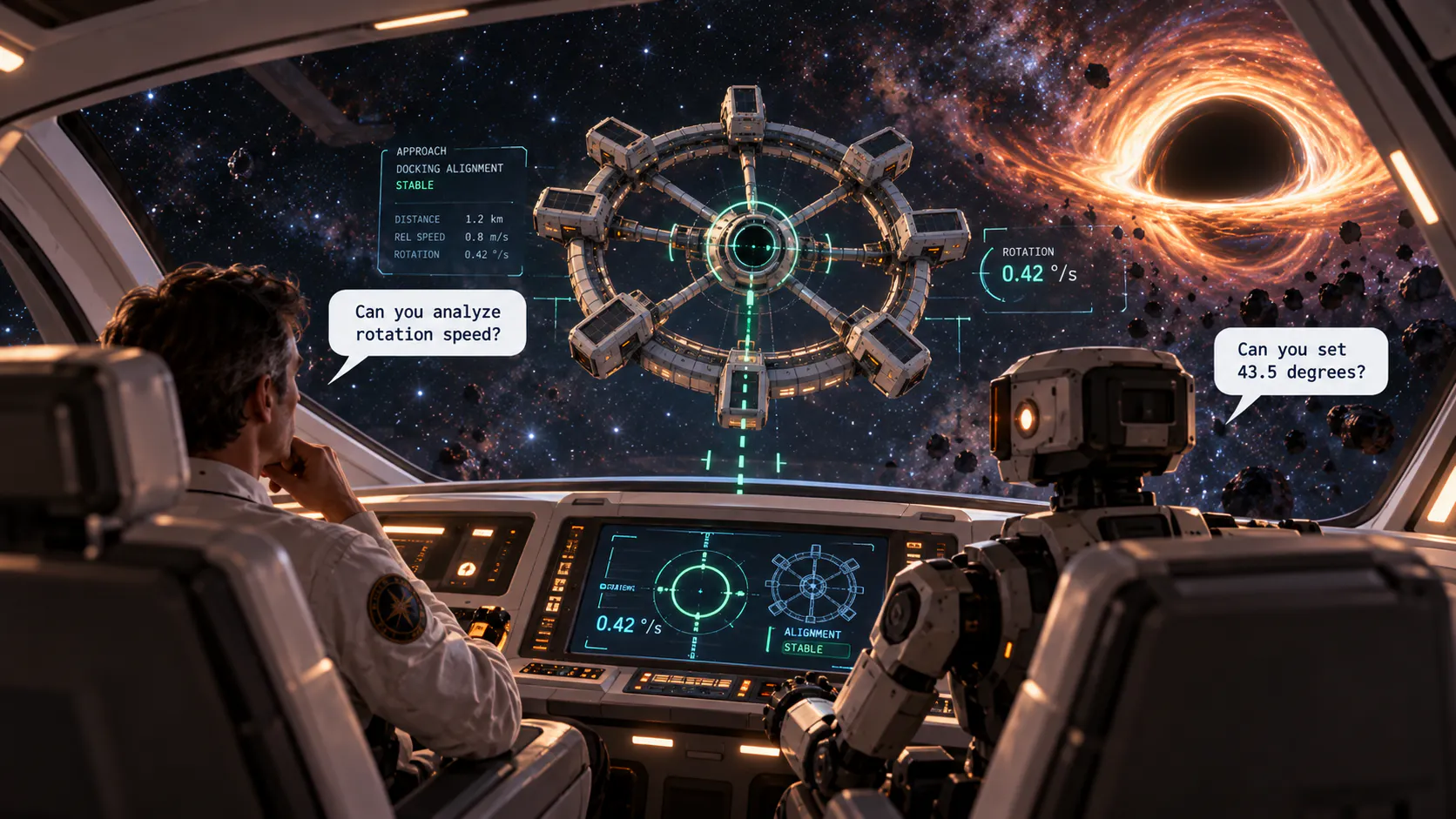
The article details an educational game built to demonstrate voice-driven human-AI collaboration. Inspired by the Interstellar docking sequence, the simulation places a human pilot and an AI robot under time pressure to rescue a stranded vessel. The game uses GPT-Live and OpenAI Astra model assigning the robot specific operational roles while the human manages alignment and rotation through a control panel illustrating how defined responsibilities and shared context enable successful cooperation under stress.
Why This Matters
Beyond the demo the piece highlights a significant shift in voice AI capabilities. GPT-Live enables agents to perceive environmental changes delegate specialized tasks to other models and deliver context-aware feedback through WebRTC sideband channels. This architecture supports real-world applications where voice agents must maintain situational awareness execute tools and keep users informed without breaking flow whether in education enterprise or emergency scenarios.
Key Takeaways
- GPT-Live delegation system allows the main voice agent to offload complex analysis to specialized models while preserving conversational flow.
- WebRTC sideband channels transmit environmental signals such as timers or system states to the AI enabling pressure-aware responses like countdown cues.
- Defining clear role boundaries between human and AI prevents bottlenecks, and collaboration is the path to success.
- Pressure signals such as 30-second and 10-second warnings mirror project management techniques and help users maintain focus during time-sensitive tasks.
- Open-source source code and public demos lower the barrier for developers eager to experiment with live voice-agent collaboration in their own projects.
Conclusion
As voice agents gain the ability to act and coordinate in real time they transition from passive tools to active partners. GPT-Live architecture proves that context-aware real-time interaction is already feasible. For developers educators and creators the path to integrating live voice AI into products classrooms and simulations has never been more accessible.



Discussion
Join the conversation
Thoughtful reactions, questions, and follow-up ideas help shape the next story.