Introduction
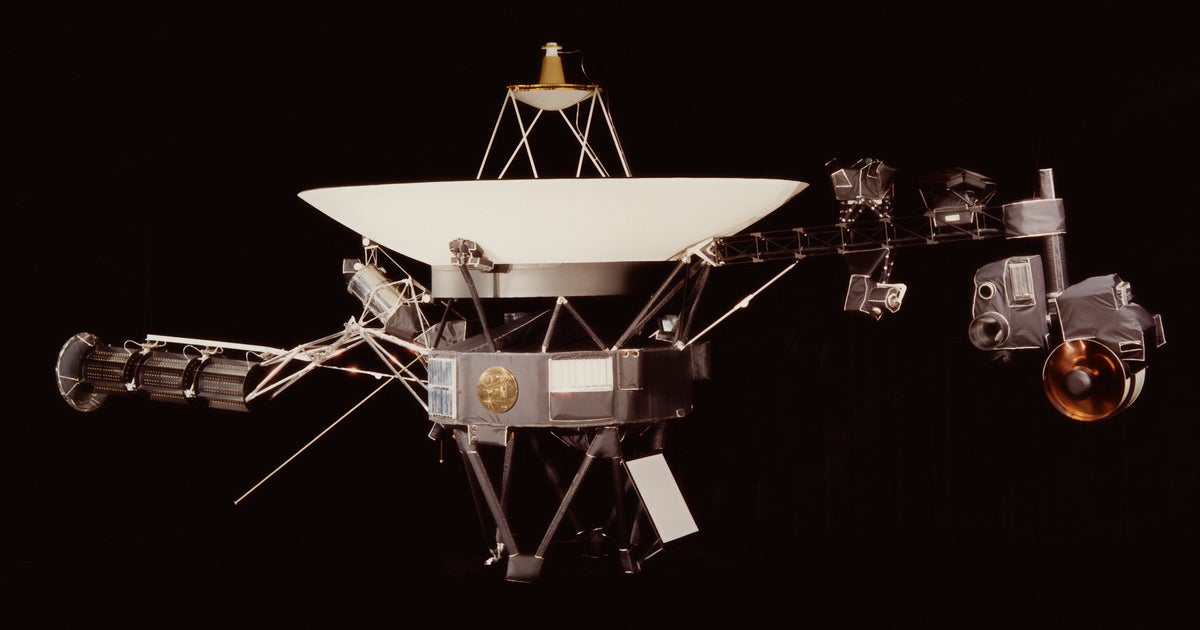
NASA’s Voyager 1 has reached a staggering new distance marker, transmitting a signal from one light-day away. The message arrived at mission control exactly 24 hours after it was dispatched, having crossed more than 16 billion miles of interstellar space at light speed. The milestone underscores the enduring resilience of a spacecraft that has been traveling since the 1970s.
What Happened
Flight controllers at NASA’s Jet Propulsion Laboratory in California received Voyager 1’s call on Thursday. The radio transmission took a full day to reach Earth because the probe is now roughly 26 billion kilometers from home. Agency officials could not verify the achievement until the signal physically arrived, though NASA marked the occasion on social media a day early with a light-day greeting.
Voyager 1 launched in 1977 and flew past Jupiter in 1979 and Saturn in 1980. It captured the famous “Pale Blue Dot” image of Earth in 1990, became the most distant human-made object in 1998, and entered interstellar space in 2012. Its twin, Voyager 2, lifted off two weeks earlier but followed a longer path and did not enter interstellar space until 2018; it is not expected to reach the one-light-day mark until 2035.
Why This Matters
Reaching one light-day means Voyager 1 is now so far away that a simple radio exchange takes two days round trip. It is humanity’s farthest emissary, operating in an environment no other craft has explored so directly. The milestone also highlights the longevity of the mission: both Voyagers are nearly 50 years old, powered by plutonium, and still moving at roughly 38,000 miles per hour.
Key Takeaways
- Voyager 1 sent a signal from one light-day away, and NASA received it 24 hours later.
- The spacecraft is more than 16 billion miles (26 billion kilometers) from Earth.
- Voyager 1 launched in 1977 and entered interstellar space in 2012.
- Voyager 2 will not reach the same light-day distance until 2035.
- NASA is investigating why science and engineering data stopped flowing from Voyager 1, though its carrier signal remains active.
Conclusion
Nearly five decades after leaving Earth, Voyager 1 continues to push the boundaries of what is possible. While engineers work to restore the flow of scientific data, the probe’s carrier signal proves it is still calling home from deep interstellar space. Its onboard Golden Record, designed to last more than a billion years, ensures that a snapshot of Earth’s sounds and culture will travel long after the spacecraft falls silent.
Discussion
Join the conversation
Thoughtful reactions, questions, and follow-up ideas help shape the next story.