Introduction
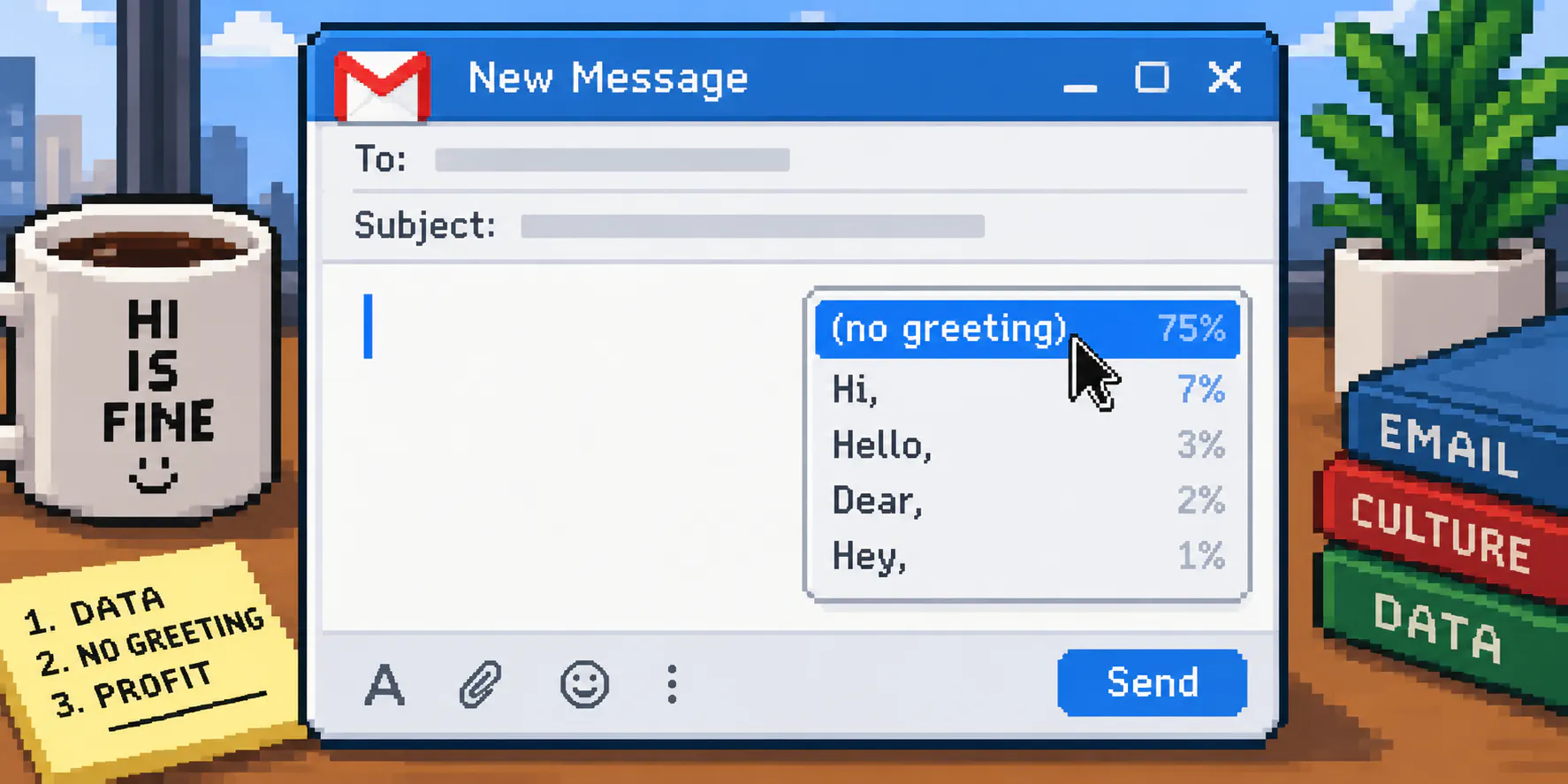
Email etiquette columns always lead with a salutation. But data from over 71,216 real messages tells a different story. Three quarters of email traffic begins with nothing at all, overturning the assumption that every inbox start follows a script.
What Happened
A comprehensive analysis of 71,216 real emails across two major archives found that 75.1% of messages open with no greeting whatsoever. The Git mailing list (44,627 messages 2022 to 2026) and Enron's internal mail 1999 to 2002 formed the primary datasets. Additional research spanning 2007 to 2024 covered cultures from Arabic academic inboxes to Norwegian workplaces, revealing greeting rates from 97% down to 13.9% no-opening. Even the Git community often seen as informal recorded 80.8% silence at the start.
Why This Matters
The findings challenge the popular narrative that Gen Z or digital natives are killing email manners. Cultural context proves far more predictive than age or gender. A 2007 New Zealand study showed greeting rates varying from 17% to 59% across just two organizations in the same country and year. Meanwhile cybersecurity researchers found that Dear and Hello appear three times more often in phishing and spam than in legitimate correspondence because scammers mail-merge names while genuine writers tend to use Hi only when they already know the recipient. A five-year longitudinal look at the Git list reveals greeting use creeping up slightly driven by more newcomers starting conversations rather than a collapse of etiquette.
Key Takeaways
- 75.1% of real emails begin with no greeting
- Hi is the most common greeting word across human mail used in 67.9% of greeted Git messages and 35.2% of Enron correspondence
- Dear and Hello are disproportionately common in phishing 3.3 times more than in human email
- Arabic academic email all but requires a salutation 97% include one while Norwegian workplace email has 13.9% no-greeting
- A five-year Git list study shows no-greeting rates holding steady around 80% with Hi rising 63% in relative terms
- Workplace culture not generation predicts greeting behavior far more strongly
Conclusion
The next time you open an email and see no salutation, you're part of the majority. These numbers reveal that email etiquette is less about personal habit and more about community culture and context. Whether you're a professional navigating cross-cultural mail or a security analyst hunting phishing cues understanding who greets who doesn't and why offers a clearer picture of digital communication than any generational stereotype.



Discussion
Join the conversation
Thoughtful reactions, questions, and follow-up ideas help shape the next story.