Introduction
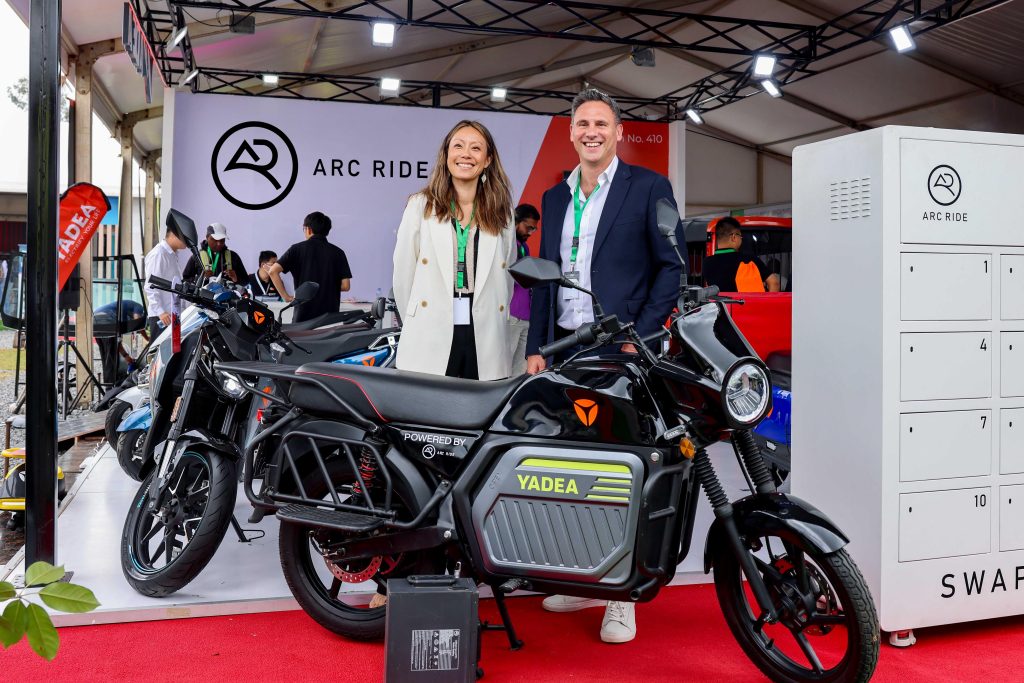
ARC Ride, the Kenyan electric mobility startup, has secured $33.3 million in funding to accelerate its battery-swapping network and grow its fleet of electric motorcycles across the continent. The round positions the company as a key player in Africa's rapidly evolving electric two-wheeler landscape.
What Happened
The funding round was led by Novastar Ventures and Norrsken22, with participation from the International Finance Corporation (IFC), British International Investment (BII), and Proparco. Existing investors including Japanese automotive supplier Musashi Seimitsu and African impact investor Talanton also joined. ARC Ride plans to use the capital to add 5,000 new electric motorcycles to its fleet, expand battery-swapping infrastructure within Kenya, and extend operations into Ghana, South Africa, Tanzania, and Uganda. The startup also aims to advance automated battery-swapping technology, smart charging systems, and renewable-energy-integrated swap stations.
Why This Matters
Africa's electric-mobility sector is witnessing intense competition as companies race to build the charging and battery-swapping infrastructure needed for a rapidly growing fleet. Kenya's registered electric vehicles increased nearly 30-fold from 2022 to 2025, underscoring the urgency of scalable energy solutions. ARC Ride's interoperable, open-architecture battery system and solar-powered swap stations could become a template for reducing grid dependence and lowering operating costs for riders. The funding also signals strong investor confidence in locally assembled electric two- and three-wheelers as a viable path toward sustainable last-mile transport.
Key Takeaways
- ARC Ride secured $33.3 million in asset-backed debt and equity to fuel continental expansion
- The round was led by Novastar Ventures and Norrsken22, with backing from IFC, BII, and Proparco
- Over 5,000 new electric motorcycles will be added to ARC Ride's fleet in the coming months
- The company will expand its battery-swapping network into Ghana, South Africa, Tanzania, and Uganda
- Open-architecture, interoperable batteries are designed to work across multiple motorcycle brands and models
- Swap stations are engineered to operate partially on solar power, reducing grid reliance
- ARC Ride has already piloted its ARC Panther model in South Africa and established a local assembly plant
Conclusion
With this latest round of funding, ARC Ride is poised to accelerate the adoption of electric two-wheelers across East and Southern Africa. By combining scalable battery-swapping infrastructure with locally assembled vehicles and solar-integrated energy systems, the startup aims to make electric mobility more accessible, affordable, and practical than petrol-powered alternatives. If execution matches ambition, ARC Ride could become a cornerstone of Africa's transition to cleaner urban transportation.


Discussion
Join the conversation
Thoughtful reactions, questions, and follow-up ideas help shape the next story.