Introduction
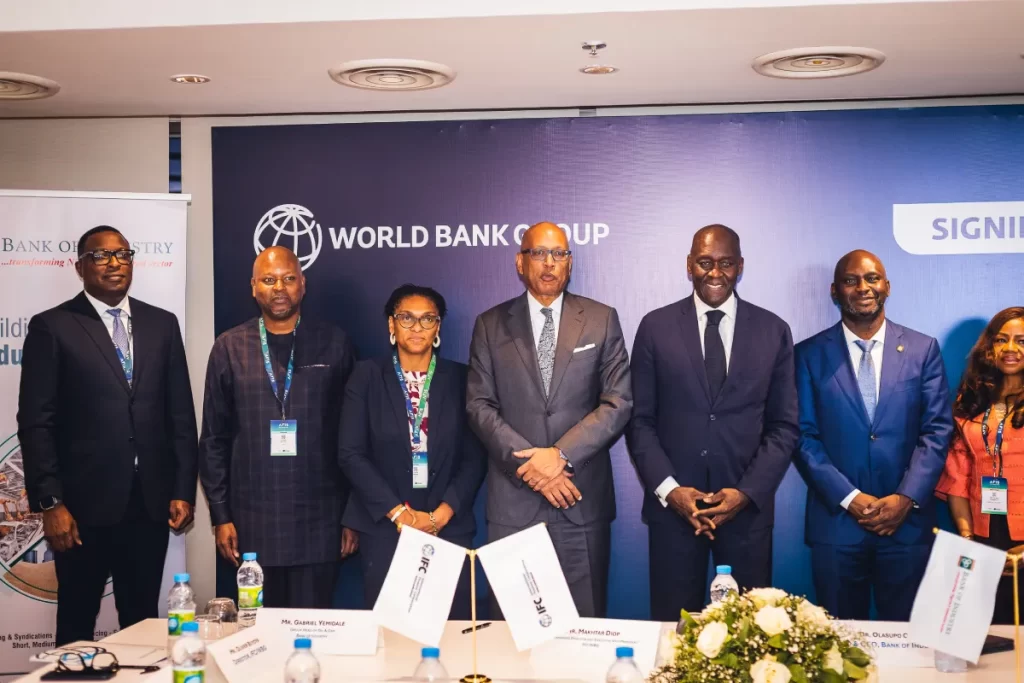
Nigeria’s Bank of Industry (BOI) and the International Finance Corporation (IFC) have formalized a major financing agreement aimed at strengthening the country’s small business ecosystem. The two institutions signed a $50 million senior loan during the Africa Financial Industry Summit in 2026, marking a significant step toward expanding long-term capital for micro, small, and medium enterprises across Africa’s largest economy.
What Happened
The agreement provides BOI with a seven-year senior loan of $50 million. It sits within a broader IFC investment package of up to $100 million intended to support the development bank’s operations. At least one-quarter of the proceeds is reserved for women-owned enterprises. Dr. Olasupo Olusi, BOI’s Managing Director and CEO, signed alongside Makhtar Diop, IFC’s Managing Director. The funds are earmarked for productive businesses in sectors such as manufacturing, agriculture, renewable energy, and Nigeria’s creative industries. BOI noted that final financing documents and standard conditions still need to be completed before full implementation.
Why This Matters
Access to patient, long-term capital remains a persistent constraint for Nigerian MSMEs. By bolstering BOI’s funding base, the facility is designed to help smaller enterprises grow, hire workers, and deepen local supply chains. The partnership also blends direct development finance with efforts to mobilize domestic capital markets, potentially attracting additional private investment. Officials from both organizations emphasized that the deal aligns with Nigeria’s federal goals of private sector-led expansion and inclusive industrialization, with a specific focus on creating opportunities for women entrepreneurs and young people.
Key Takeaways
- BOI and IFC signed a $50 million senior loan to support Nigerian MSMEs.
- The loan is part of a wider IFC commitment of up to $100 million to BOI.
- At least 25 percent of the funds are dedicated to women-owned businesses.
- The seven-year tenor targets manufacturing, agriculture, renewable energy, and creative industries.
- The signing took place at the Africa Financial Industry Summit (AFIS) 2026.
- Final documentation and customary conditions remain outstanding before implementation.
Conclusion
The BOI–IFC agreement represents a concrete effort to channel more durable financing into Nigeria’s real economy. While paperwork and conditions still lie ahead, the deal signals confidence in BOI’s institutional capacity and highlights the role of development partnerships in driving job creation, value-chain development, and broader industrial growth. For Nigerian entrepreneurs—especially women-led ventures—the facility could mean easier access to the long-term capital needed to scale operations and contribute to national economic transformation.
Discussion
Join the conversation
Thoughtful reactions, questions, and follow-up ideas help shape the next story.