Introduction
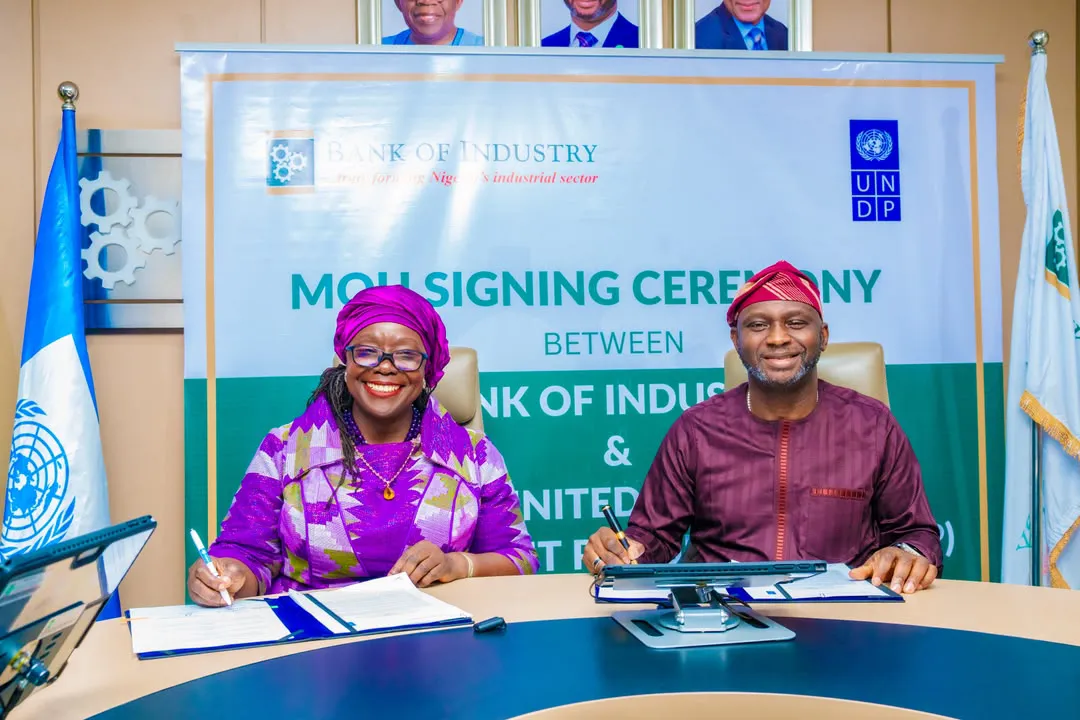
Nigeria’s Bank of Industry and the United Nations Development Programme have formalised a renewed collaboration aimed at strengthening the country’s business ecosystem. The three-year agreement focuses on making local enterprises more competitive, improving access to finance and markets, and creating pathways for women and young people to participate in industrial growth.
What Happened
Representatives from both institutions signed a Memorandum of Understanding at the Bank of Industry’s office in Abuja. The pact establishes a structured framework for joint action over the next three years, building on exploratory discussions that began in 2025.
Under the arrangement, the Bank of Industry will contribute its experience in long-term development financing and industrial development, while UNDP will provide technical expertise, policy support, and connections to global partnership networks. Priority sectors include micro, small and medium-sized enterprises, manufacturing, and agro-processing.
The collaboration also emphasises value-chain development and corridor-based projects that link producers, processors, and markets. Another stated goal is to help Nigerian businesses take advantage of trade opportunities under the African Continental Free Trade Area.
Why This Matters
Small businesses and manufacturers are central to Nigeria’s economic diversification and job creation efforts. By combining development finance with technical programming, the partnership aims to address gaps that often prevent enterprises from scaling, particularly among underserved communities.
The agreement places specific emphasis on women-led businesses and young entrepreneurs, offering support for skills development, employability, and innovation. It also touches on broader development themes such as renewable energy, climate resilience, digital inclusion, and the creative economy.
Key Takeaways
- The Bank of Industry and UNDP signed a three-year Memorandum of Understanding in Abuja.
- The partnership targets enterprise development, inclusive industrialisation, and expanded economic opportunities for women and youth.
- Key focus areas include MSMEs, manufacturing, agro-processing, value chains, and market access under AfCFTA.
- Project THRIVE will combine BOI’s financing capacity with UNDP’s technical and programming expertise.
- Additional cooperation areas cover renewable energy, climate resilience, digital inclusion, and the creative economy.
Conclusion
The renewed MoU reflects a shared belief that Nigerian enterprises are essential drivers of prosperity. By aligning BOI’s development finance mandate with UNDP’s global development experience, the two organisations intend to deliver practical interventions that support sustainable growth and contribute to the Sustainable Development Goals.
Discussion
Join the conversation
Thoughtful reactions, questions, and follow-up ideas help shape the next story.