Introduction
Kitchen cabinets do more than store dishes and pantry staples. They set the tone for the entire room, influence how easy it is to cook and clean, and often become the focal point of a renovation. With so many finishes and layouts trending online, it is tempting to choose a look based on aesthetics alone. However, several interior designers caution that two of the most eye-catching cabinet styles currently circulating on social media may create more problems than they solve.
What Happened
When asked to identify the most impractical new kitchen cabinet trend, three designers independently pointed to mirrored cabinetry. Izabela Tokarski of Kabela & Co. acknowledges that reflective surfaces can make a compact kitchen feel brighter and more spacious, but she warns that the effect can quickly feel dated or overly flashy. Katelyn De Spain of Makehouse Design Studio describes a potential “hall of mirrors” effect when reflective finishes cover every cabinet, and she notes that the surfaces demand constant cleaning to stay presentable. Jennifer Stephan adds that kitchen environments are especially unforgiving: greasy fingerprints, cooking residue, and ventilation make mirrored doors difficult to keep spotless. She also raises a safety concern, noting that chipped or damaged glass could break and create a hazard.
For homeowners who still want a hint of glamour, the designers suggest restraint. A mirrored inset on one or two upper cabinets, or a freestanding mirrored pantry piece, can add visual interest without overwhelming the space.
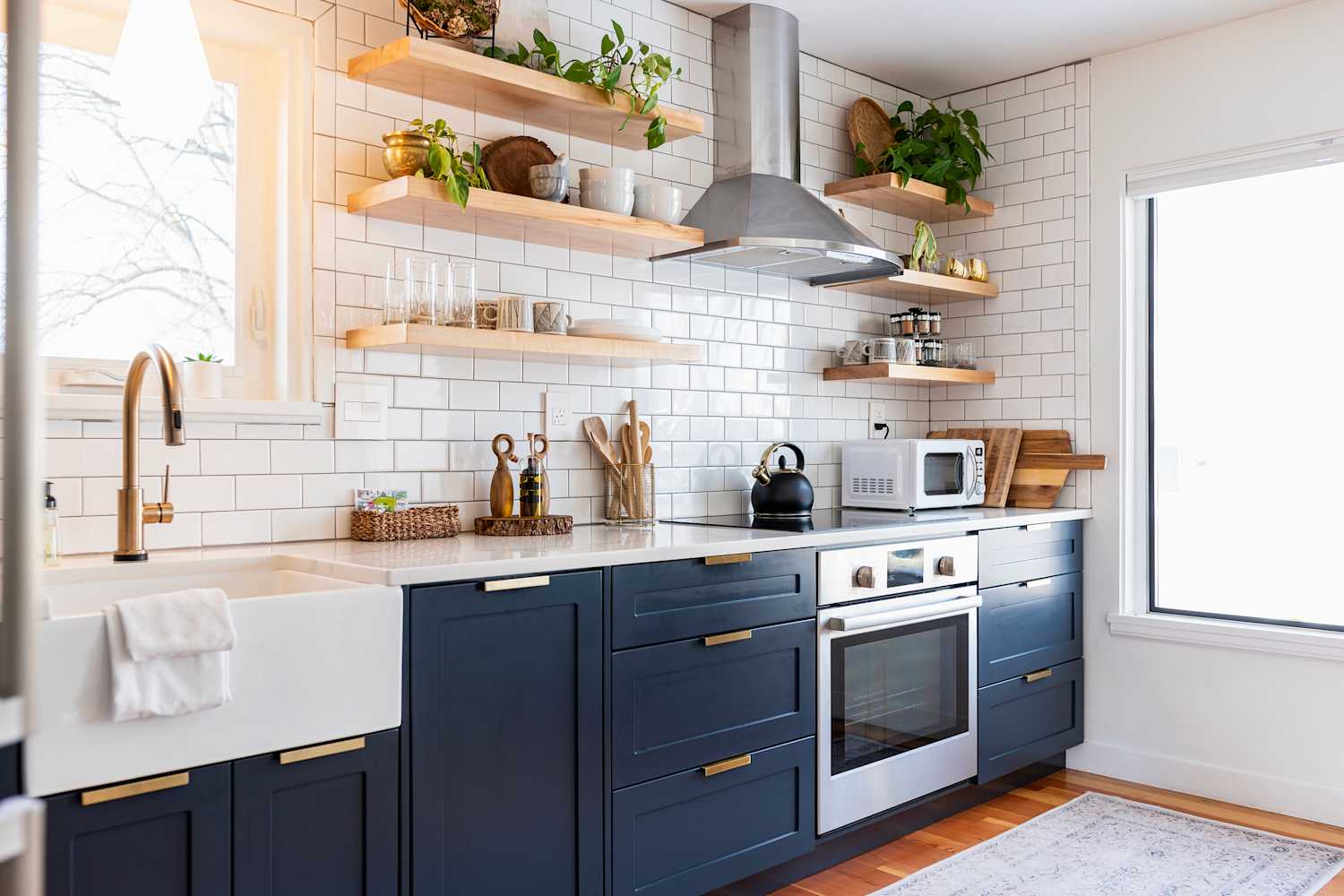
Open shelving received similar criticism. While floating shelves and glass-fronted cabinets look beautiful in staged photos, Stephan calls them impractical for everyday family life unless the kitchen sees minimal use, such as in an Airbnb. Tokarski points out that open shelves expose dishware and cookware to dust, grease, and cooking residue, meaning clean items may need washing before use. Storing bulky or unattractive kitchen tools also becomes harder, which can leave shelves looking cluttered rather than curated.
Why This Matters
A kitchen is a high-traffic, high-moisture area where practicality usually outweighs pure visual impact. Surfaces that show every smudge, require daily polishing, or cannot hide everyday clutter can turn a dream renovation into a maintenance burden. Safety is another consideration, particularly with glass cabinet doors that may chip or shatter over time. Understanding the downsides before committing to a trendy finish can save homeowners time, money, and frustration after the installation is complete.
Key Takeaways
- Mirrored cabinets can make a small kitchen feel larger, but they show fingerprints and grease quickly and may create a chaotic, dated look.
- Designers warn that full-wall mirrored cabinetry can produce an overwhelming “hall of mirrors” effect and poses a safety risk if the glass chips or breaks.
- Open shelving and glass-fronted cabinets expose dishes to dust and cooking residue, making them difficult to keep presentable in a busy household.
- Smaller mirrored accents, such as a single inset panel or a freestanding mirrored pantry cabinet, offer a lower-maintenance way to add shine.
- Classic cabinet materials and closed storage remain the most practical choices for kitchens that see daily use.
Conclusion
Trendy kitchen cabinets can photograph beautifully, but they do not always hold up to real-life cooking and cleaning. Mirrored surfaces and open shelving may deliver instant glamour, yet the designers interviewed agree that both styles demand more upkeep than most households want to handle. If you love the look, consider using mirrored details sparingly or reserving open shelves for decorative items only. For a durable, easy-to-care-for kitchen, traditional closed cabinetry in a timeless finish is still the safest bet.
Discussion
Join the conversation
Thoughtful reactions, questions, and follow-up ideas help shape the next story.