Introduction
Quantum computing is often described as the next frontier in technology, promising machines that can solve problems far beyond the reach of today’s supercomputers. While the United States and China have grabbed headlines in artificial intelligence, European leaders see quantum as a chance to claim a leadership position in an emerging field. The continent has already committed billions to the effort, but private capital and commercial dominance remain concentrated elsewhere.
What Happened
The story begins with a moment of doubt. In September 2017, Google researcher Austin Fowler told an audience of quantum engineers in College Park, Maryland, that error correction remained a major obstacle. Quantum systems make constant mistakes, and the best hardware available was still far too slow to fix them in time. Across the Atlantic, a five-person startup in Cambridge called Riverlane was already working on a solution. Founder Steve Brierley had launched the company from his kitchen table a year earlier. By 2024, Riverlane said it completed the world’s first low-latency quantum error-correction experiment, decoding errors in under a microsecond. Today, the company employs nearly 200 people and partners with more than 60 percent of the world’s quantum computer makers.
Riverlane is just one piece of a much larger European push. The European Commission’s Quantum Europe Strategy aims to position the continent as a global quantum leader by 2030. European nations have committed $15.9 billion to quantum technologies over the five years leading up to 2025. That figure compares with roughly $6 billion in U.S. federal funding before Washington added a further $2 billion for nine quantum companies in May.
Why This Matters
Quantum computers rely on qubits, which can exist in multiple states at once, unlike the binary bits in conventional computers. This allows them to simulate molecules for drug discovery, model complex financial risk, and tackle other problems that are impractical for classical machines. A sufficiently powerful quantum computer could also break the encryption that protects banking and digital communications, making the technology a matter of national security.
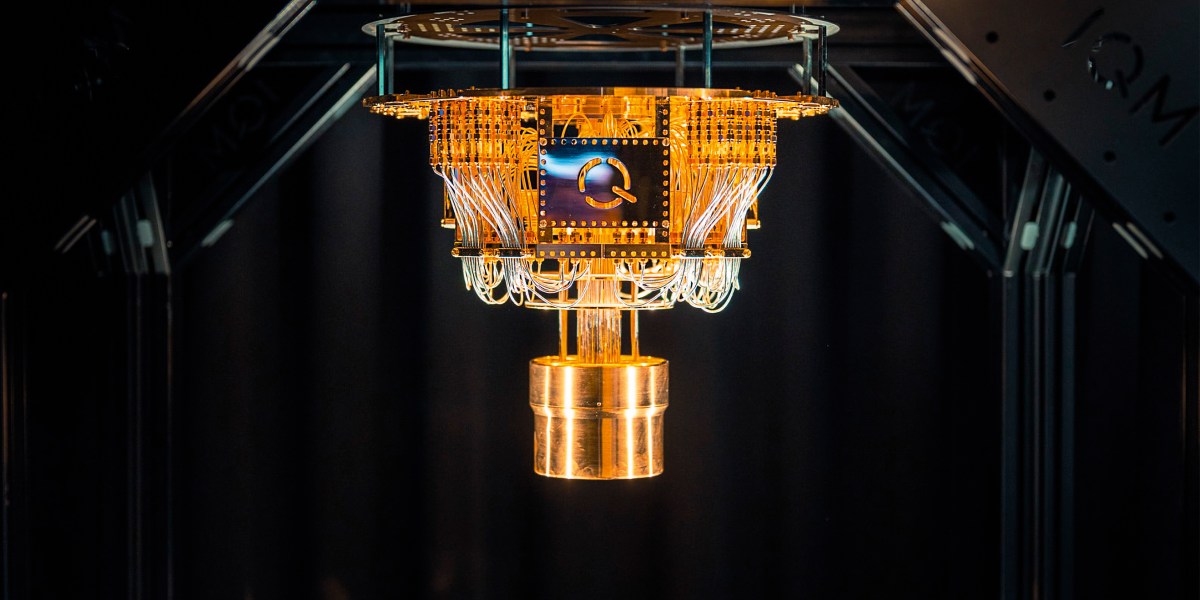
The economic stakes are substantial. McKinsey estimates quantum computing could generate $2.7 trillion in global economic value by 2035. Europe already hosts 32 percent of the world’s quantum technology companies, according to the European Commission’s Joint Research Centre, and 43 percent of quantum computing customers are headquartered on the continent. France alone has five leading hardware startups, while Finland’s IQM says it has sold 26 on-site quantum computers—more than any other manufacturer has publicly disclosed.
Yet private investment tells a different story. A record $12.6 billion flowed into quantum startups worldwide in 2025, more than six times the previous year’s total, but 64 percent went to American companies. The European Commission estimates that European quantum firms capture only about 5 percent of global private funding. As a result, some promising European ventures have sought capital or listings in the United States. Britain’s Oxford Ionics was acquired by U.S.-listed IonQ for $1.075 billion in 2025, and both IQM and France’s Pasqal have floated on Nasdaq.
Key Takeaways
- Europe has committed $15.9 billion to quantum technologies through 2025, aiming to be a global leader by 2030.
- Riverlane’s 2024 error-correction breakthrough shows European startups can deliver technical milestones, but the company remains an exception in a funding landscape dominated by the U.S.
- American companies received 64 percent of the $12.6 billion invested in quantum startups globally in 2025, while European firms attract roughly 5 percent of private funding.
- Europe’s potential advantage lies in components and software rather than complete machines, with companies such as Bluefors, Zurich Instruments, and Qblox supplying critical hardware layers.
- Sovereignty concerns are driving the push, as quantum advances could threaten current encryption standards and GPS-independent navigation.
Conclusion
Europe has strong research roots, a growing startup ecosystem, and significant public investment, but it faces a fragmented funding model and aggressive competition from the U.S. and China. Industry leaders argue the race is not over, especially if European firms focus on indispensable parts of the supply chain and software that combines quantum with artificial intelligence. Whether the continent can align its national programs quickly enough to turn public spending into private success remains the central question.
Discussion
Join the conversation
Thoughtful reactions, questions, and follow-up ideas help shape the next story.