Introduction
When people hear "soft robotics," speed is rarely the first trait that comes to mind. A research team at the University of California San Diego is out to change that perception. Their latest creation is a six-legged, pneumatically driven soft robot that moves far faster than anything previously built in this field.
What Happened
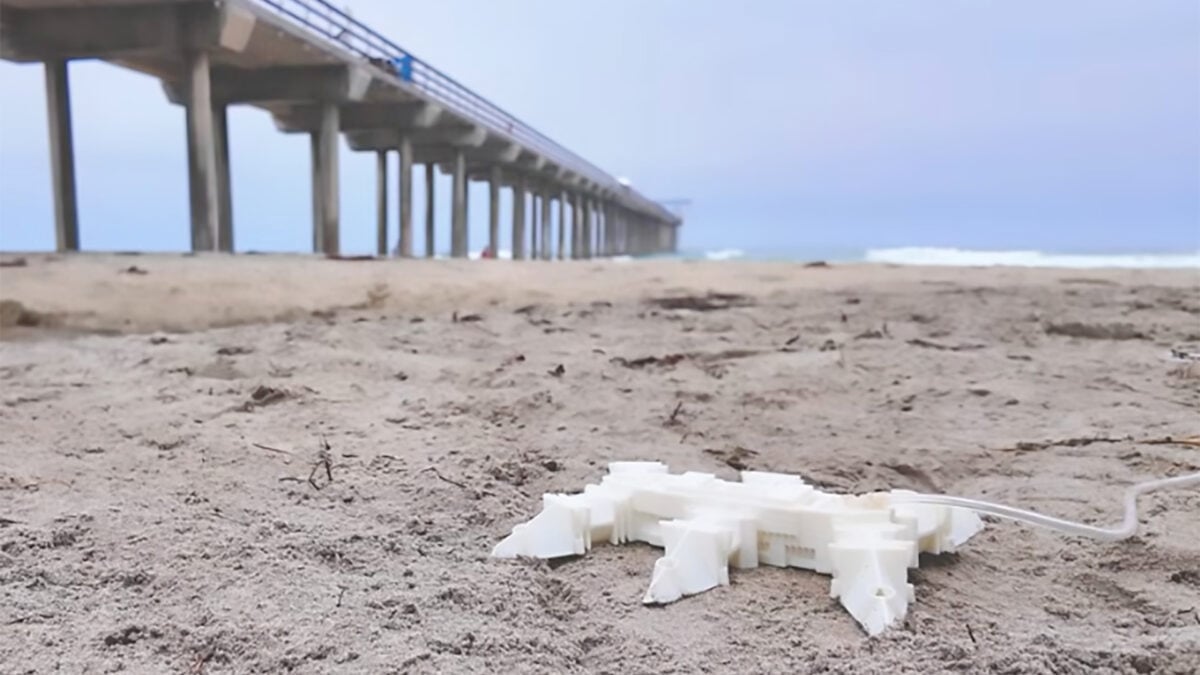
Writing in Science Robotics, the UC San Diego engineers describe a robot fabricated from one continuous soft, 3D-printed piece. It can hit top speeds of 4.72 meters per second, or about 15.5 feet per second. Compared with the group's earlier soft robot, which peaked at just 4 centimeters per second, the new design is more than 100 times quicker.
There is no computer, battery, or circuit board on board. A compressed-air line tethers the robot to an external supply, and internal double-expansion oscillators turn that steady airflow into sequenced pressure pulses. Those pulses drive the six legs in a coordinated running motion. The study also examines water pressure as an alternative power source; because water does not compress like air, the robot behaves differently when hydraulically driven, a trait that could suit irrigation, farming, and water-based cleaning jobs.
Footage of the machine shows it crossing concrete, grass, soil, soft sand, and standing water without difficulty.
Why This Matters
Removing electronics keeps production costs low and makes the robot suitable for places where electrical power is impractical or hazardous. Water-powered operation is especially promising because it can tap into existing water lines for tasks such as crop irrigation and equipment washing. The combination of high speed and all-terrain mobility also hints at future uses in search-and-rescue, environmental surveying, and other unpredictable outdoor settings.
Key Takeaways
- UC San Diego researchers built a soft robot that tops out at 4.72 meters per second.
- The new machine is over 100 times faster than the team's previous soft-robot prototype.
- It consists of a single 3D-printed soft component and runs without onboard electronics.
- Compressed air powers it through a tether; water pressure is also under investigation.
- The robot performs well on sand, water, grass, dirt, and concrete.
Conclusion
Soft robots no longer need to be slow. By replacing electronics with a pneumatic oscillator and a simple 3D-printed body, the UC San Diego team has demonstrated a platform that is quick, versatile, and potentially affordable. The current design still depends on an external air line, but the work suggests that compliant, electronics-free machines could eventually thrive in wet, dirty, or electrically sensitive environments where conventional robots cannot operate.
Discussion
Join the conversation
Thoughtful reactions, questions, and follow-up ideas help shape the next story.