Introduction
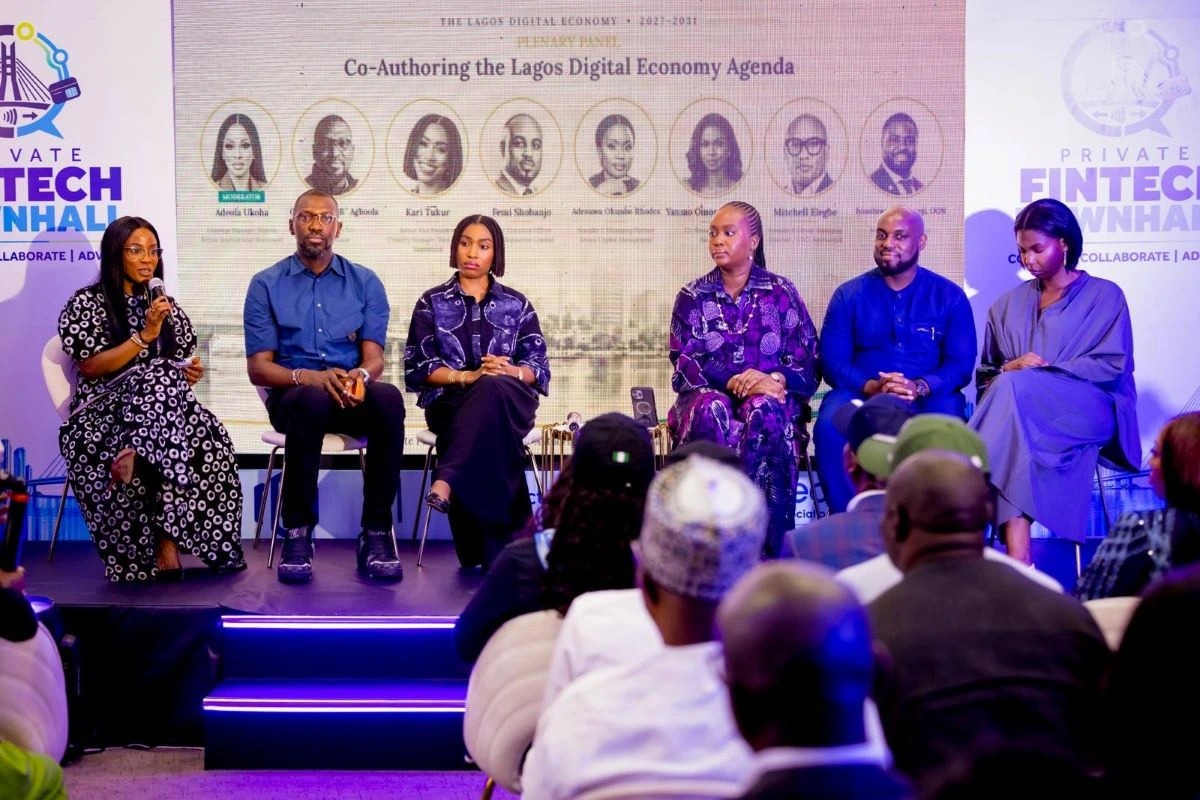
Lagos is pushing to position itself as a leading technology hub in Africa, and its latest push involves closer ties between government and private industry. At a closed-door fintech town hall held on November 20, 2026, Flutterwave co-founder and CEO Gbenga Agboola joined Lagos State Deputy Governor Dr. Obafemi Hamzat in asking corporate Nigeria to put more capital behind research, digital infrastructure, and clearer regulatory rules. The event, organized by MyCard Global alongside the Fintech Association of Nigeria, centered on a blueprint for the state’s digital economy from 2027 to 2031.
What Happened
Agboola told attendees that investors and businesses need regulatory certainty before they commit money or scale new products. He warned that shifting policies and inconsistent rules create hesitation across the fintech sector. His solution was stronger coordination among regulators, especially in licensing, so that approval from one agency helps rather than hinders compliance with others. He also argued for a framework that lets startups test ideas within established rules, backed by efficient regulation and tax policies that encourage growth.
Hamzat echoed the call, urging companies to move past superficial partnerships and fund research that solves real industry problems. He pointed to a weak link between universities and the private sector as a barrier to turning ideas into market-ready products. Drawing from his own doctoral experience, he noted that a UK oil company once sponsored his research into cutting energy use in oil production, a project that reportedly reduced consumption by 33 percent. He challenged businesses to identify operational pain points, partner with academic institutions, and finance studies that deliver practical outcomes.
The deputy governor also outlined several infrastructure plans. Lagos intends to grow its fibre-optic network from about 2,400 kilometres to roughly 6,000 kilometres through deals with telecom firms and private partners. He said the expansion would link more schools and public institutions, lower business costs, and support technology companies. Currently, around 680 of the state’s 1,028 public schools have internet access, with the government aiming to connect the rest. On data, Lagos is building an enterprise architecture that lets ministries share information through APIs, with the goal of standardizing data and improving public services.
Other announcements included a plan to reserve 10 percent of public procurement for startups and to pay participating vendors within 15 days. Hamzat noted that women make up about 54 percent of the startups that have worked under the program so far.
Why This Matters
The town hall brought together some of Nigeria’s most recognizable financial technology names, including Flutterwave, Paystack, PiggyVest, Kuda, PalmPay, Mastercard, Visa, Oracle, Interswitch, OPay, Moniepoint, Paga, and Meristem. MyCard Global Executive Director Aderemi Fagbemi said the gathering showed that Lagos has the expertise needed to drive Africa’s digital economy, but warned that innovation cannot happen without government collaboration.
The discussion fits into a broader record. In March 2025, Governor Babajide Sanwo-Olu said Lagos had drawn more than $1.2 billion in digital investments over five years, funding data centres, submarine cables, and network infrastructure. The latest meeting builds on that history by asking companies to put money into research and innovation corridors, harmonize taxes, and integrate digital payments into city systems.
Key Takeaways
- Flutterwave CEO Gbenga Agboola called for predictable policies and better coordination among Nigeria’s regulatory agencies.
- Lagos Deputy Governor Obafemi Hamzat urged businesses to invest directly in research and commercializable innovation.
- The state plans to expand its fibre-optic network from 2,400 km to about 6,000 km and connect all public schools to the internet.
- Lagos wants to reserve 10 percent of public procurement for startups and pay them within 15 days.
- More than $1.2 billion in digital investment has flowed into Lagos over the past five years, according to the governor.
Conclusion
The message from the November 20 town hall is clear: Lagos wants corporate money, not just political support, to carry its digital economy agenda through 2031. Whether that means funding research, laying fibre, or simplifying regulations, the state is asking the private sector to move from observer to partner. If businesses respond, Lagos could strengthen its position as Africa’s fintech capital; if not, the 2027–2031 blueprint may struggle to move beyond the drawing board.
Discussion
Join the conversation
Thoughtful reactions, questions, and follow-up ideas help shape the next story.