Introduction
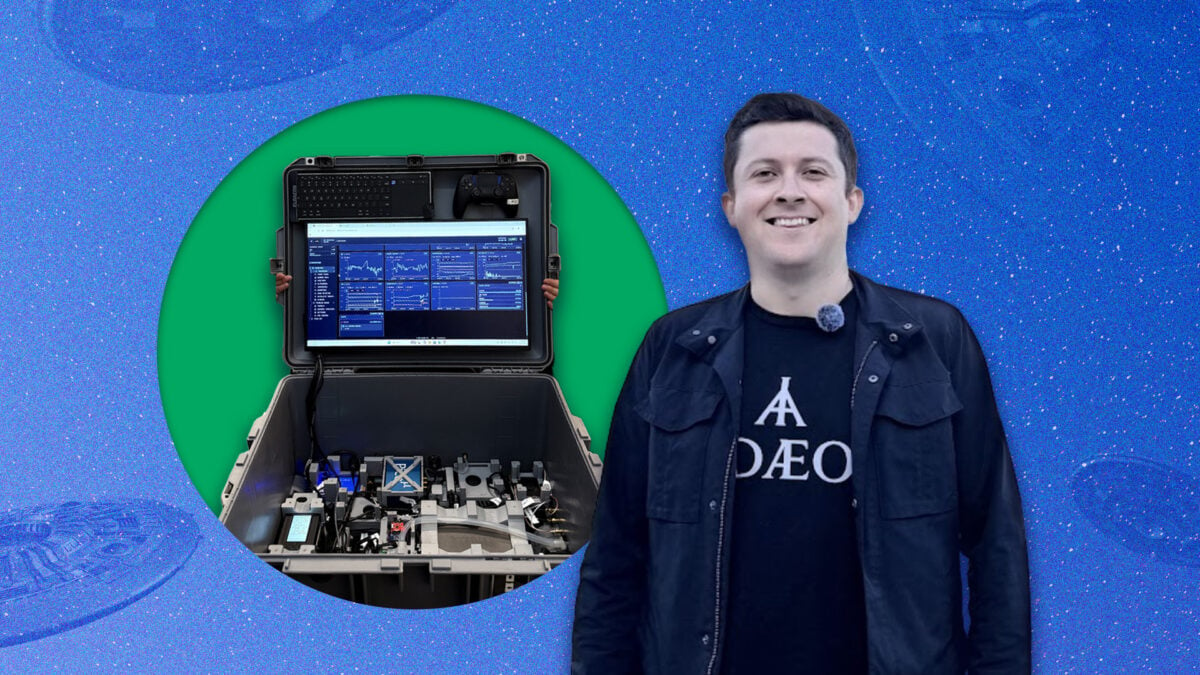
David Dominguez Hooper does not fit the stereotype of a UFO enthusiast. A graduate of UC Berkeley's electrical engineering and computer science program, he spent years building drones and running a campus drone club before turning his attention to one of the most controversial topics in modern aerospace: unidentified anomalous phenomena, or UAP. Today, Hooper leads ELDÆON, a startup that sells sensor hardware designed to bring scientific rigor to sky-watching.
What Happened
Hooper's journey into aerial detection began during the COVID-19 pandemic. With daily life paused, he decided to investigate reports of strange objects in the sky. That research became ELDÆON, a company now accepting orders for two products. The enterprise-grade Dionysus system costs $25,000 and is aimed at research labs and investigators. The consumer-focused Nemesis costs $500 and uses passive radar, drawing on existing FM radio and digital television signals to detect moving objects without transmitting its own radar waves. Nemesis can compare its readings against ADS-B flight data to separate known aircraft from unexplained activity.
Hooper is quick to note that the technology is unproven for UAP specifically. His team can detect airplanes and some drones, but whether passive radar can identify truly anomalous objects remains an open question requiring field testing.
Why This Matters
ELDÆON is collaborating with Jasenka Rakas of UC Berkeley's Aerospace Engineering Program to test its equipment near Los Angeles International Airport. The goal is to help authorities understand unauthorized drone incursions around airports without interfering with air traffic control radar. Because passive radar listens rather than broadcasts, it avoids the legal and technical complications of active radar transmissions near sensitive aviation infrastructure.
The company also positions itself as an alternative to military-focused counter-drone technology. Hooper compares the device to a doorbell camera that lets residents evaluate who is approaching their property, except applied to the airspace above their homes as drone deliveries and services become more common.
Key Takeaways
- David Hooper founded ELDÆON after developing an interest in UAPs during the COVID-19 pandemic.
- The company offers Dionysus, a $25,000 enterprise detection system, and Nemesis, a $500 consumer passive radar device.
- Nemesis uses existing broadcast signals for passive radar and cross-references them with ADS-B aircraft data.
- ELDÆON is working with UC Berkeley researchers to validate drone-incursion reports near LAX.
- Hooper has resisted shifting the company toward military counter-drone applications despite investor interest.
- The startup runs its own AI infrastructure, including Nvidia DGX systems, to reduce dependence on outside AI providers.
Conclusion
Hooper's ultimate goal is to replace confusion with data. He points to recent drone sightings that sparked public panic because observers could not identify what they were seeing. By making aerial detection hardware more accessible, ELDÆON hopes to give individuals and communities the tools to make informed decisions about what is happening overhead. Whether the company ever confirms evidence of UAPs or simply improves airport safety, its bet is that better information leads to better outcomes.
Discussion
Join the conversation
Thoughtful reactions, questions, and follow-up ideas help shape the next story.