Introduction
Have you ever walked into a home where every room looks beautiful on its own, yet the whole place still feels disconnected? Interior designers often point to visual continuity as the missing ingredient—the sense that each space belongs to the same story. A recent apartment tour in France demonstrates how one simple detail can solve this problem: matching wood tones can tie an open-concept layout together without forcing every room to look identical.
What Happened
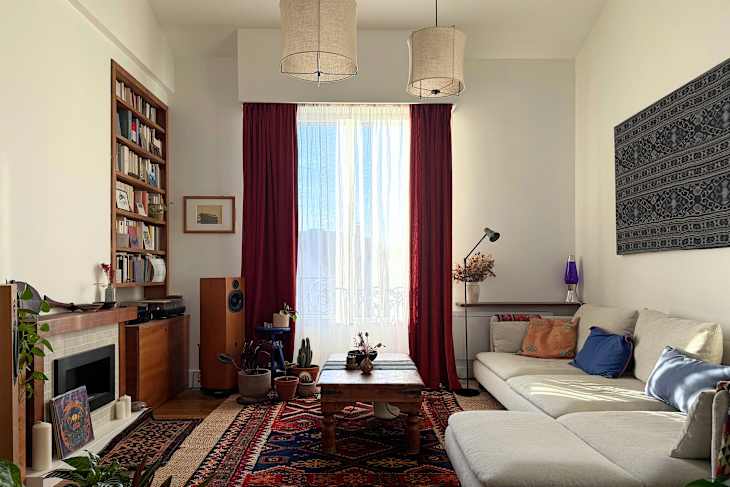
Writer Cullen Ormond recalls a conversation with interior designer Meghan Thigpen of Cheatham, Fletcher, Scott — Architects + Designers, who emphasized that rooms should relate to one another. The idea came back into focus during a house tour of designer Cassandre Brana’s apartment in France. Brana and her partner wanted the kitchen to feel like a natural extension of the living room, so they built DIY wood panels for the cabinet fronts using the same tone as the living room’s bookshelves. The continuous wood grain runs across both spaces, creating an unbroken visual thread between the cooking and lounging areas.
Why This Matters
Open-concept layouts are losing favor with many homeowners and renters, especially those in studio apartments who prefer defined zones. Still, not everyone can move walls or alter a floor plan. Subtle details such as matching wood finishes offer a practical way to make separate areas feel connected while still functioning independently. Thigpen adds that other small touches—like a tile chair rail or decorative molding—can preserve a home’s overall aesthetic and strengthen the visual link from room to room.
Key Takeaways
- Matching wood tones between kitchen cabinetry and living room shelving creates visual continuity in open spaces.
- Rooms can maintain their own personality while still feeling like part of the same home.
- Small design details, including consistent trim or tilework, help separate areas relate to one another.
- A major renovation is not necessary to improve flow; cohesive materials and finishes can do much of the work.
Conclusion
Whether you live in a spacious open-concept house or a compact studio, thoughtful details can transform how your home feels. By selecting matching wood tones or repeating subtle architectural elements, you can guide the eye from room to room and make your space feel intentionally designed. The goal is not uniformity, but harmony—each area with its own voice, yet all belonging to the same home.
Discussion
Join the conversation
Thoughtful reactions, questions, and follow-up ideas help shape the next story.