Introduction
From orbit, the Nullarbor Plain appears as a vast, featureless flatland. Yet long, shallow trenches slice across this barren terrain, puzzling researchers for years. Though they look like ancient riverbeds at first glance, a recent study argues they are surface scars produced by enormous underground cave systems that slowly gave way over millions of years.
What Happened
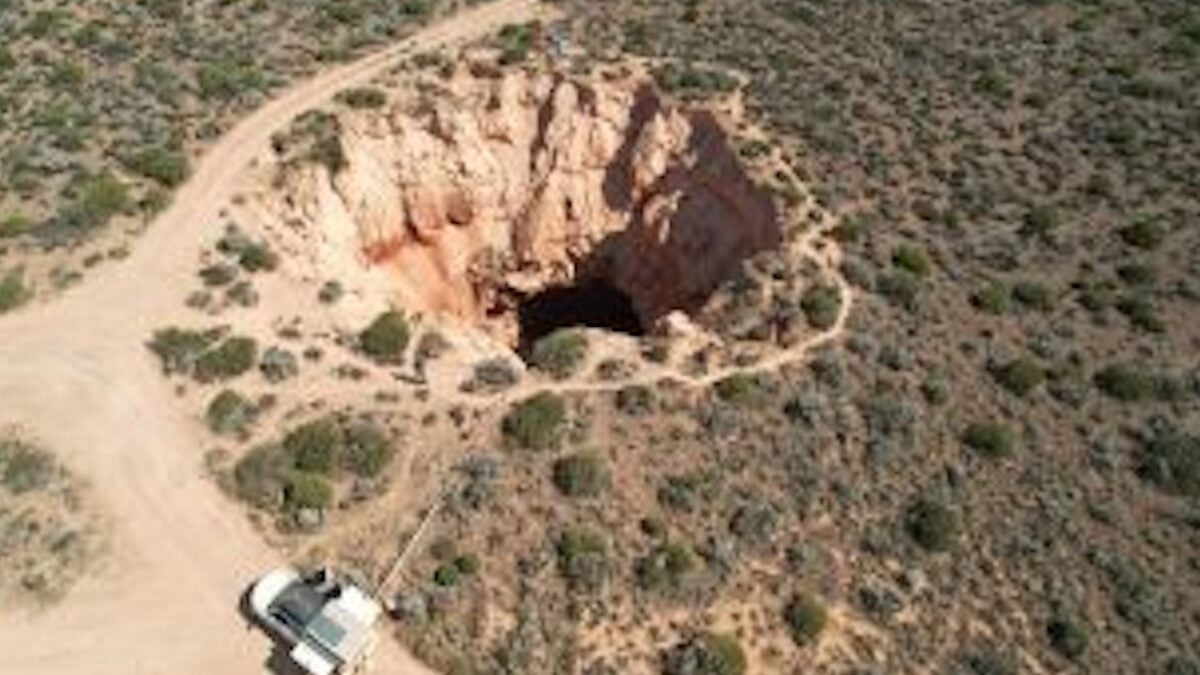
Researchers examined five elongated depressions along the eastern edge of the Nullarbor Plain in southern Australia. Each trench measures roughly 100 to 500 meters across and has gently sloping sides with floors filled with sediment. Unlike genuine river channels, these formations show no connected drainage networks and no evidence of sediment being transported downstream.
To determine how they formed, scientists paired drone and aerial photography with satellite-derived terrain models. They also applied electrical resistivity tomography, which sends electrical currents into the ground to map disturbed or sediment-filled material below. The results showed deep zones of low resistivity beneath the trenches, lining up with known caves and sinkholes across the region.
The Nullarbor consists primarily of limestone, a rock that groundwater slowly dissolves over geological time. This creates underground cavities and tunnel networks. Instead of one massive collapse, the study suggests these cave systems experienced staged weakening, producing the shallow depressions visible today.
Why This Matters
The work goes beyond explaining a curious feature of Australian geography. It provides a model for spotting similar formations on other worlds. Mars has many elongated depressions frequently interpreted as dried-up riverbeds or fallen lava tunnels. Some may have formed through the same slow cave-collapse process identified beneath the Nullarbor.
That distinction matters for astrobiology. Subsurface caves can protect potential biosignatures from harsh surface radiation, so they might retain evidence of ancient microbial life far longer than exposed Martian ground.
Key Takeaways
- Five long trenches on Australia's Nullarbor Plain likely formed from collapsing underground caves, not flowing water.
- Scientists used drone imagery, satellite terrain models, and electrical resistivity tomography to investigate the features.
- The plain's limestone bedrock dissolves over time, forming cave networks that can undergo staged weakening and leave shallow surface scars.
- The results may help researchers identify cave-related formations on Mars.
- Underground caves are considered promising sites to search for preserved signs of past microbial life.
Conclusion
The flat surface of the Nullarbor Plain conceals a complex subsurface history. By connecting shallow surface trenches to deep cave collapses, scientists have gained a new tool for interpreting landscapes on Earth and potentially on Mars. As planetary exploration advances, these insights could guide the hunt for hidden cavities—and perhaps ancient life—beneath alien skies.
Discussion
Join the conversation
Thoughtful reactions, questions, and follow-up ideas help shape the next story.