Introduction
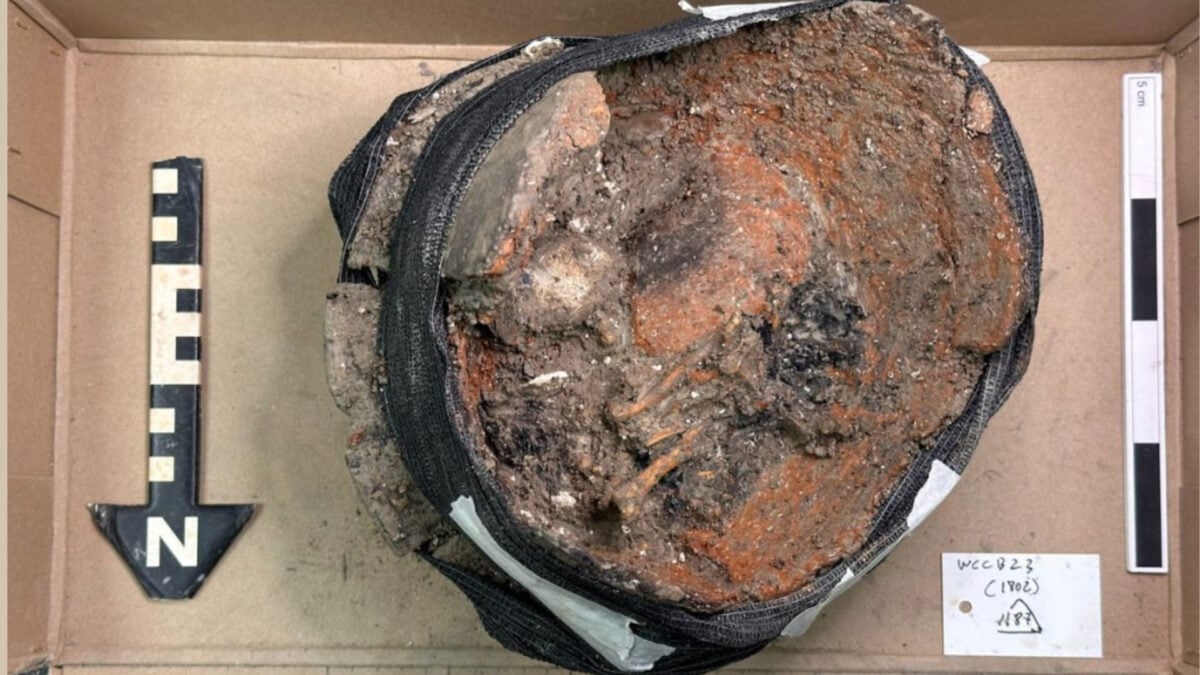
Archaeologists working ahead of a new cricket ground in Wendover, England, uncovered a cluster of Roman-era graves that defies easy explanation. Among nine burials recorded by Cotswold Archaeology, one stood out: the remains of a baby, a mature hen, and a small songbird sealed inside a pottery vessel placed upside-down in the ground. The find, likely dating to the early third or fourth century CE, may be unprecedented in Britain.
What Happened
The excavation revealed four adult cremations and five inhumations involving infants and young children. While burying very young children near homes or boundary ditches was not unusual in Roman Britain, the specific arrangement of one grave was extraordinary. A pottery jar held a nine-month-old child at its base, with a hen and a songbird positioned near the opening. Because the vessel was inverted, the child effectively rested above the animals.
Radiocarbon testing placed the infant between 131 and 329 CE and the chicken between 237 and 346 CE, supporting a timeframe from the early 300s to the early 400s. The child’s bones were disturbed and incomplete, but the animal remains were present alongside them. Two other infant graves nearby—a newborn and a six-month-old—were also found close to agricultural features known as corn dryers.
Why This Matters
Interring infants in pottery vessels was a known tradition around the Mediterranean, but it is exceptionally rare in Britain. Researchers suggest the family may have been immigrants from that region, or that the vessel symbolized a womb, representing rebirth or return to the earth. Chickens, considered a luxury food in Roman times, frequently appear in graves as provisions for the deceased or as votive offerings.
The proximity to corn dryers adds another layer. Some experts connect infant burials with agricultural rituals tied to harvesting, threshing, and fermentation, activities also linked to fertility in the ancient world. Together, these details point to a complex set of beliefs about death, infancy, and the land.
Key Takeaways
- Nine Roman burials were uncovered in Wendover, England, during pre-construction archaeology for a cricket ground.
- One grave contained a nine-month-old infant, a hen, and a songbird inside an upside-down pottery vessel.
- Radiocarbon dates suggest the burial occurred between the early third and early fourth centuries CE.
- Pottery-vessel infant burials were common in the Mediterranean but highly unusual in Roman Britain.
- The graves were located near corn dryers, possibly reflecting ancient associations between farming rituals and fertility.
Conclusion
This unusual discovery expands what we know about Roman funerary customs in Britain and highlights how local practices could blend with traditions from farther afield. Whether the jar represented a womb, a protective container, or something else entirely, the presence of a child alongside domestic animals invites reflection on how ancient communities cared for their youngest members in death. Further study may reveal whether similar graves remain hidden beneath other British settlements.
Discussion
Join the conversation
Thoughtful reactions, questions, and follow-up ideas help shape the next story.