Introduction
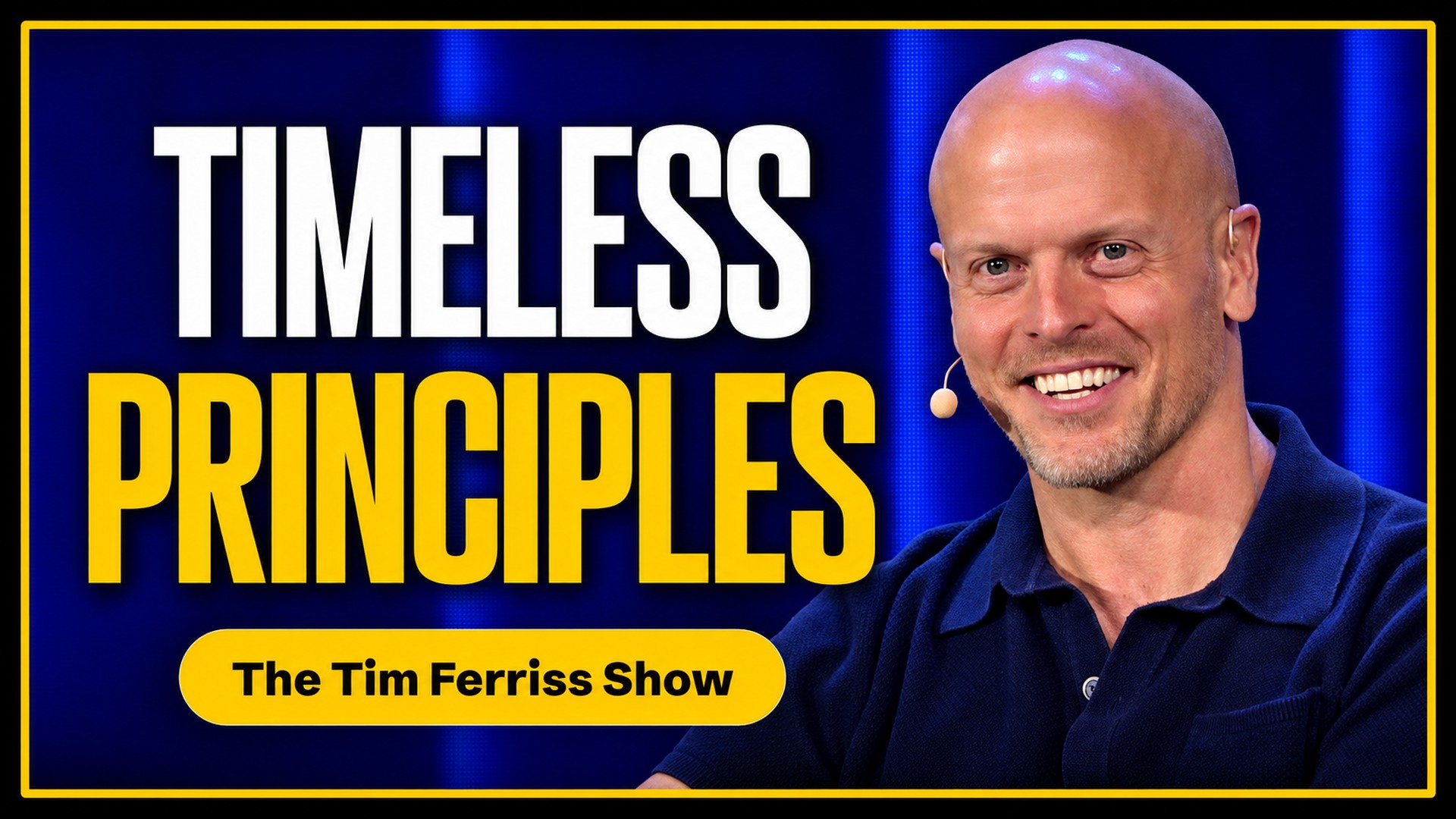
Tim Ferriss recently stepped out of his usual interviewer role and became the interviewee. In a live conversation with Zuhairah Washington, a senior vice president at Zillow, Ferriss discussed how to stay resilient when technology and markets shift faster than ever. The discussion, released as episode 890 of The Tim Ferriss Show, covered everything from automating a sports nutrition business to choosing asymmetric bets, taking mini-retirements, and protecting your sense of self when your career dominates your identity.
What Happened
The conversation began with Ferriss reflecting on BrainQUICKEN, the sports nutrition company he ran before becoming an author. He described working 14-hour days and realizing the business was running him rather than the other way around. Using the D-E-A-L framework—definition, elimination, automation, and liberation—he explained how an 80/20 analysis of his customers revealed that he was spending most of his time on high-maintenance, low-yield accounts while neglecting his best clients.
Ferriss also addressed artificial intelligence, warning that AI can magnify meaningless work just as easily as meaningful work. He recommended defining goals first, eliminating nonessential tasks, and only then automating. He mentioned tools like Wispr Flow for dictation and large language models such as ChatGPT and Claude as strategic advisors, while advising users to disable model training on their data.
When asked about a real estate agent who felt trapped by his own business, Ferriss proposed a mini-retirement—ideally two to four weeks—as a forcing function to repair systems before stepping away. He also discussed fear-setting, the practice of voluntarily experiencing modest hardship, and the difference between efficiency and effectiveness, citing Peter Drucker's The Effective Executive.
Other topics included asymmetric bets, where the downside is capped but the upside remains open, and identity diversification, the idea of not tying all self-worth to a single role. Ferriss shared his own rock climbing practice as an example of building a separate area of progress. He closed with practical tips for protecting attention, including blocking social media, archiving old email, and moving tasks from an inbox to a calendar.
Why This Matters
In an era of constant change, Ferriss argues that timeless principles matter more than the latest productivity hack. Doing the right things matters more than doing things efficiently, and focusing on a single priority can simplify difficult decisions. For professionals who feel like bottlenecks in their own companies, the mini-retirement concept offers a concrete way to test whether a business can survive without its founder.
The discussion also touches on psychological resilience. By diversifying identity across multiple domains—such as family, health, and creative pursuits—people can avoid the crash that comes when one area of life suffers. Ferriss's emphasis on asymmetric risk-taking, illustrated by Richard Branson's early Virgin Atlantic negotiations, suggests that bold moves are safer when the downside is strictly limited.
Key Takeaways
- Use an 80/20 analysis to identify your most valuable customers and stop over-serving low-yield accounts.
- Define your ideal lifestyle and calculate a target monthly income before automating or scaling.
- Treat AI as a strategist, not just a search engine, and opt out of model training when possible.
- Schedule a mini-retirement of two to four weeks to force system improvements and prove your business can operate without you.
- Distinguish between effectiveness—choosing the right targets—and efficiency—executing tasks well.
- Practice fear-setting and voluntary simplicity to reduce the psychological cost of potential setbacks.
- Diversify your identity so your self-worth is not concentrated in a single role or business outcome.
- Protect your attention by blocking distracting apps, archiving old email, and scheduling tasks on a calendar instead of leaving them in an inbox.
Conclusion
Ferriss's conversation with Zuhairah Washington returns to a simple idea: in fast-changing times, the most durable advantages come from timeless habits. Whether it is picking asymmetric bets, taking a planned break from work, or refusing to let one label define you, the goal is to build systems and a sense of self that can withstand uncertainty. The tools may change—from BrainQUICKEN spreadsheets to large language models—but the underlying principles of definition, elimination, and intentional focus remain constant.
Discussion
Join the conversation
Thoughtful reactions, questions, and follow-up ideas help shape the next story.