Introduction
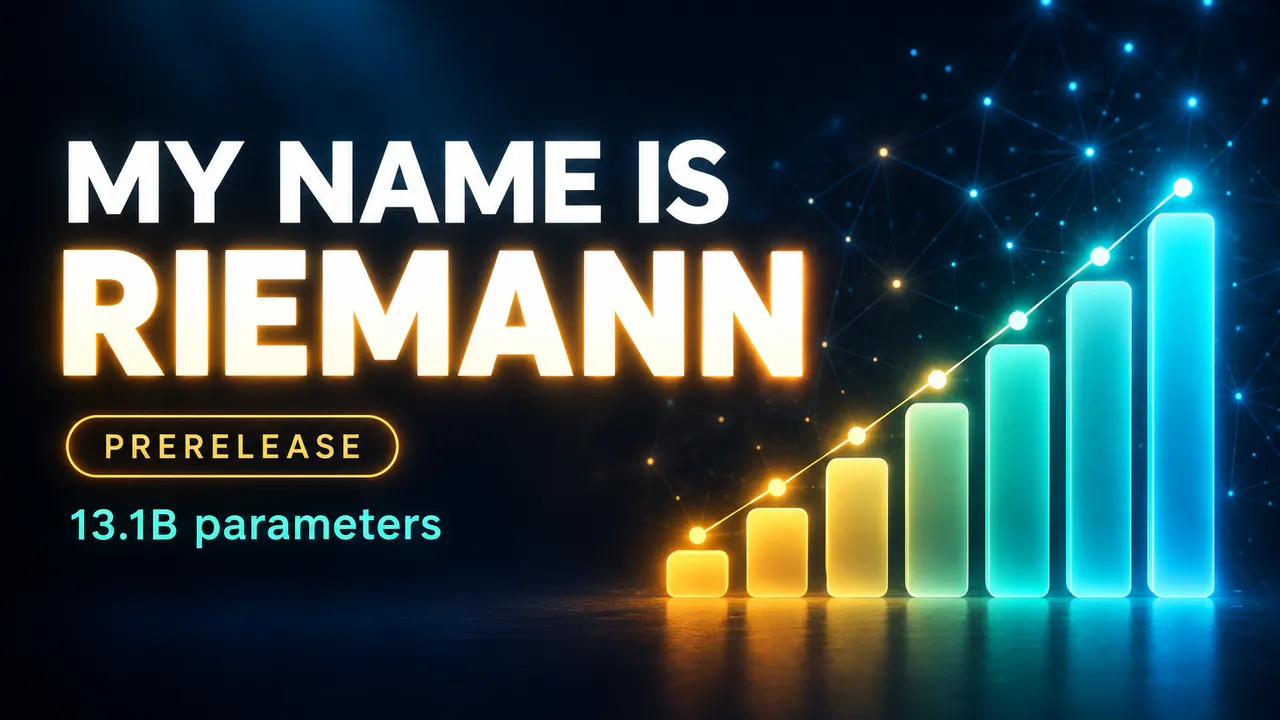
The dream of training powerful AI models has long been locked behind multi-million-dollar budgets and centralized cloud providers. Riemann Computing is challenging that status quo by demonstrating that a 13B parameter model can be trained for under $4,000, putting advanced machine learning within reach of individual creators and researchers.
What Happened
Andrew Magdy Kamal of Riemann Computing recently shared a pre-release of "My Name is Riemann" and the OpenPeer AI line on Huggingface. The project began with $3,000 worth of local hardware and was supplemented by a DigitalOcean cloud node featuring eight AMD MI325X GPUs, costing $30.40 per hour. Over 21 node-hours (168 GPU-hours total), the model progressed through pretraining, growth, controller fitting, setup, and upload, reaching a total spend of approximately $640.
The training used the OpenPeerLLM model and the NTK Trainer, focusing on a foundational dataset rather than building a full commercial chatbot. The goal was to establish a solid base that could be scaled later via saved checkpoints, avoiding repeated weight reinitialization.
Why This Matters
Most major AI firms operate at massive scale, incentivizing recursive data analysis with significant environmental and financial costs. This centralization raises ethical concerns about who controls powerful models and how they shape society. Riemann Computing's approach suggests a different path—one where training costs drop enough for individuals, startups, and research groups to build and customize models without relying on a few dominant players.
By proving that a 13B model is achievable at a fraction of typical expense, the initiative opens the door to broader participation in AI development, greater transparency, and a more distributed innovation landscape.
Key Takeaways
- A 13B parameter model can be trained for under $4,000 using a combination of local hardware and short-term cloud GPU instances.
- Riemann Computing spent roughly $640 total by leveraging a 21-node-hour, 168-GPU-hour run on a DigitalOcean AMD MI325X droplet.
- The training used the OpenPeerLLM framework and NTK Trainer, focusing on foundational data rather than end-user application polishing.
- Decentralizing AI training could reduce reliance on hyperscalers and empower more creators to participate in model development.
- The vision extends beyond this single model: an open ecosystem where transparency and creator-owned AI become the norm.
Conclusion
Riemann Computing's experiment shows that the barrier to training large AI models is lower than commonly assumed. By prioritizing openness, transparency, and cost-effective infrastructure, the project points toward a future where AI development is more inclusive and less concentrated in the hands of a few. As the creator economy expands, tools that enable individual contributors to build and iterate on large models could reshape who gets to shape the next generation of artificial intelligence.







Discussion
Join the conversation
Thoughtful reactions, questions, and follow-up ideas help shape the next story.