Introduction
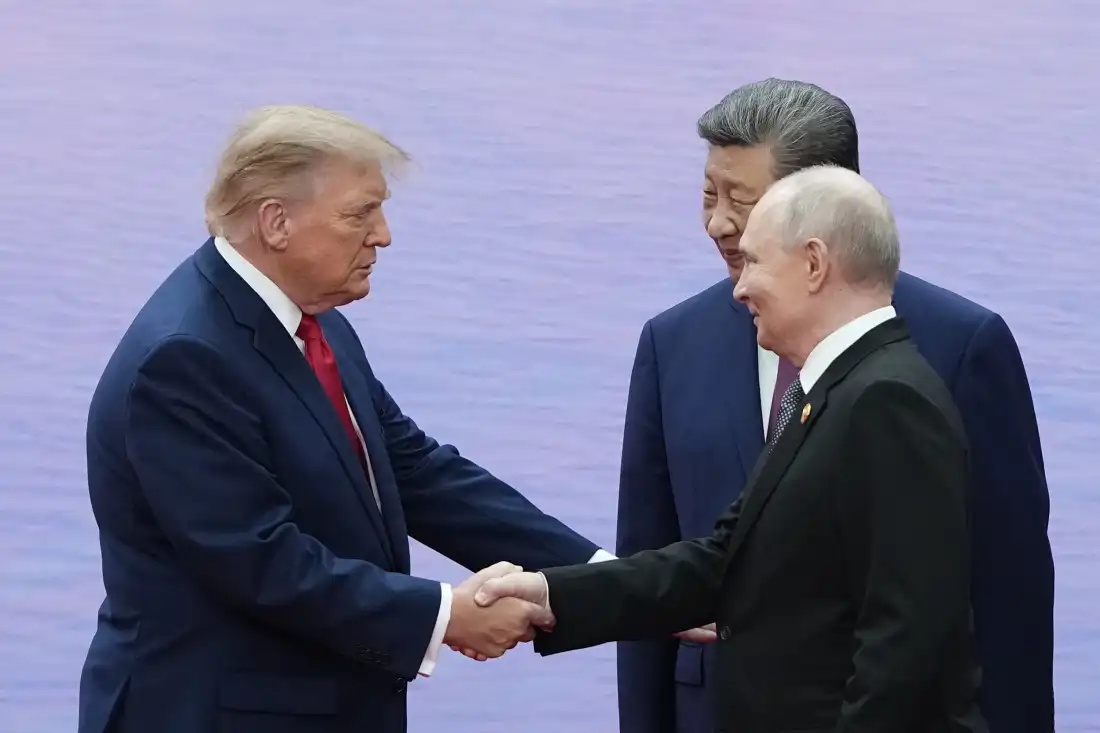
President Donald Trump traveled to Shenzhen, China, for a historic trilateral summit with Chinese President Xi Jinping and Russian President Vladimir Putin. The November 2026 gathering marked the first time an American president sat down with both leaders at the same time, bringing together three nations that often find themselves at odds on the world stage. With Ukraine, Iran, and nuclear weapons on the agenda, the meeting drew immediate attention from critics and allies alike.
What Happened
The talks took place alongside the Asia-Pacific Economic Cooperation conference. According to reports, the bilateral and group sessions were relatively brief: Trump and Putin spoke for 42 minutes, Trump and Xi for about an hour, and the full trilateral session ran for 90 minutes.
Each leader arrived with different priorities. Trump pressed for nuclear arms reduction and urged China to help prevent Iran from obtaining nuclear weapons. Putin sought backing for ending the war in Ukraine on terms favorable to Moscow, including a redrawn European security arrangement that would roll back NATO presence in Eastern Europe. Xi, meanwhile, kept his remarks broad, emphasizing peace and economic stability while signaling reluctance to dive deeply into either the Ukraine conflict or arms control negotiations.
Despite lofty rhetoric about great powers maintaining peace, the leaders produced few concrete agreements. Trump declined to answer reporter questions regarding allegations that China played a role in an espionage plot to steal advanced Nvidia chips. The most tangible outcome may have been the imagery itself: the U.S. president standing alongside the leaders of China and Russia in an unprecedented display of great-power diplomacy.
Why This Matters
The summit carried symbolic weight far beyond its limited deliverables. For Putin, the event represented a diplomatic victory, offering visual proof that Western efforts to isolate Russia over its invasion of Ukraine have not succeeded. Kremlin state media broadcast footage of the three leaders repeatedly, framing the meeting as Russia's return to its perceived place among global superpowers.
The gathering also raised concerns about a potential division of the world into spheres of influence, with some observers comparing it to the 1945 Yalta Conference. However, the divergent agendas on display suggested that any such arrangement remains distant. Beijing has repeatedly resisted U.S. pressure to join arms control talks with Moscow, noting its nuclear arsenal is far smaller than those of the United States and Russia. On Ukraine, Xi has insisted that European nations must have a seat at any negotiating table, while Trump has relied on close advisers such as Steve Witkoff and Jared Kushner to work through peace deal complexities.
Timing added another layer of urgency. With Trump in the final stretch of his presidency and Democrats poised to take control of Congress in January, the window for major diplomatic shifts is narrowing.
Key Takeaways
- The Shenzhen summit was the first trilateral meeting between a U.S. president and the leaders of China and Russia.
- Trump prioritized nuclear disarmament and Iran, while Putin focused on Ukraine and NATO; Xi emphasized general peace and stability.
- No major agreements were announced, though the leaders held bilateral talks and a 90-minute group session.
- The meeting was proposed by Putin during an October phone call with Trump and tied to China's hosting of APEC.
- Ukraine struck a key bridge linking Russia to Crimea shortly before the summit, underscoring the ongoing conflict.
- Observers worry the summit could signal a move toward great-power spheres of influence, though deep disagreements remain.
Conclusion
The Shenzhen summit will likely be remembered more for who attended than for what was accomplished. By bringing Trump, Xi, and Putin together, the event highlighted both the possibilities and the limits of great-power cooperation in a fragmented world. Whether the meeting opens the door to future diplomacy or simply serves as a political photo opportunity remains to be seen.
Discussion
Join the conversation
Thoughtful reactions, questions, and follow-up ideas help shape the next story.